
Gastronomic Genoa: A Journey Through the Caruggi from Morning to Late Night
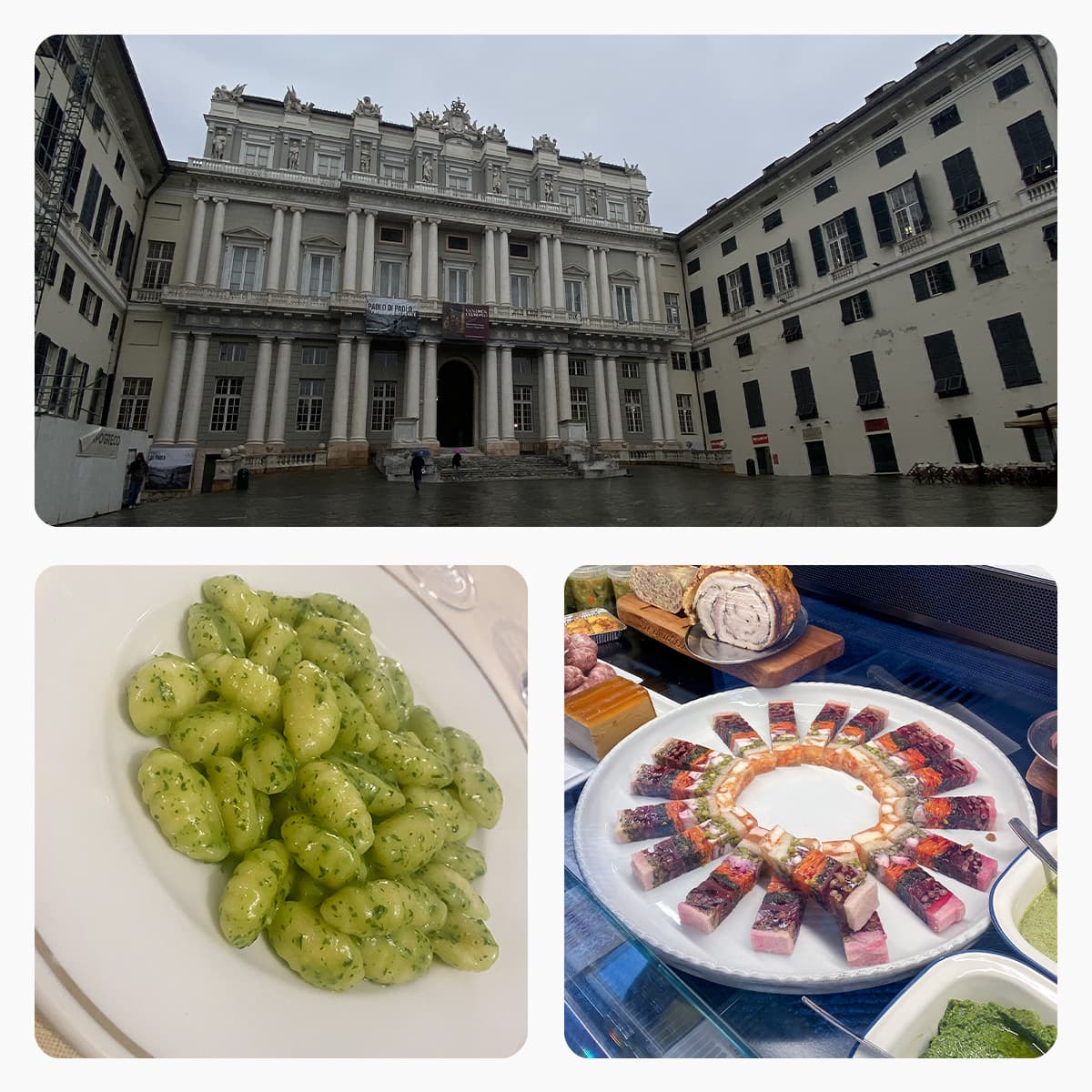

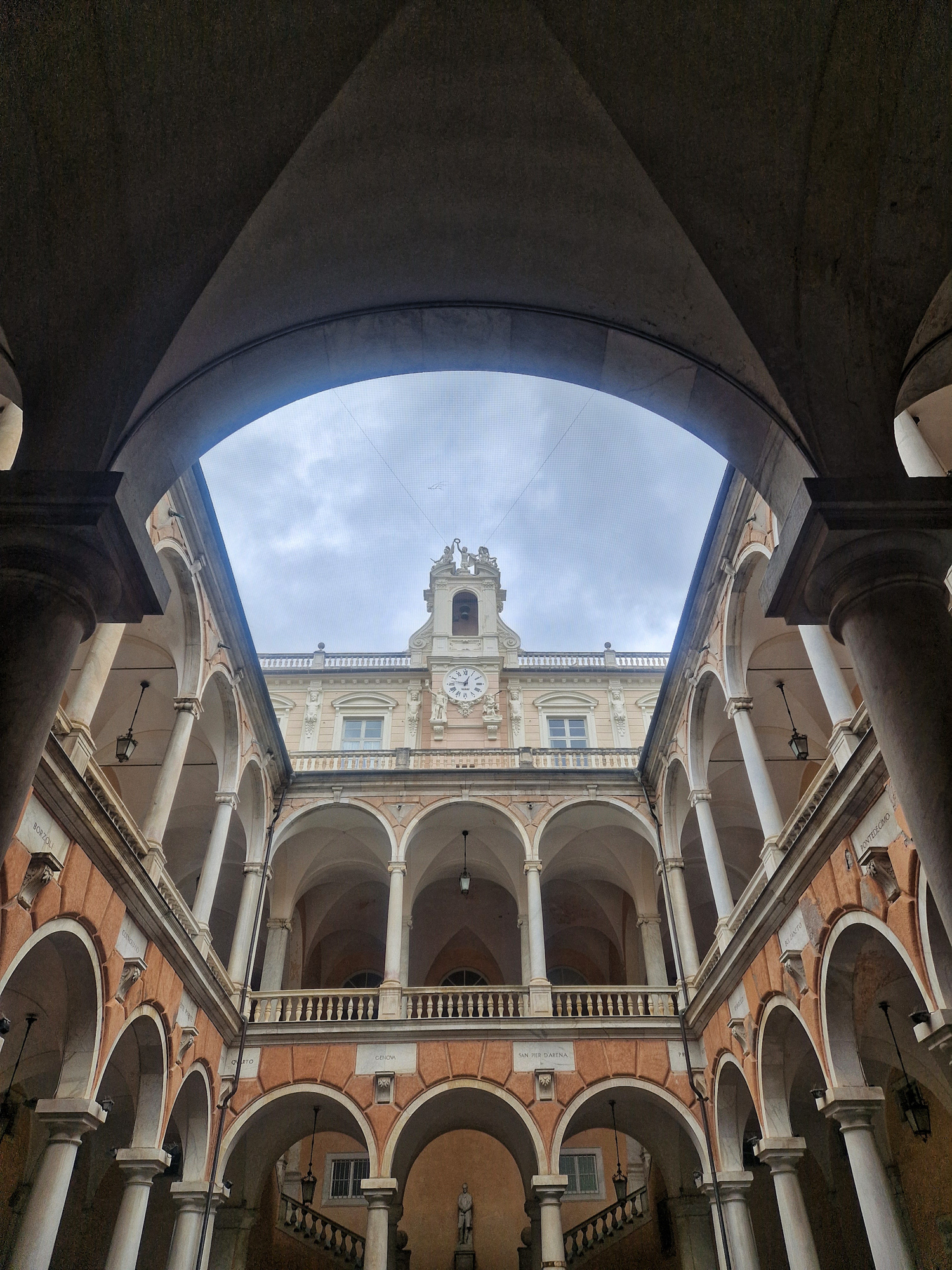
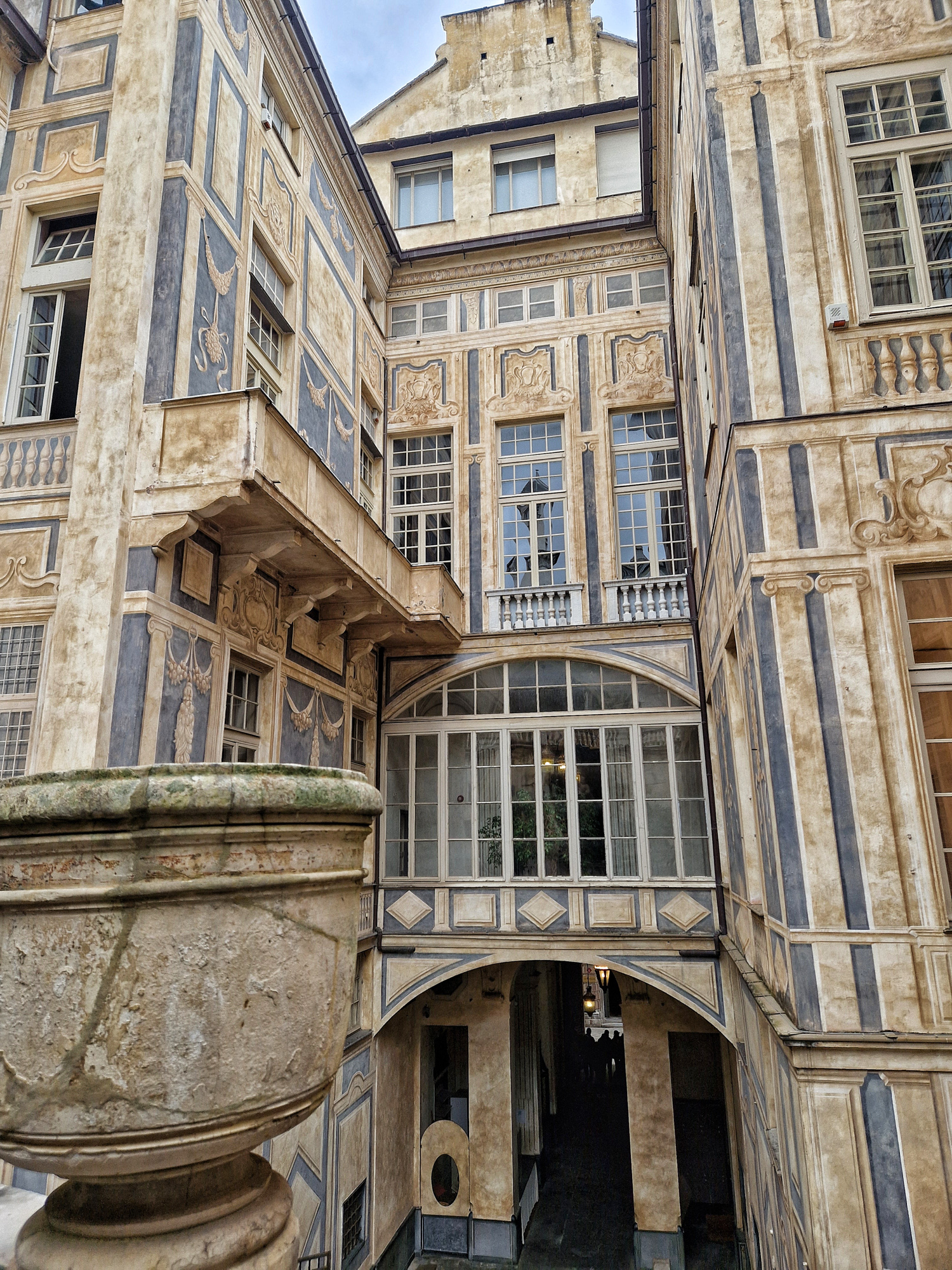
Genoa has always evoked an image that weaves together the vertical sharpness of its Baroque palaces and the salty scent of the harbor—a proud, structurally reticent elegance. Behind the painted façades of its 24 museum complexes—which range from the masterpieces of the Musei di Strada Nuova (within the rooms of Palazzo Rosso, Palazzo Bianco, and Palazzo Tursi) and the archaeology of the Museo di Sant’Agostino, to the collections at GAM (Gallery of Modern Art) and the Villa Croce Museum of Contemporary Art—the city hides a dense, fiercely territorial gastronomic soul. It also serves as the perfect central hub for exploring the rivieras: on one side lies nearby Portofino, with its marina accessible by ferry, alongside the Cinque Terre and Porto Venere; on the western side, the Riviera dei Fiori unfolds.
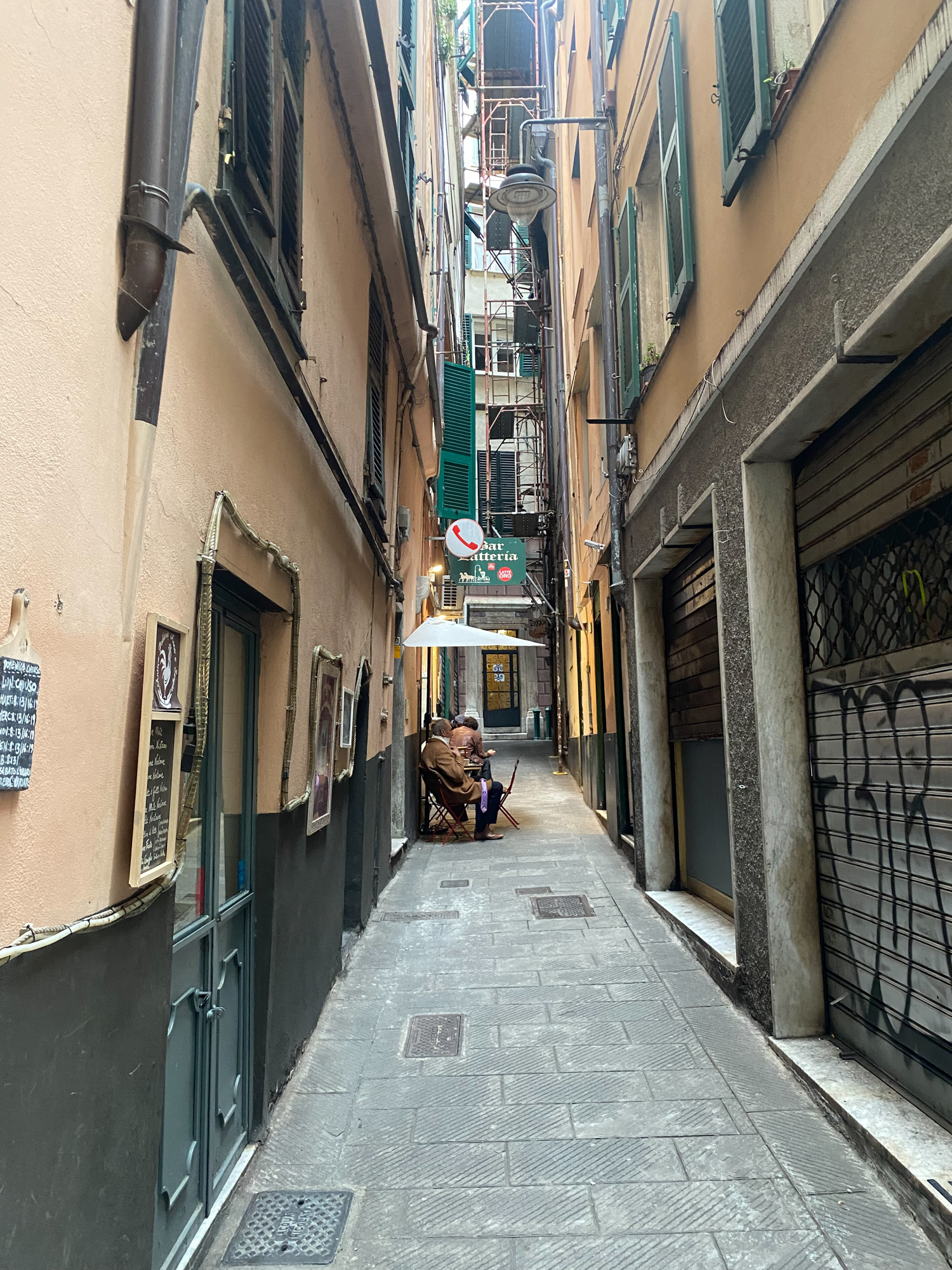
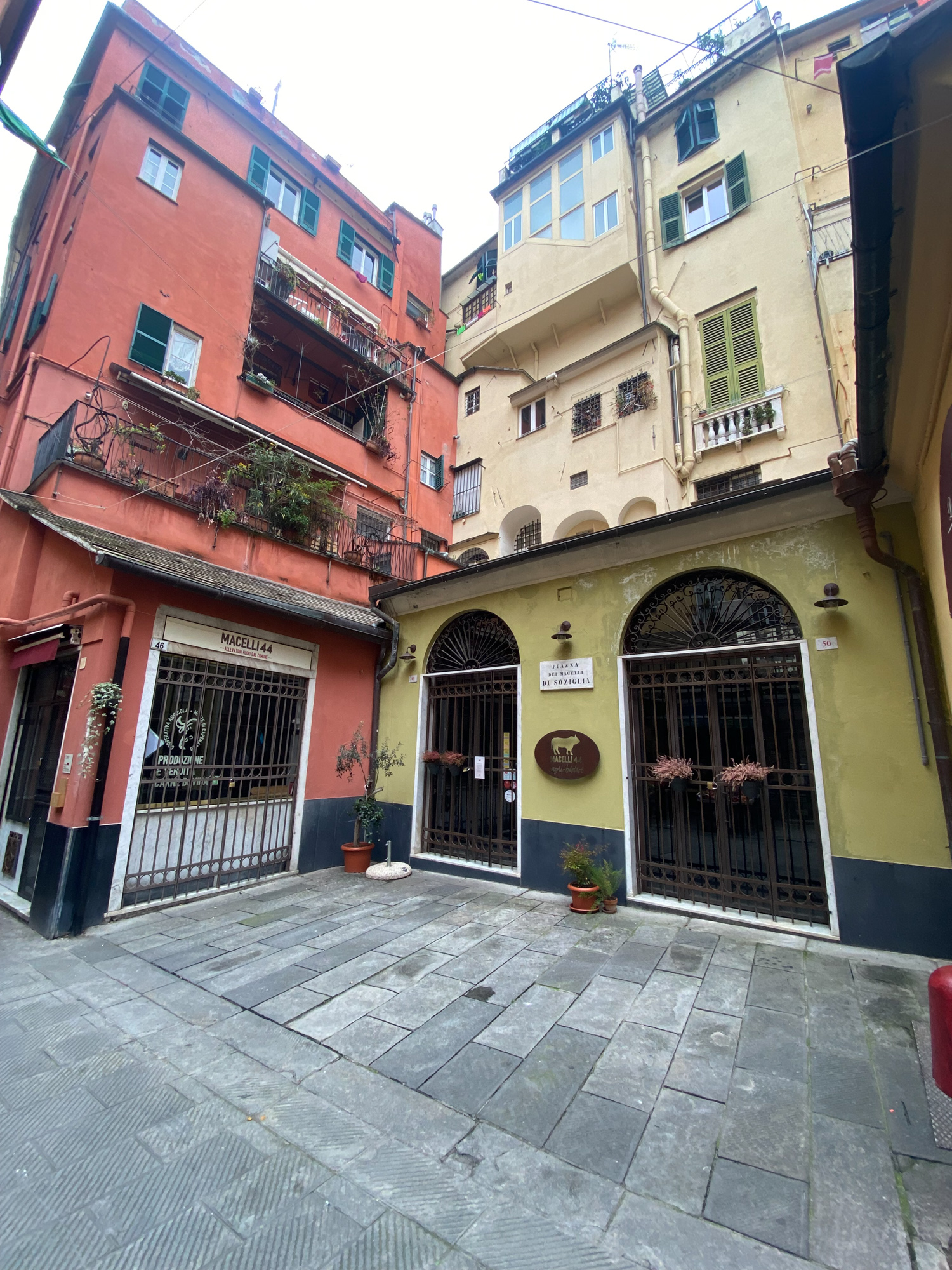
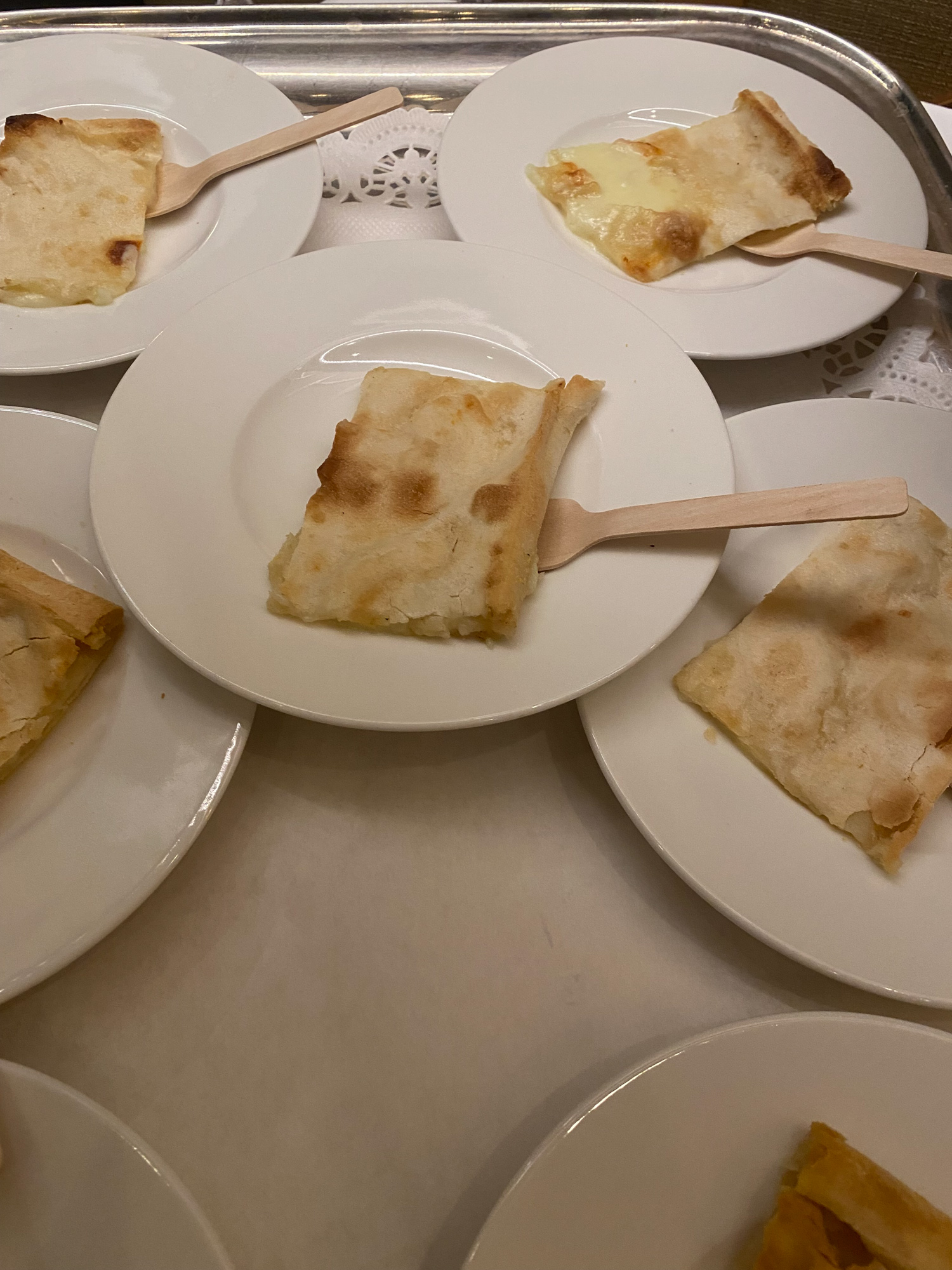
The local heritage of flavors contains primal elements that time has never eroded. Pesto, made strictly with highly aromatic Genovese Basil DOP, is traditionally destined to pair with trofie or linguine. Bakers incessantly turn out delicious focaccia, both plain and with cheese, flanked by frisceu (typical savory fritters), farinata, and panissa—both expressions of chickpea flour ideal for a restoring break.
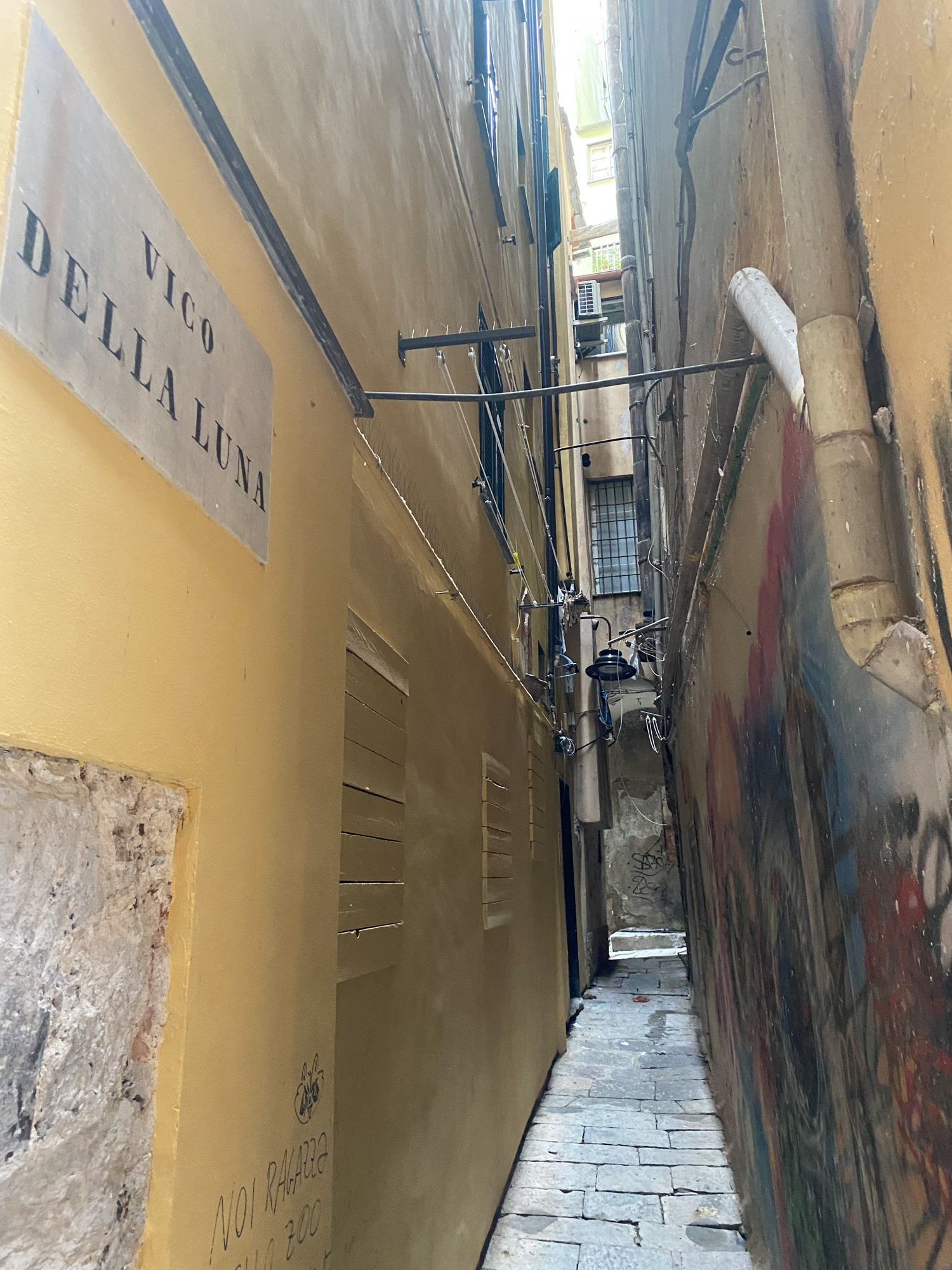
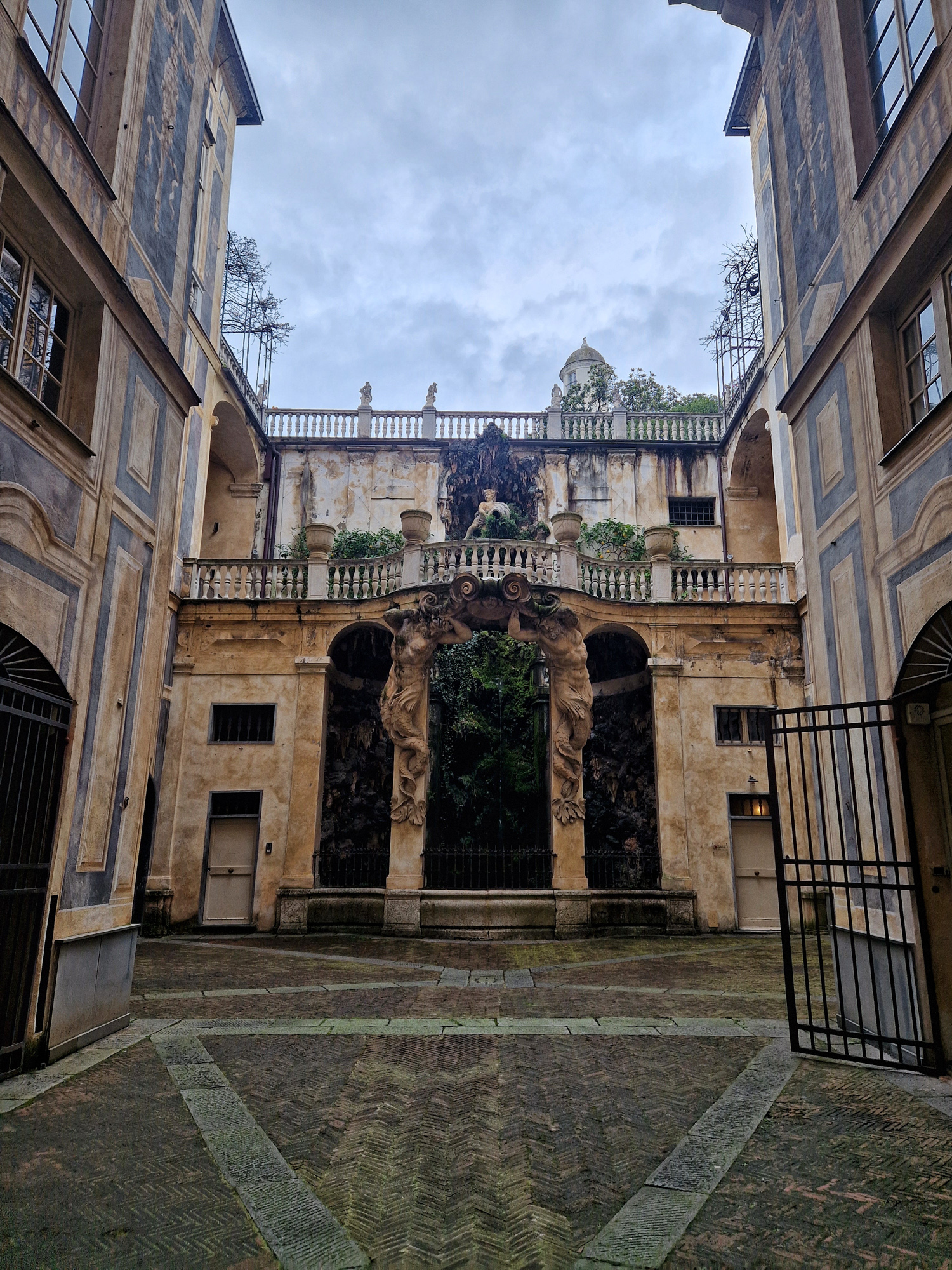
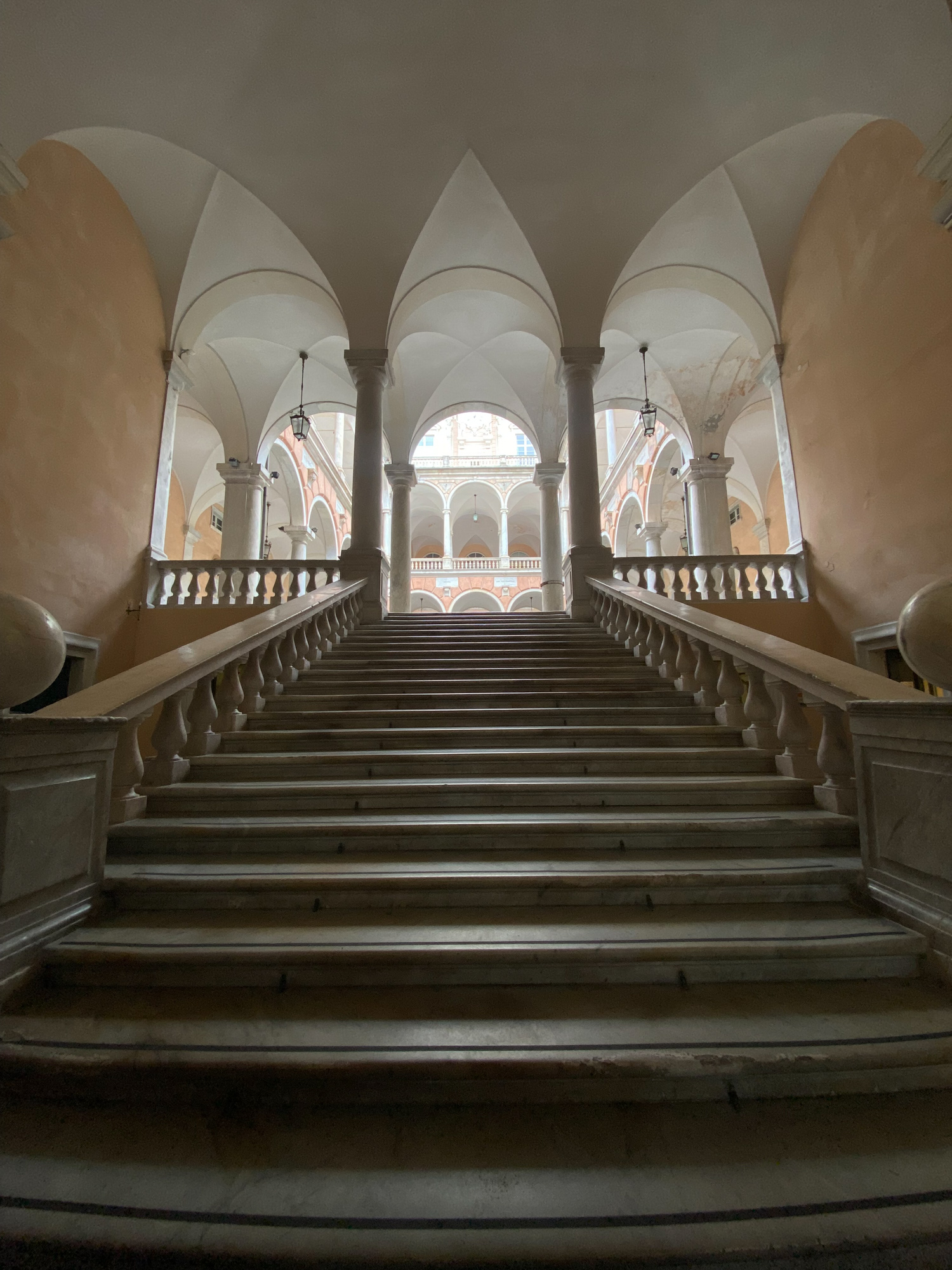
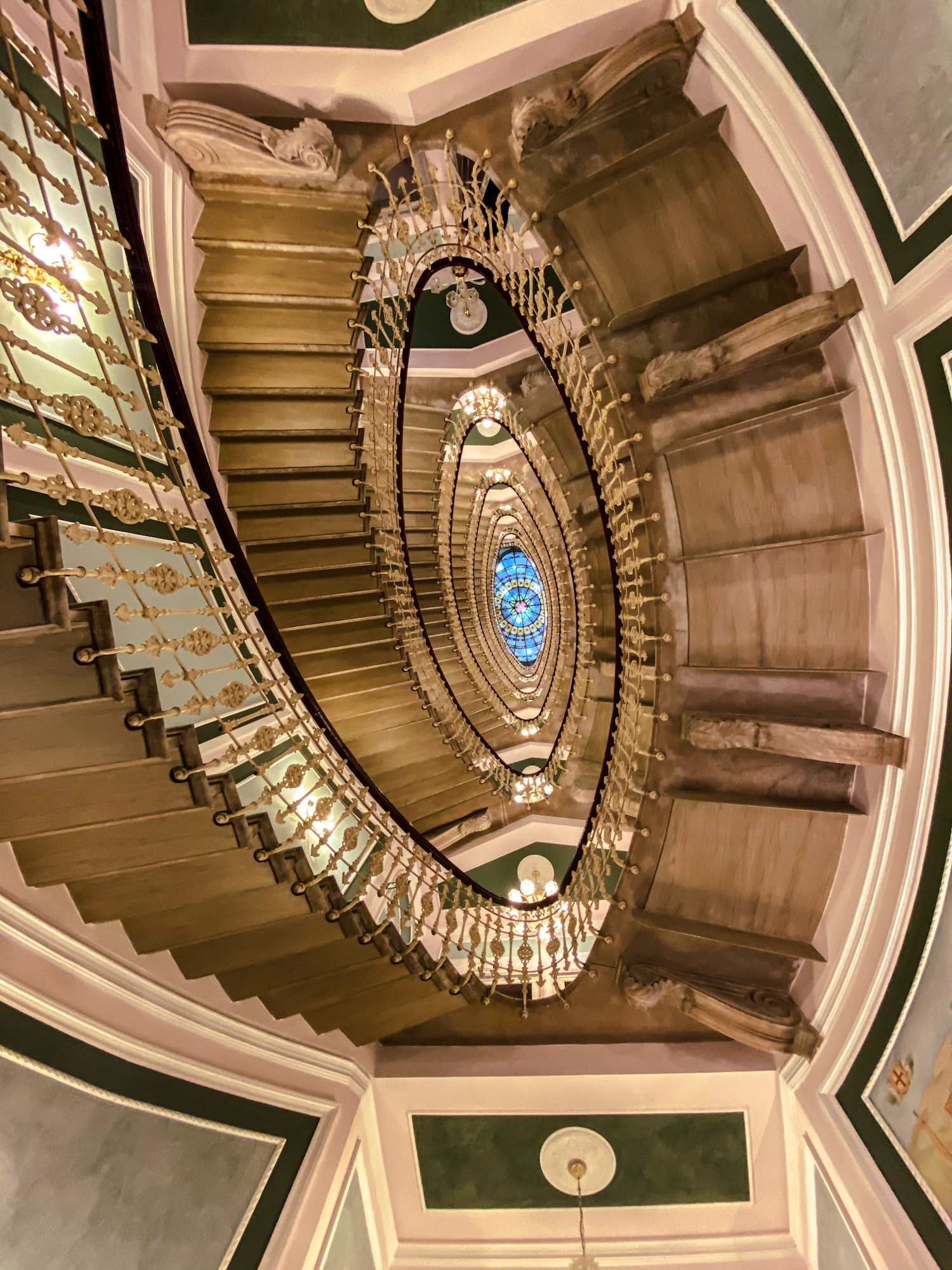
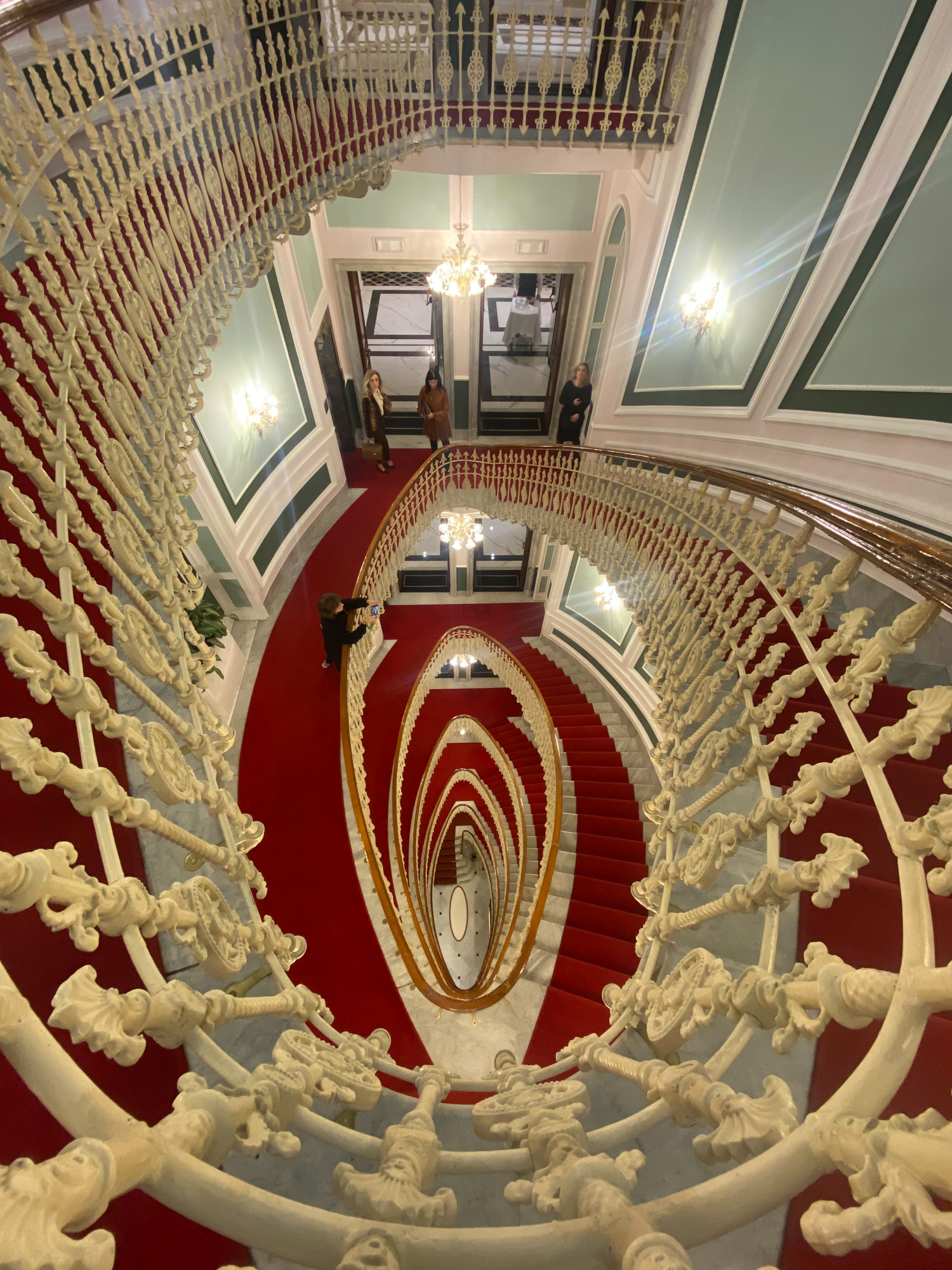
A monument of Genovese hospitality is the Hotel Bristol Palace, inaugurated in 1905 and a hub for society ever since, earning its place among the Historic Places of Italy. This Art Nouveau palace has lived through great history. Now beautifully restored, it preserves period silverware, antique Chinese porcelain, Albissola vases, and Capodimonte pieces. Its main attraction remains the elliptical white marble staircase, featuring a wrought-iron balustrade that spirals up to the sixth floor, offering a dizzying perspective that is worth seeing for its sheer magnetism, even just with a fleeting glance from the lobby.
It was precisely this spiral that fascinated Alfred Hitchcock during his stays at the hotel—first in 1925 for The Pleasure Garden and later in 1954 for To Catch a Thief—inspiring the famous visual leitmotif of the bell tower in Vertigo. Its rooms have hosted legends of the caliber of Edmondo de Amicis, Gabriele D’Annunzio, Luigi Pirandello, Vittorio De Sica, Alberto Sordi, Rita Levi Montalcini, and ballet stars like Rudolf Nureyev and Carla Fracci. Today, this aristocratic hospitality embraces contemporary sustainability, featuring a reduced-impact laundry service, while amenities introduce wheat fiber bags, disposable cotton and jute slippers with recycled straps, and bamboo pens.
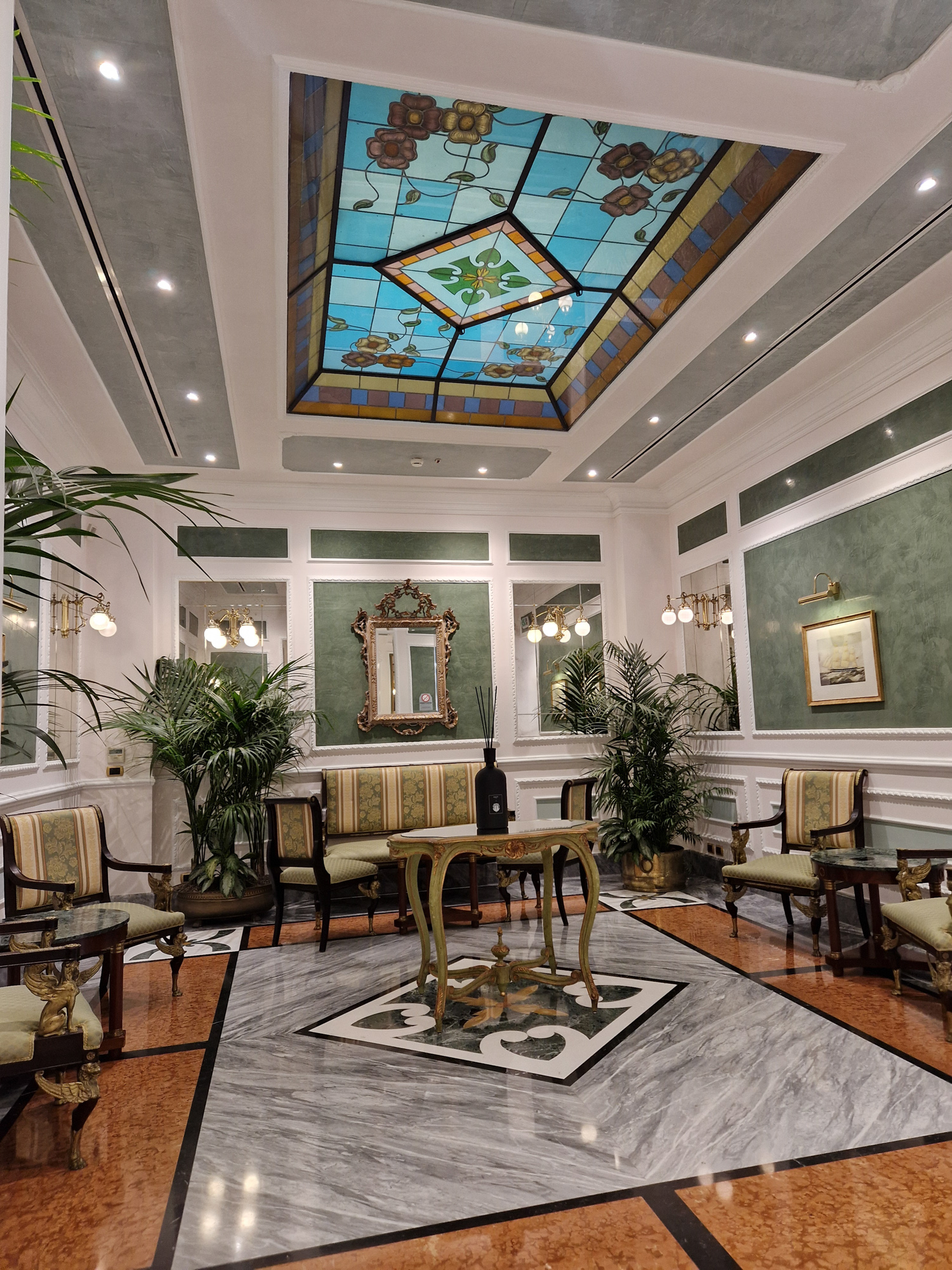
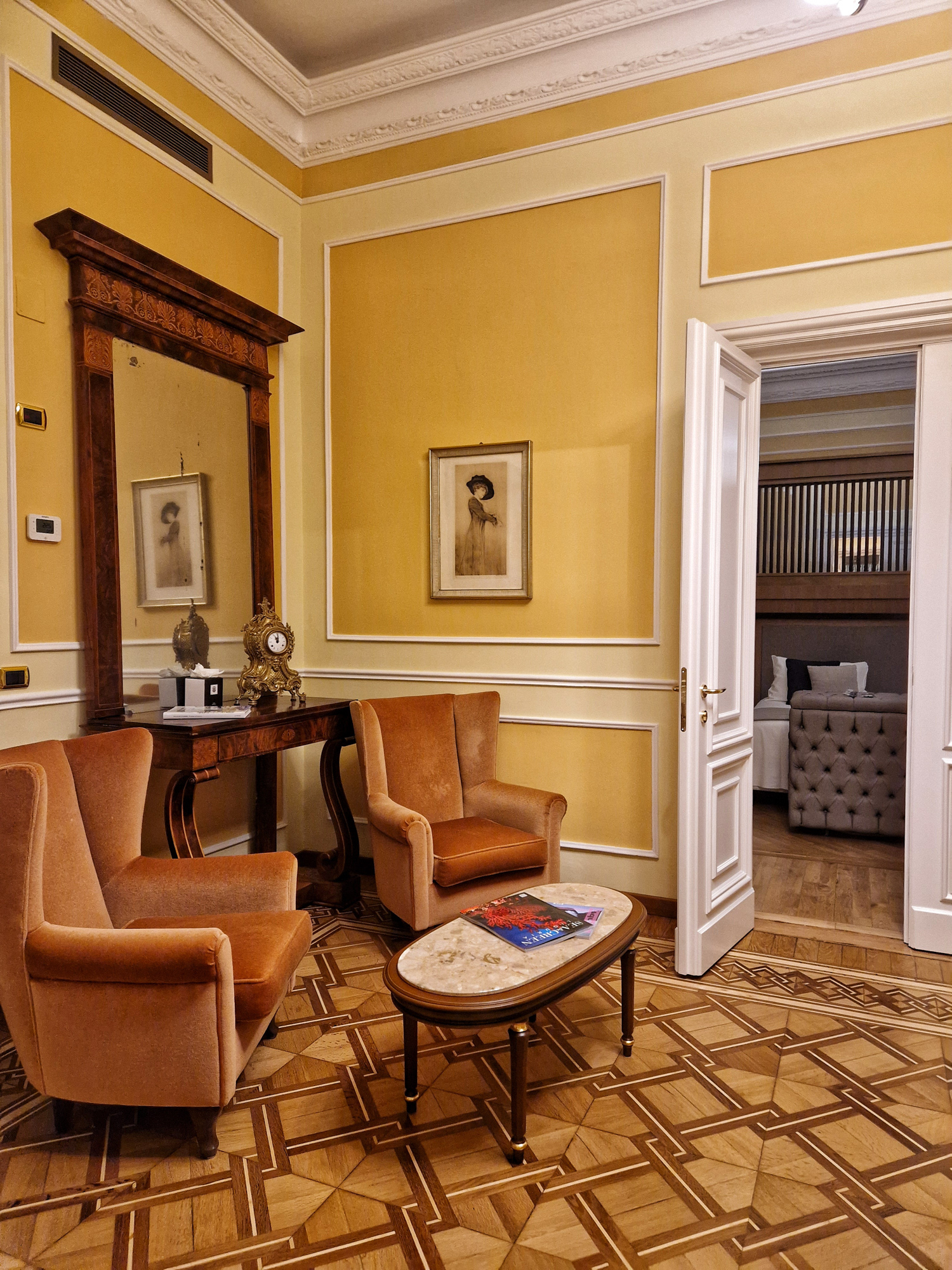
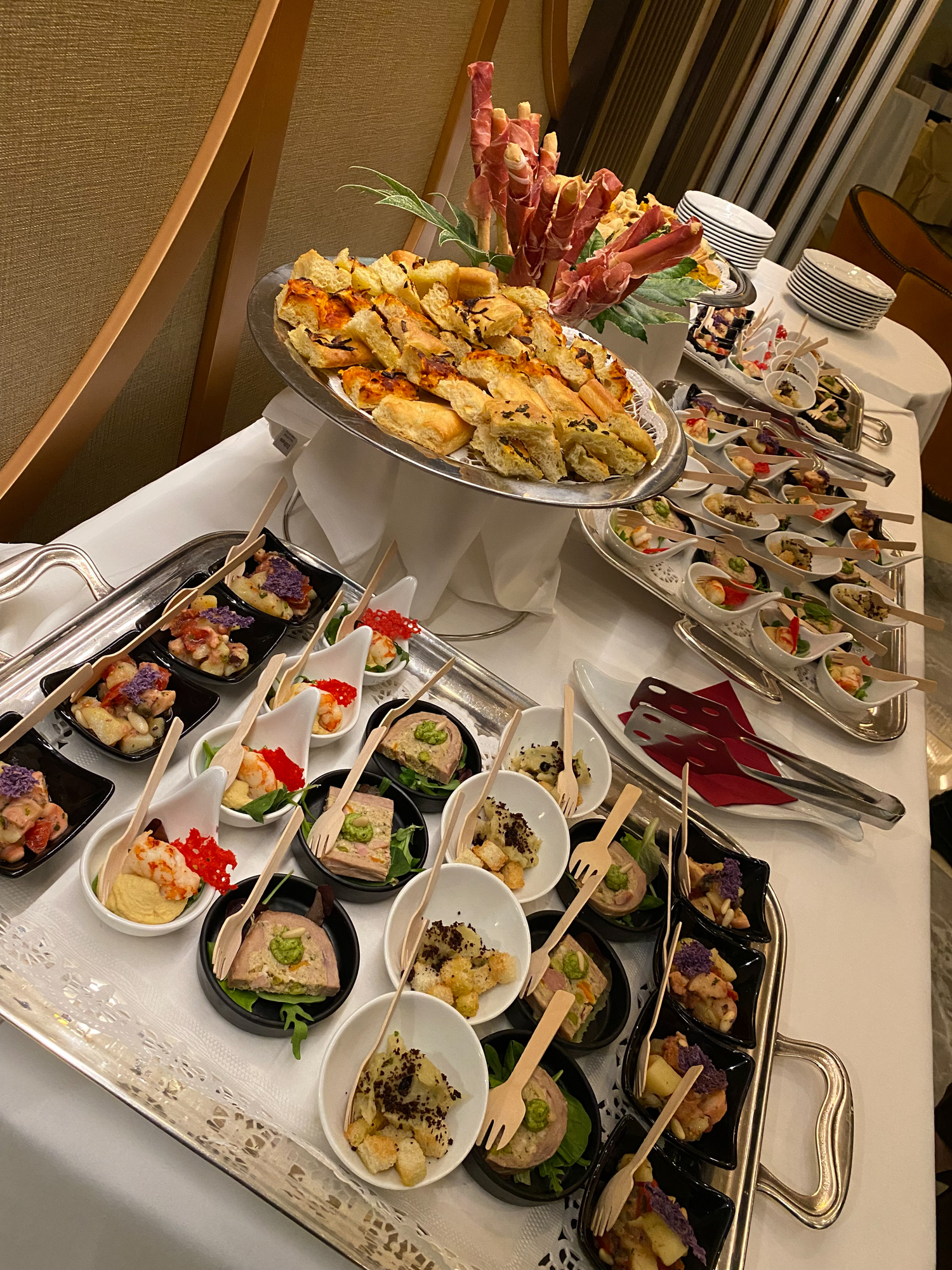
On the second floor, Ristorante Giotto offers a refined corner of conviviality with its ninety-square-meter terrace. Under the guidance of chef Marco Pernati, the kitchen exalts the territory with a contemporary flair. The property’s entry into the Genova Liguria Gourmet certification network formalizes a well-defined gastronomic vision. The space is also open to non-hotel guests for an informal lunch or a dinner designed for those seeking an authentic, highly readable expression of Liguria on the plate.
Breakfast: Specialty Beans, Historic Confectioneries, and the Sacred Morning Focaccia
Morning begins just a three-minute walk from the station at Panificio Mario, the ultimate place to be for those seeking authentic Genovese focaccia. From the constant yet fast-moving line at the entrance, one can glimpse trays sliding out hot in a continuous rhythm. The freshly cut strip is wrapped in straw paper that immediately absorbs the flavorful olive oil, ready for the local—and seemingly sacrilegious—ritual of dipping it straight into a cappuccino.
Tazzepazze, by contrast, is the coffee shop representing the city’s vanguard in the world of specialty coffee. The counter is managed with an analytical approach, creating a sharp contrast between the dark, slate-lined alleyways outside and the brightness of the interior. Here, guests order V60 extractions of Ethiopian or Central American single-origins, capable of delighting the palate with citrusy and floral notes that are worlds away from the classic burnt espresso of standard bars.
A historic counterweight is found by stepping across the threshold of Romanengo, a classic confectionery dating back to 1780. Amid mirrored furnishings and wood paneling, the atmosphere smells of orange blossom water. Here, one orders the quintessence of sugar craftsmanship: famous whole candied fruits ranging from mandarins to figs, small fondant buttons, and legendary rosolio drops, all enclosed in their iconic, hand-assembled turquoise-blue cardboard boxes.
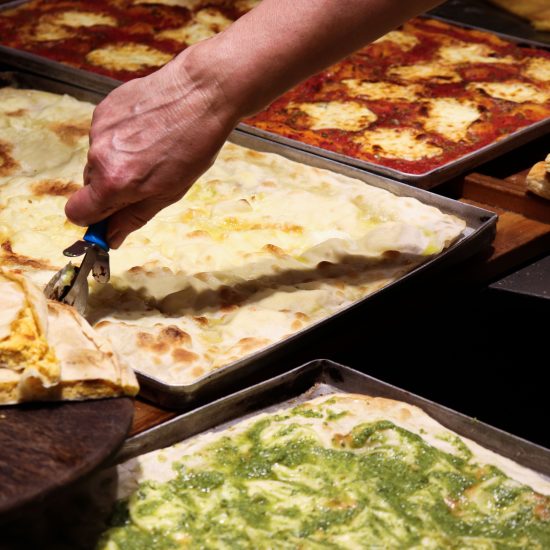
Panificio Mario
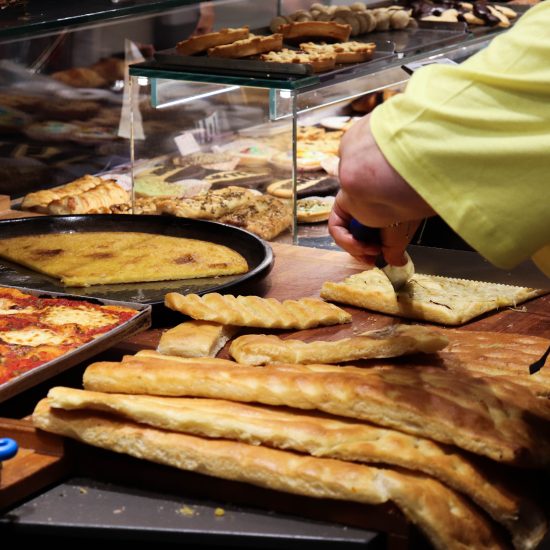
Panificio Mario
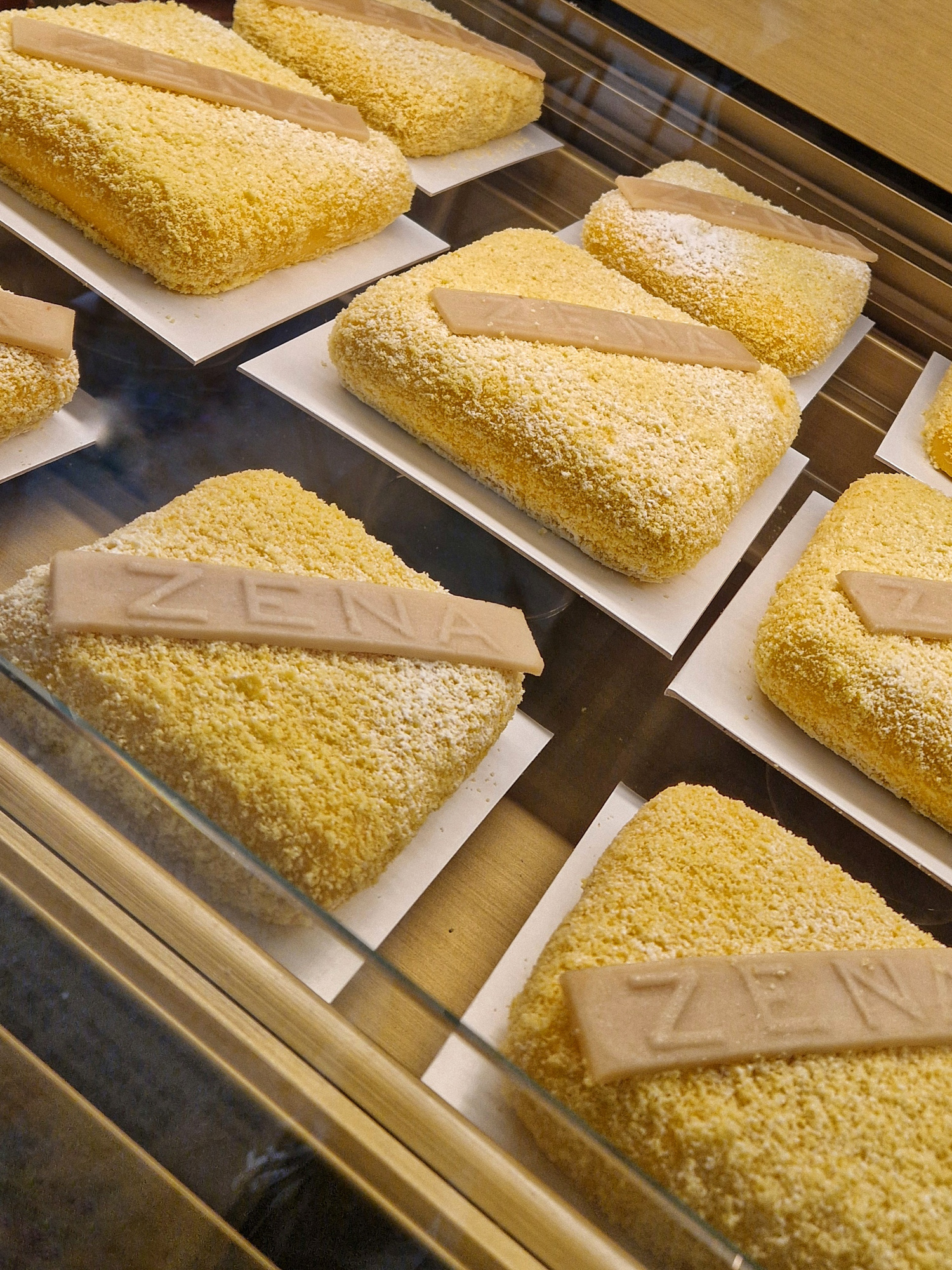
Pasticceria Klainguti
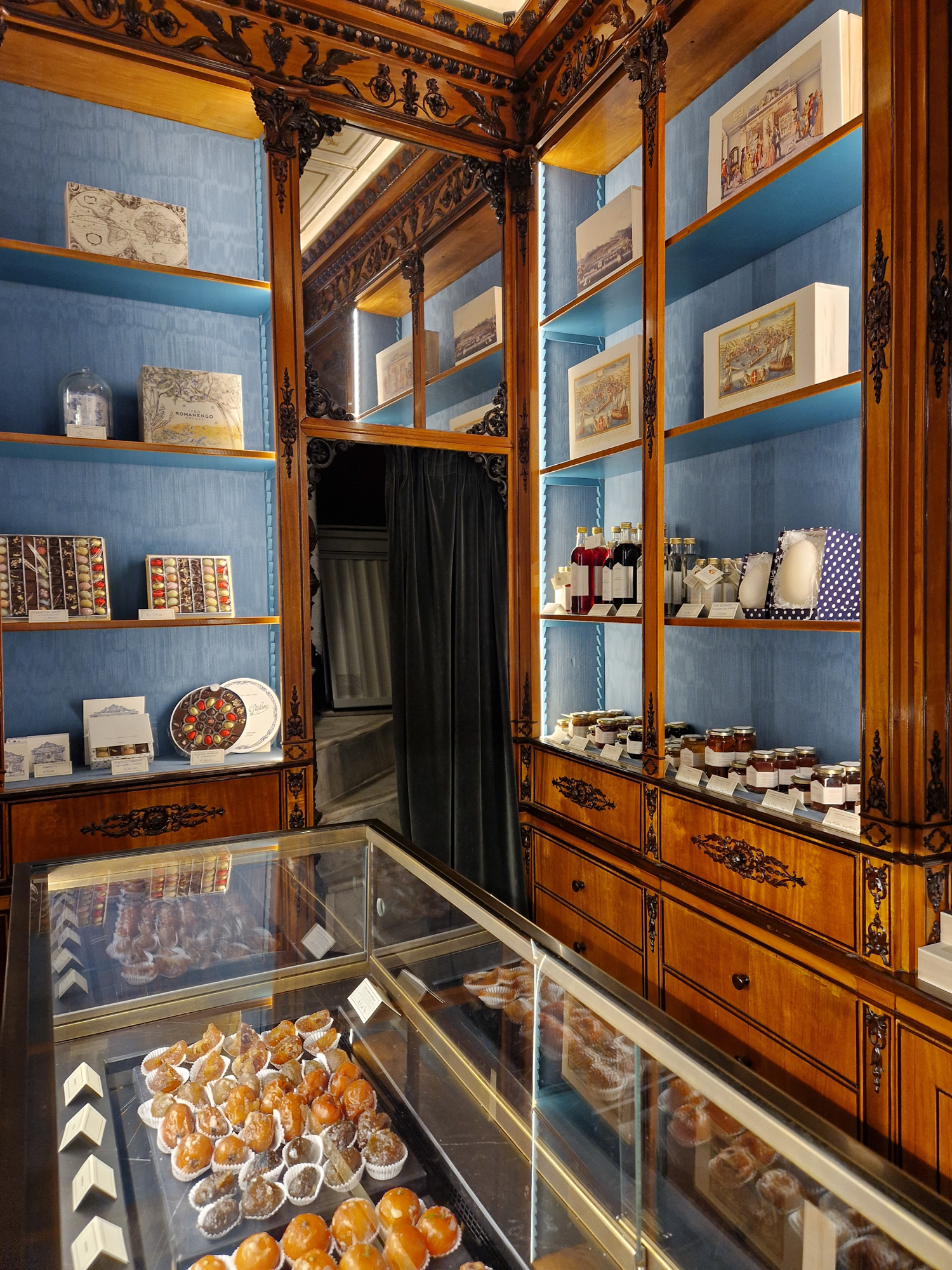
Romanengo
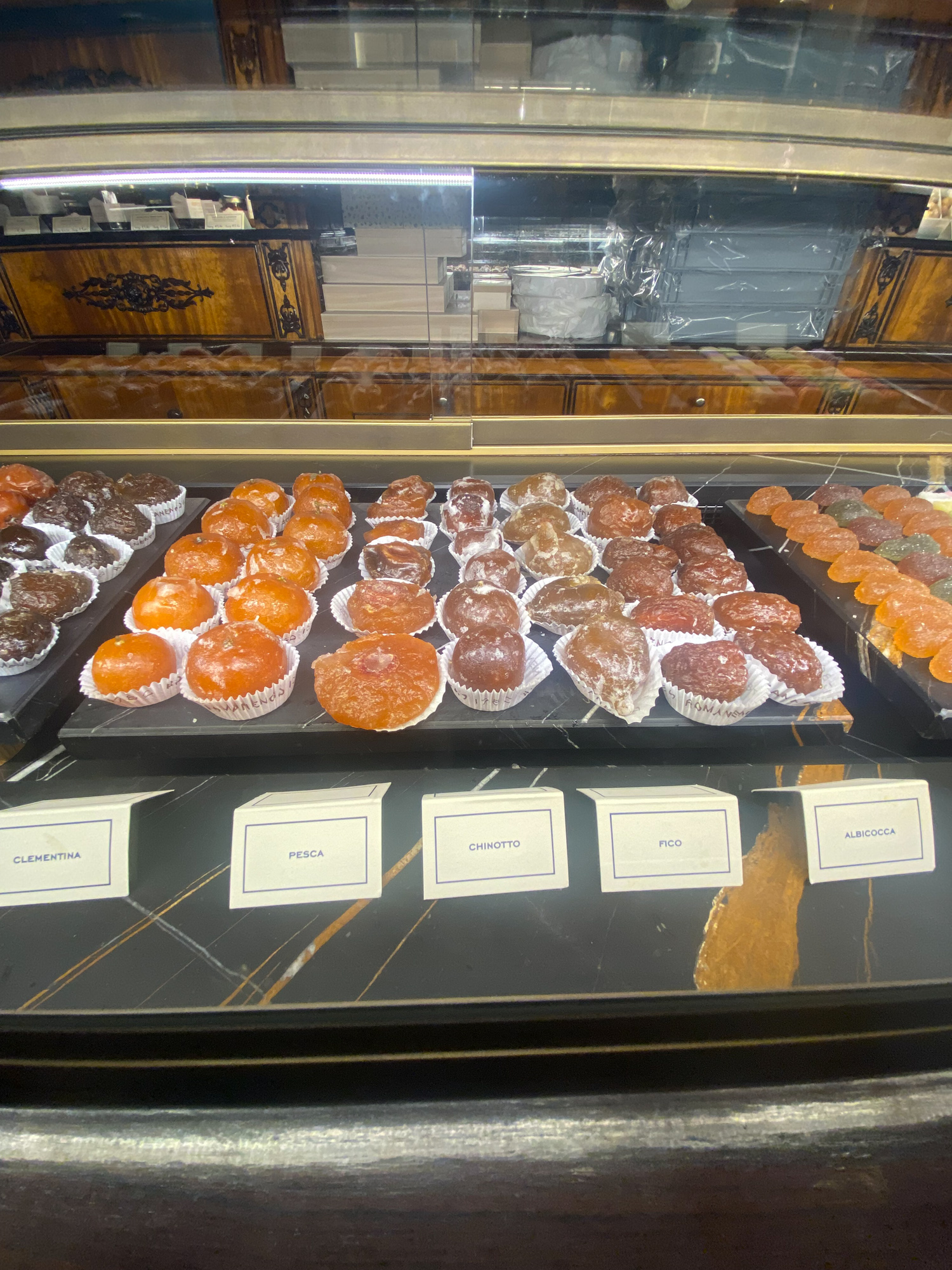
Romanengo
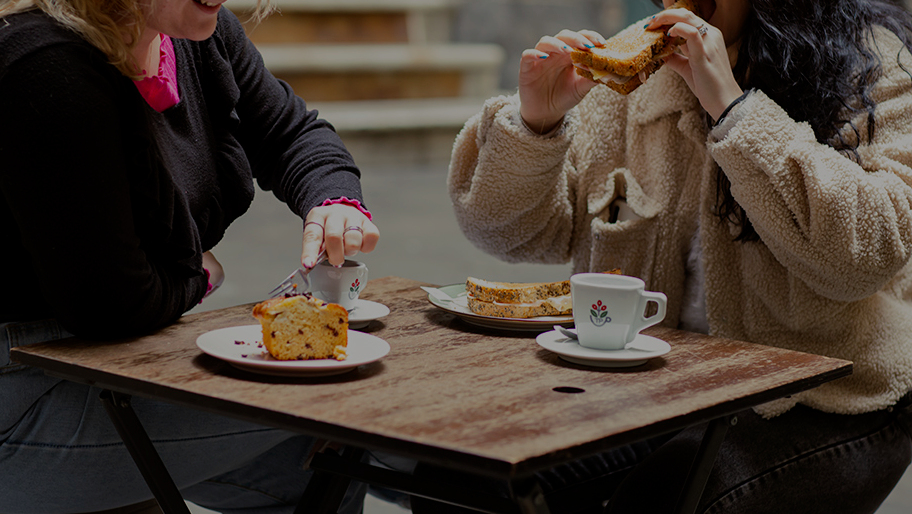
Tazzepazze
Lunch: From Shared Tables to Textbook Pesto
The most democratic experience, entirely stripped of superstructure, takes place at Trattoria da Maria, an institution historically open for lunch, and for dinner only on Thursday and Friday evenings. Tables are obligingly shared among workers, students, and white-collar professionals. The daily menu is handwritten on a flying piece of paper, and the dishes are disarmingly classic, featuring the incredibly dense Genovese minestrone enriched with a spoonful of raw pesto, or stockfish accomodato stewed with potatoes, pin needles, and olives, all served alongside pitch-perfect carafes of house wine.
For those who instead desire a lunch immersed in grand Baroque beauty, a mandatory stop is Cambi Café, located at number 1R of Via Garibaldi inside Palazzo Nicolosio Lomellino. Here, local cuisine is savored amid curated furnishings and the historic charm of the sixteenth-century building, with the option to dine in the delightful internal courtyard. The menu interprets Ligurian tradition with balance and elegance, ranging from the inevitable potato gnocchi enveloped in a rich and fragrant pesto to homemade tordelli, savory pies, and fresh catch from the Gulf. It represents the perfect high-class midday break, suspended between the grandeur of the Musei di Strada Nuova and the refined hospitality of an old-world salon.
Those seeking a scientific celebration of the king of the local table head to Il Genovese, Roberto Panizza’s restaurant made famous worldwide for protecting mortar-crushed pesto. From the kitchen comes the rhythmic sound of the wooden pestle hitting marble. The signature dish is mandilli de sea—handkerchiefs of pasta rolled as thin as silk—literally enveloped in a bright green, silky pesto, where Vessalico garlic and Parmigiano dialogue in perfect balance without ever overpowering the basil.
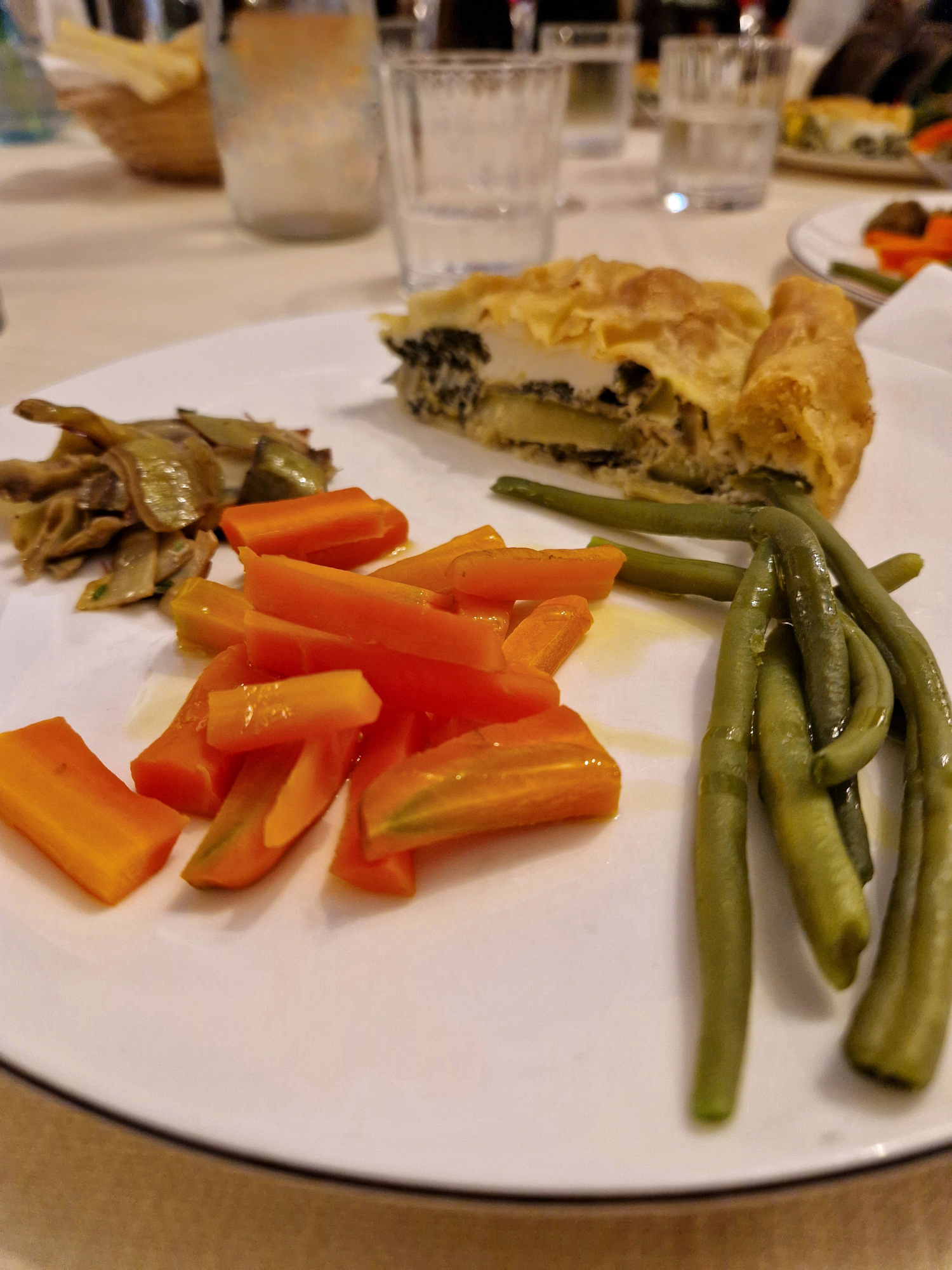
Cambi Caffè
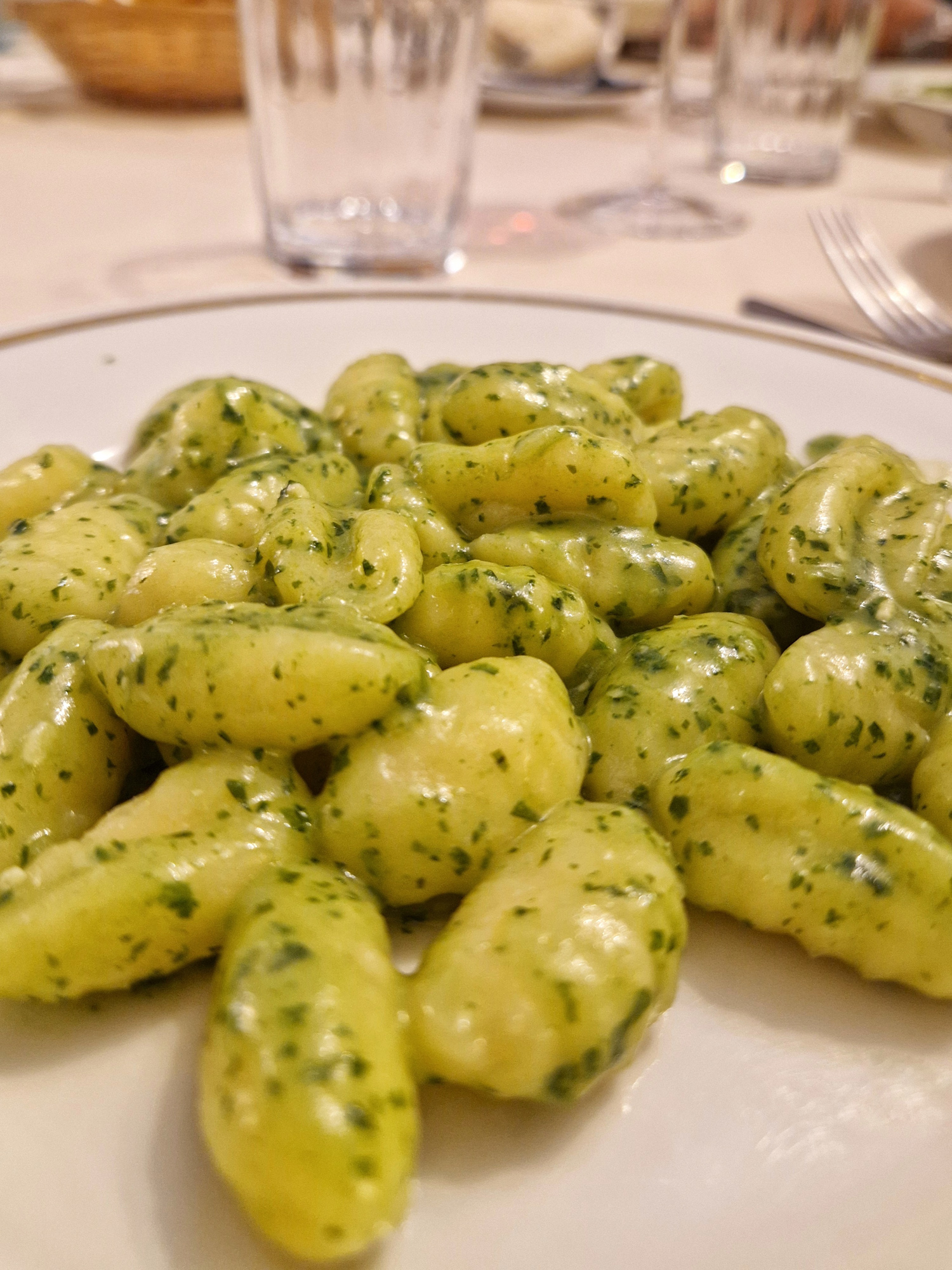
Cambi Caffè
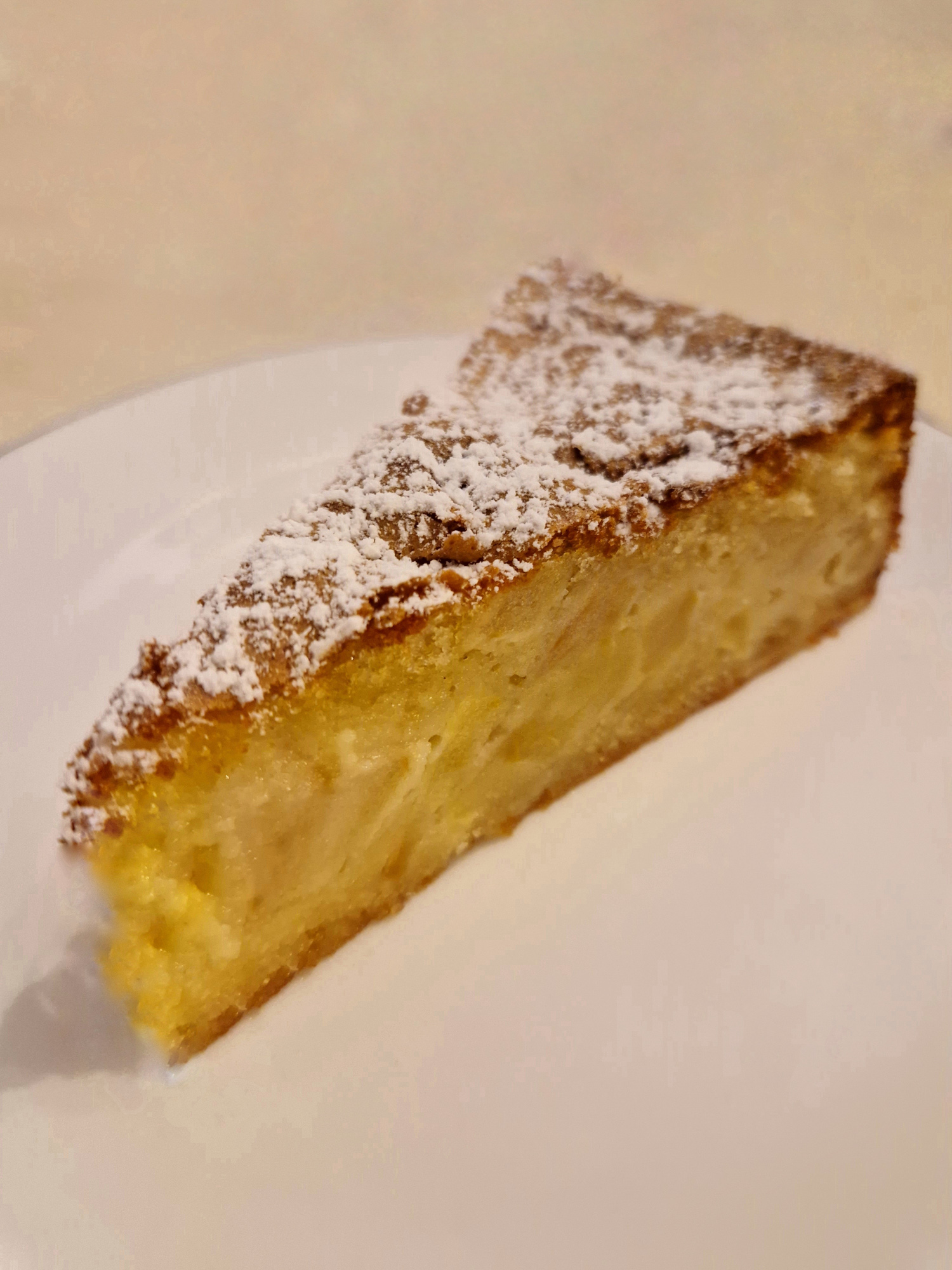
Cambi Caffè
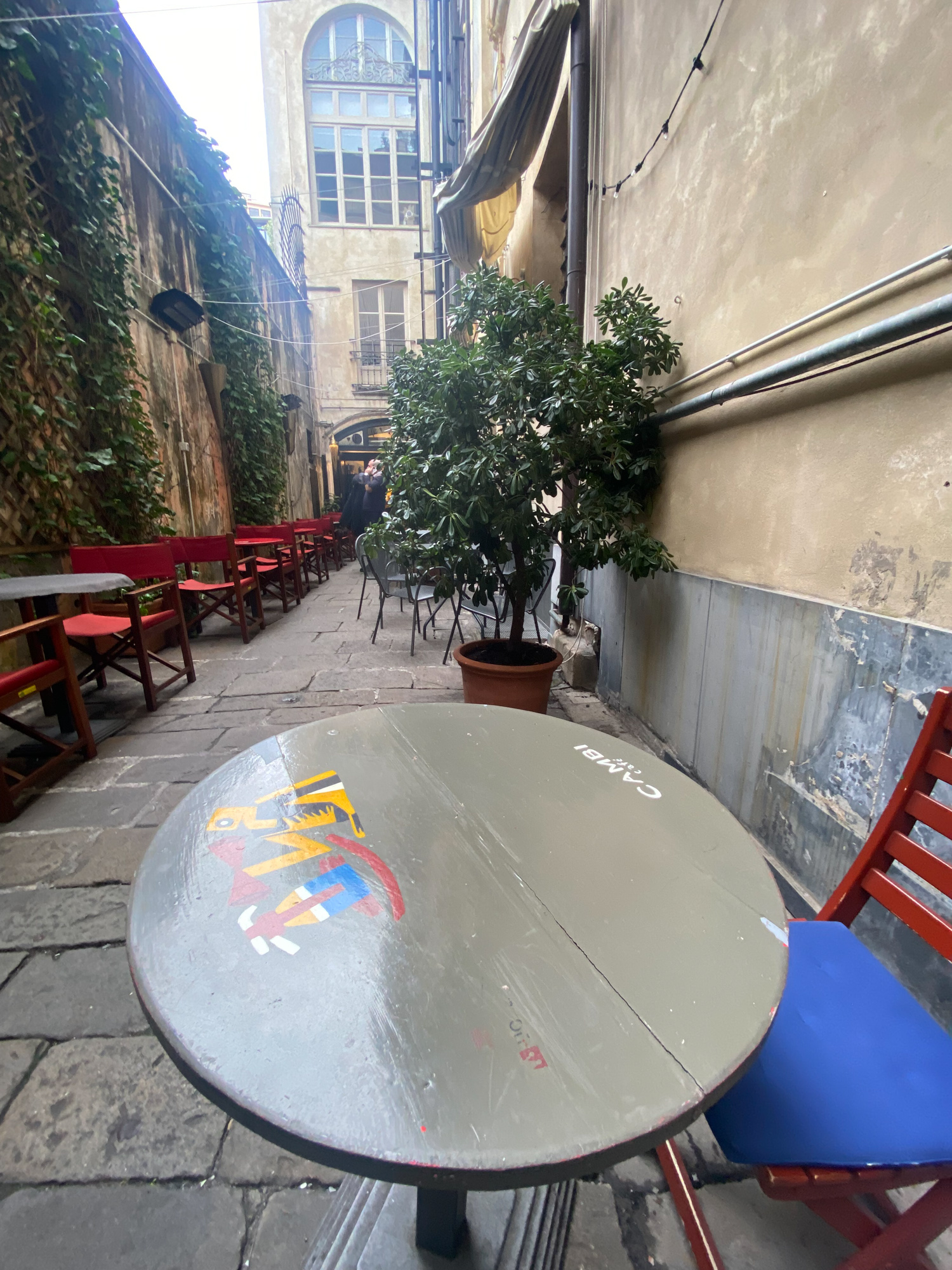
Cambi Caffè
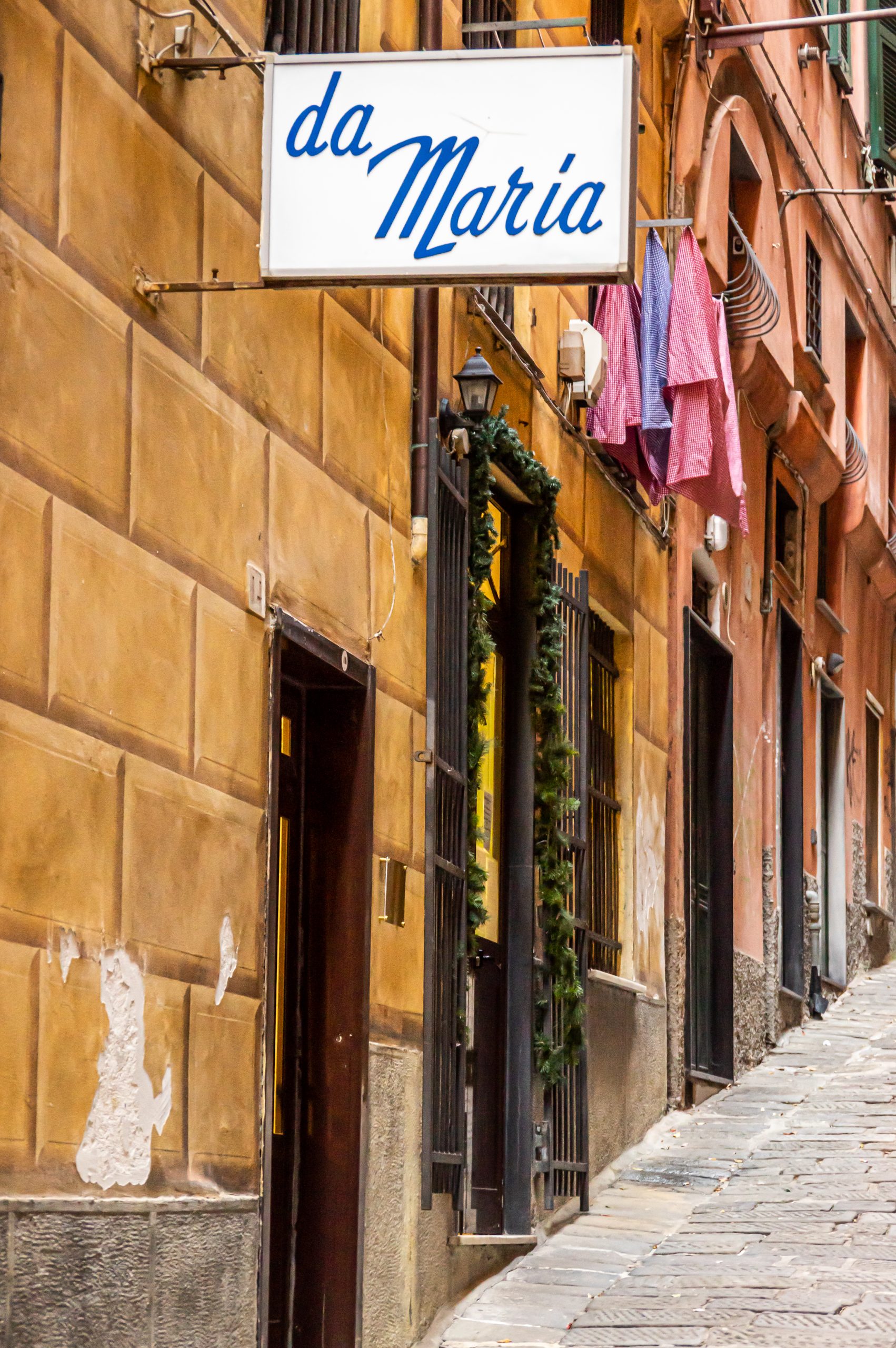
da Maria
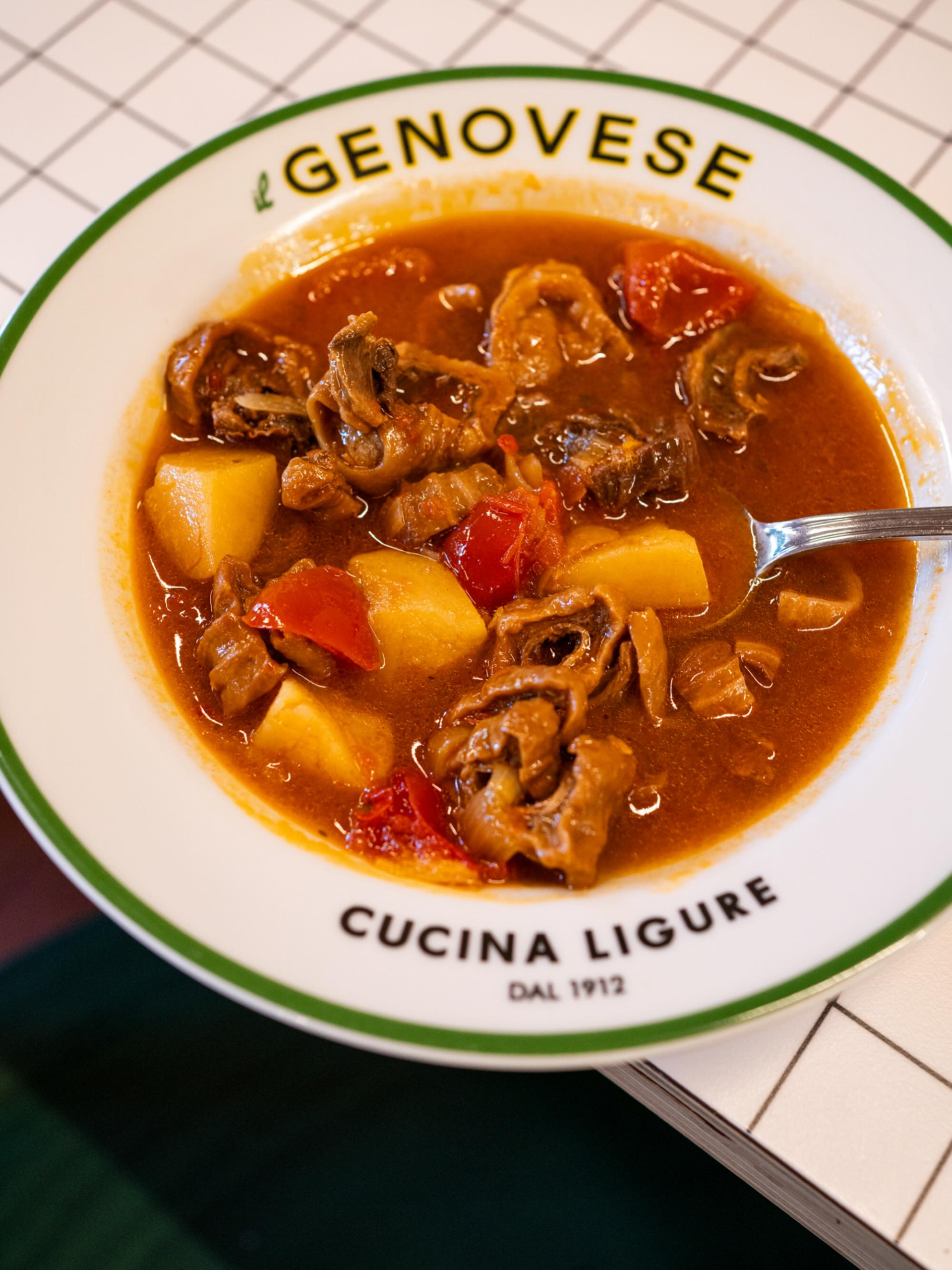
il Genovese
Afternoon: Curated Shopping and Regenerating Pauses
Via Garibaldi 12 is a high-impact conceptual space dedicated to contemporary design. Located on the first floor of the sixteenth-century Palazzo Lomellino, its frescoed rooms collect pieces from historic Made in Italy and international brands like Giobagnara, Venini, Kartell, and Vitra, displayed alongside collectible Taschen books, luxury stationery, and sought-after pop decor items.
Pescetto also warrants a visit. Founded in 1899 on Via di Scurreria, this historic shop is a must for the sober, rigorous elegance so dear to the Genovese. Its interiors preserve an old-world charm, featuring precious period fittings in teak and parchment designed in the 1930s by artist Oscar Saccorotti. Climbing to the top floor reveals the DGP Elite Vintage space, a true room of wonders gathering archival garments preserved in warehouses for decades. Among sartorial treasures, unique hats, and accessories, a legendary collection of vintage swimwear and rare pieces stands out, drawing even major international fashion designers seeking inspiration.
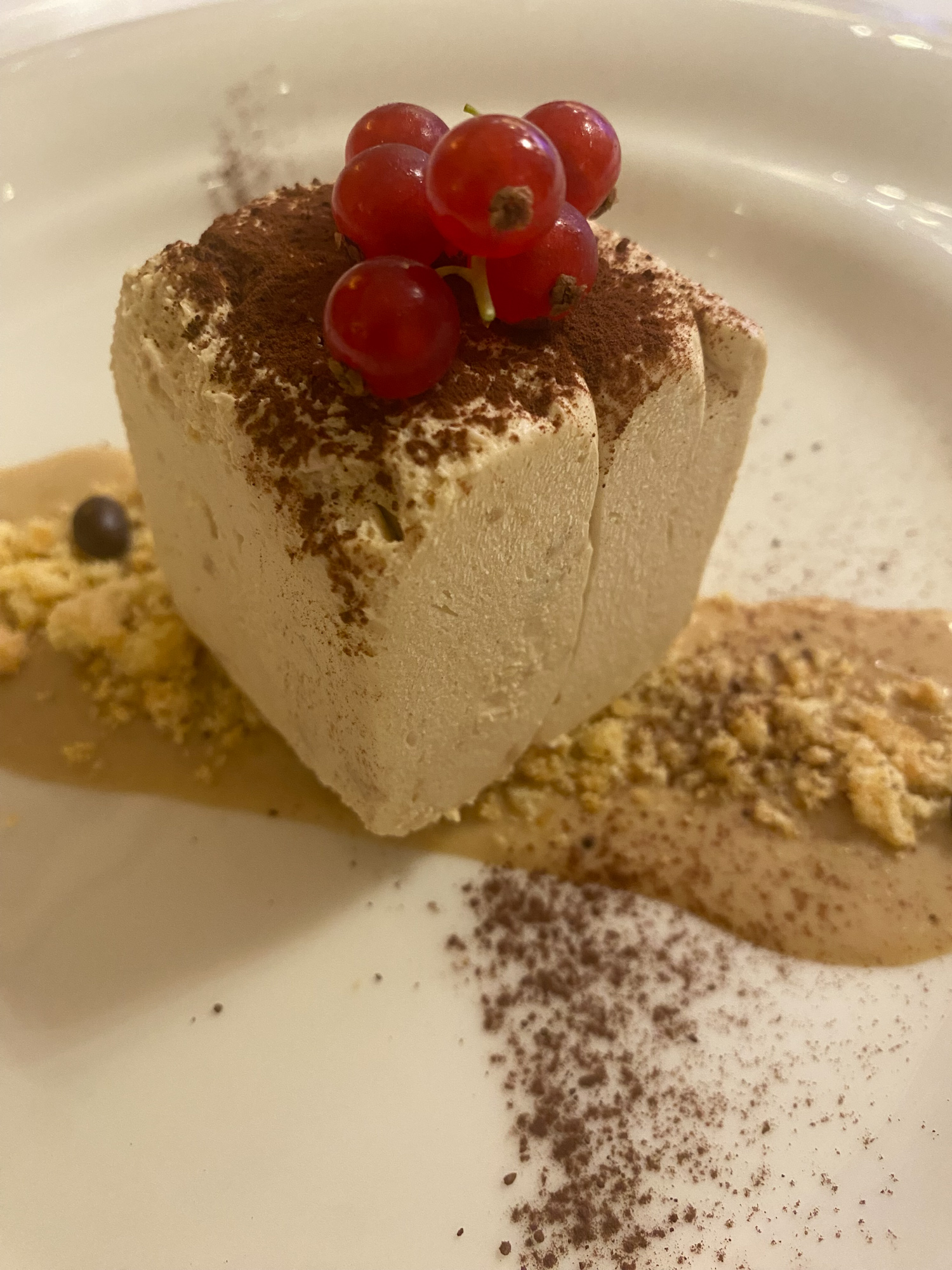
Before the shadows lengthen over the caruggi, a stop is mandatory at the historic Cremeria Buonafede to order the Panera. This is no simple ice cream, but rather the typical Genovese coffee-cream semifreddo. It is a block of pure, old-fashioned creaminess served strictly with a spatula, where the sweetness of fresh cream tempers the bitterness of roasted coffee in a perfect short-circuit of temperatures.
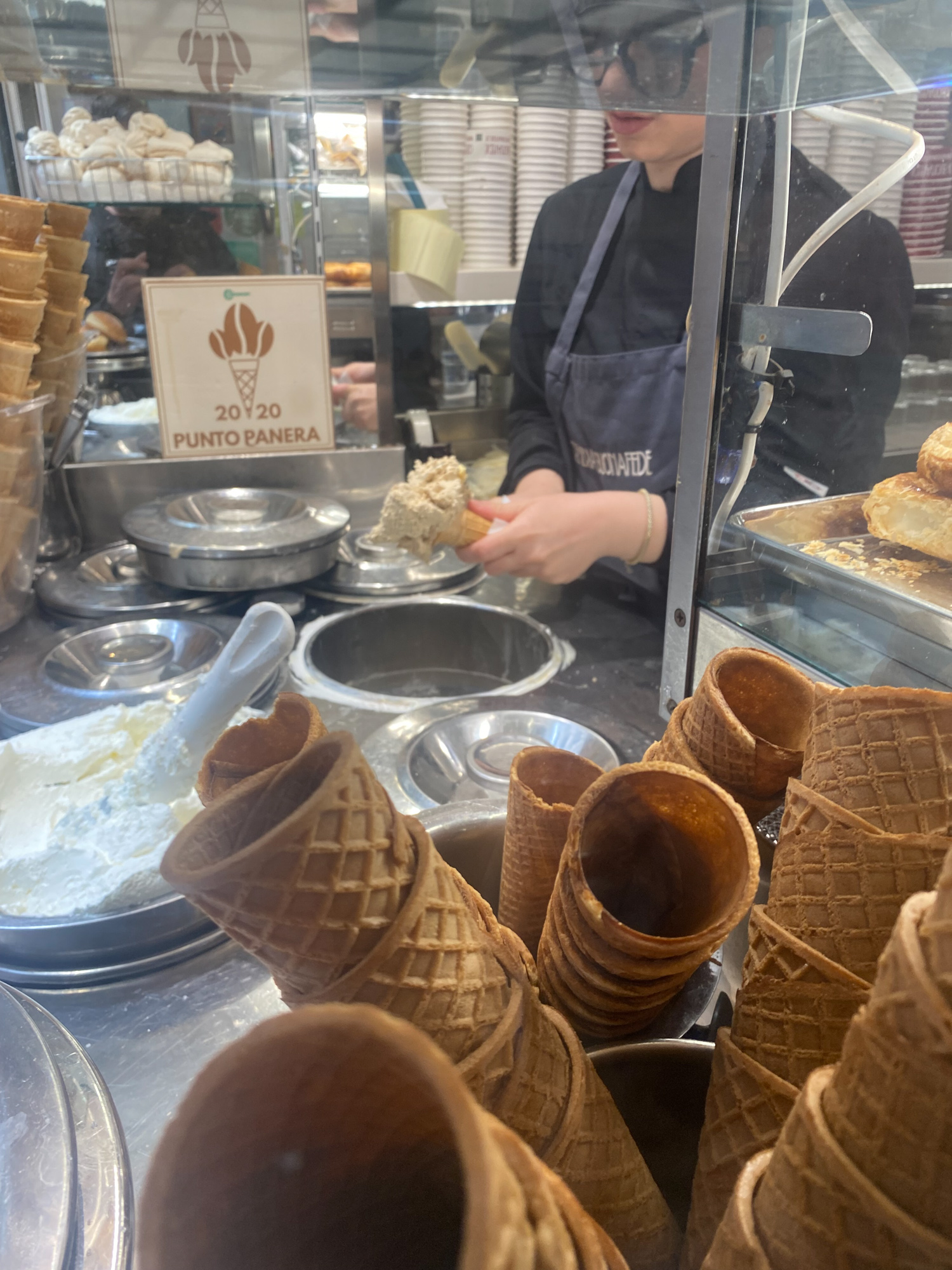
Cremeria Buonafede
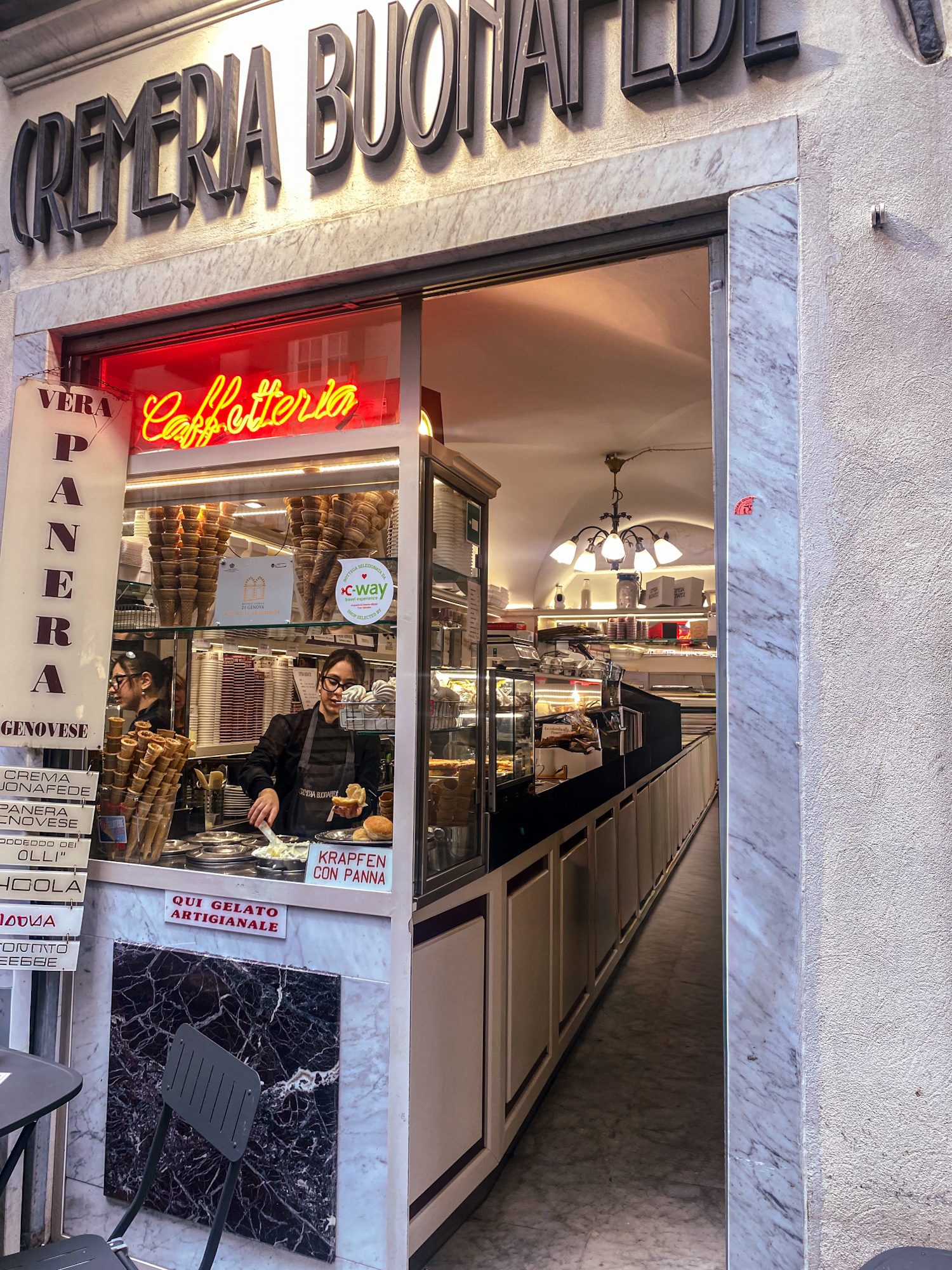
Cremeria Buonafede
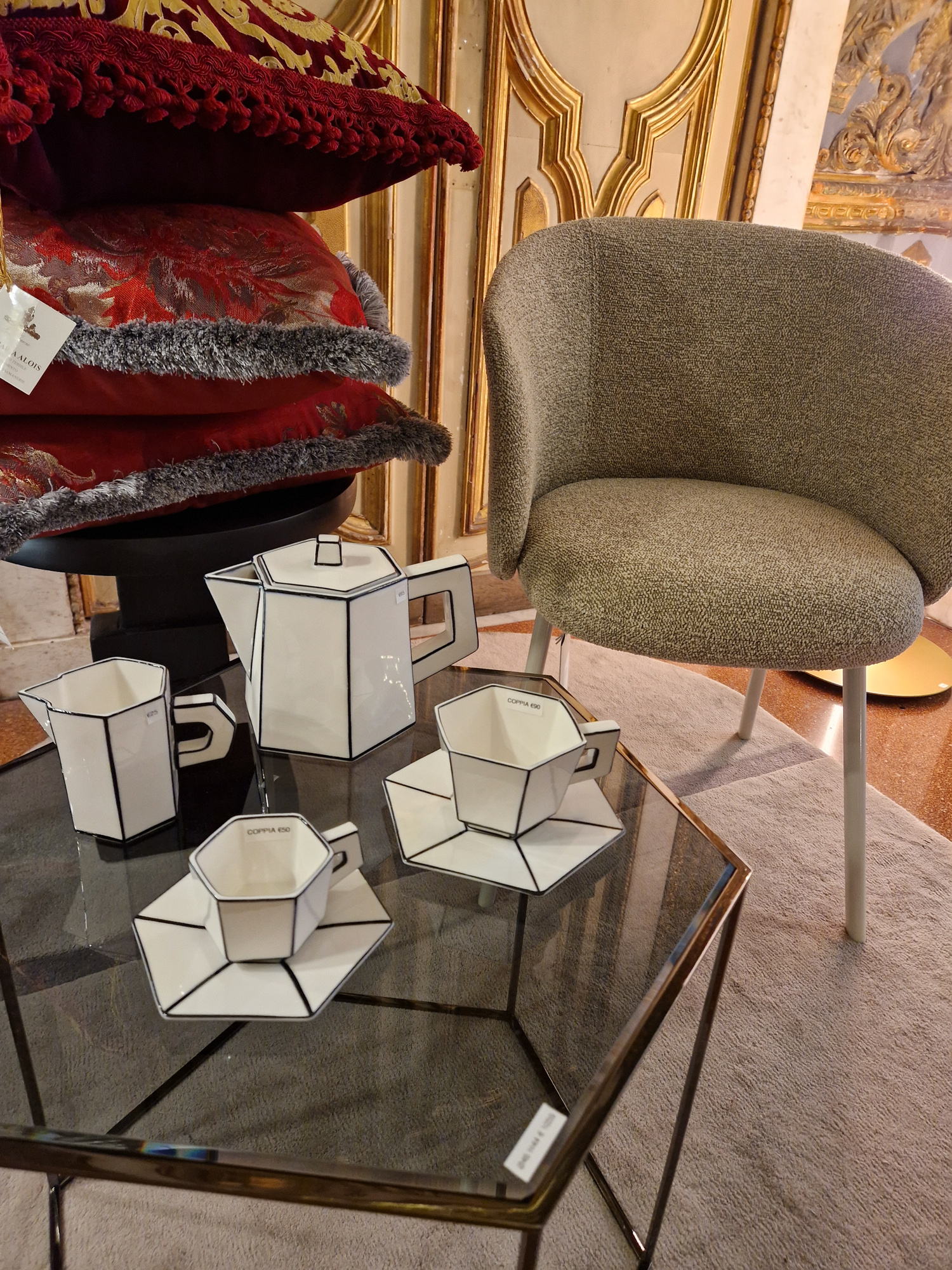
Via Garibaldi 12
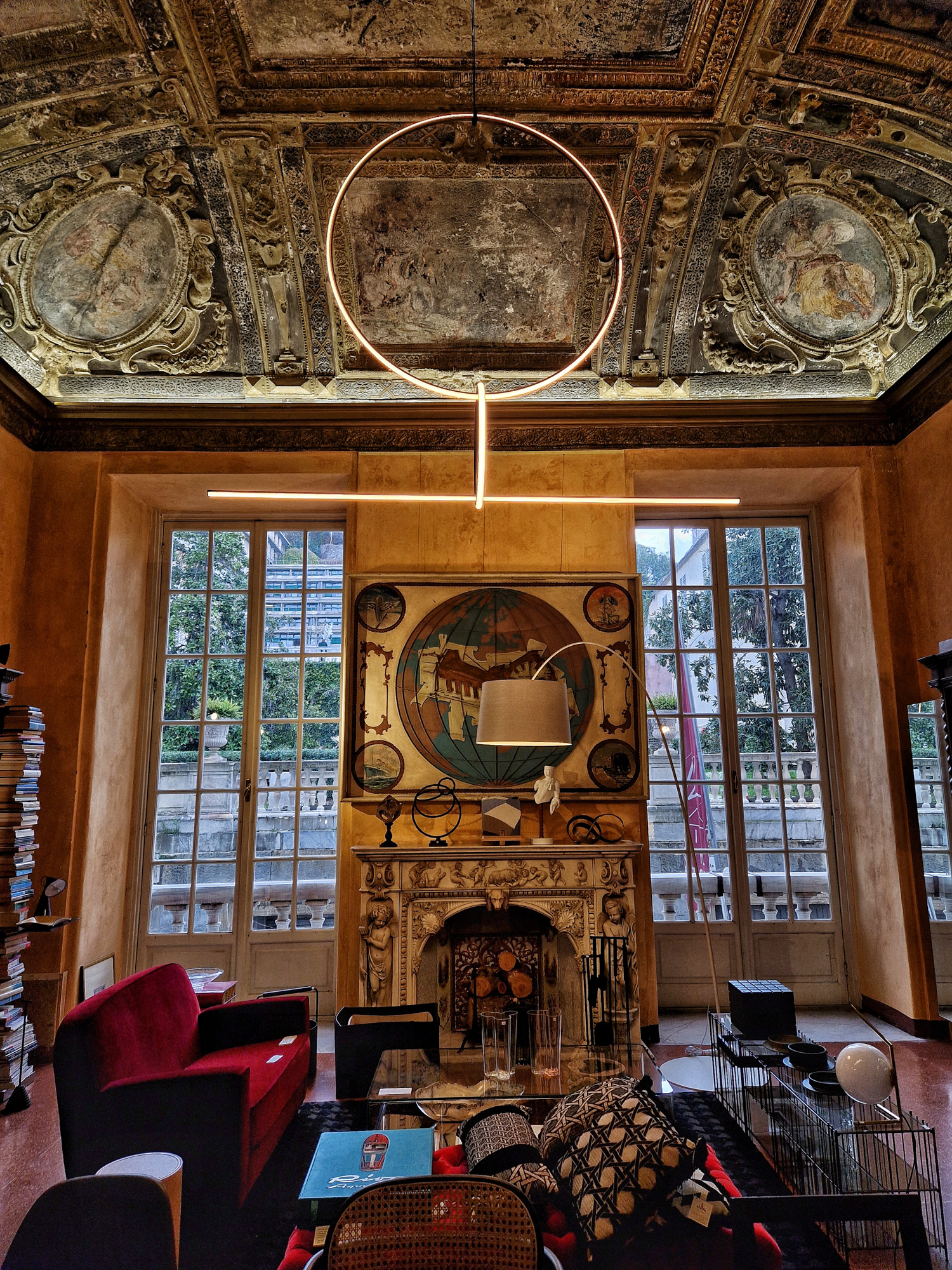
Via Garibaldi 12
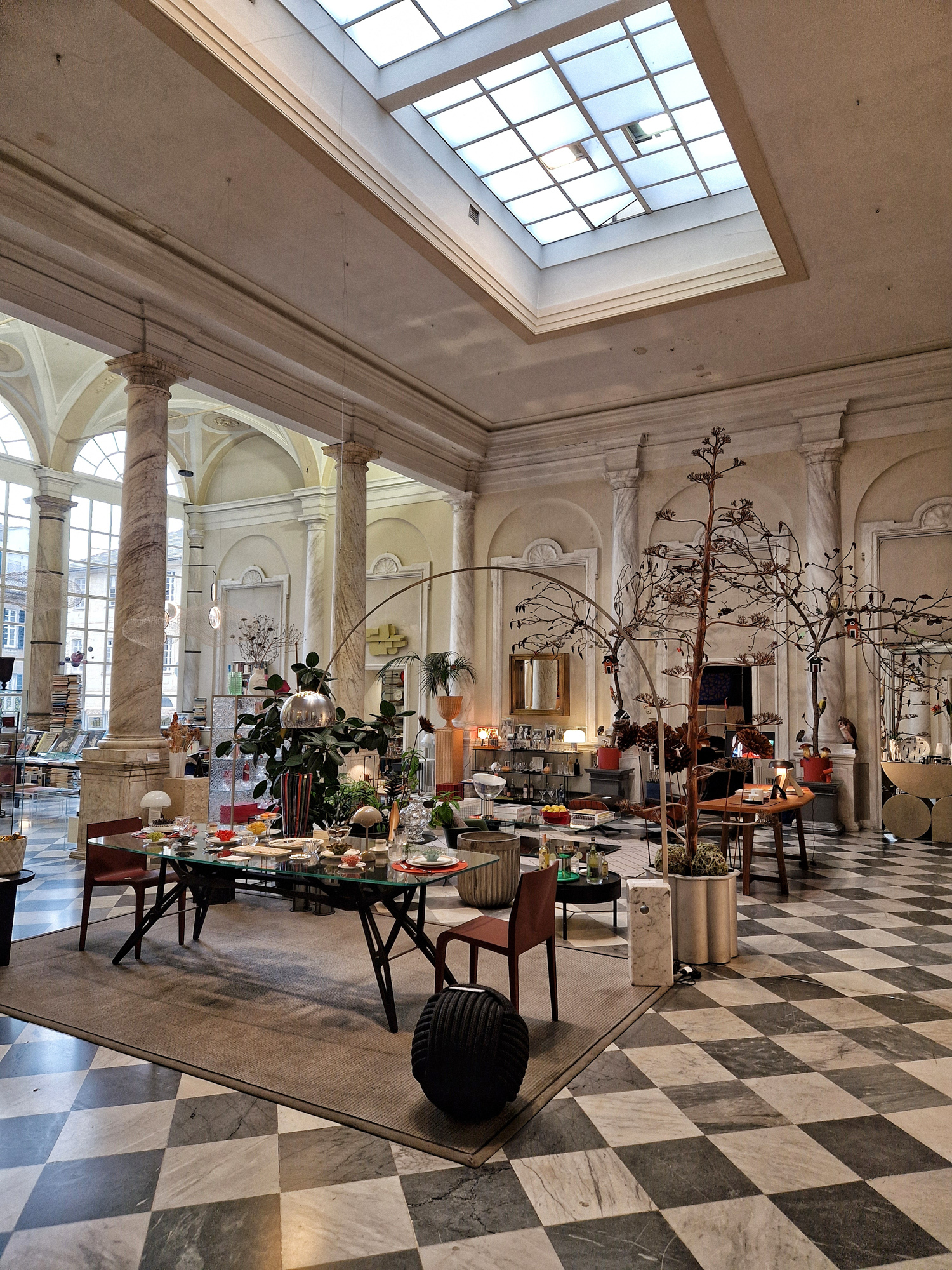
Via Garibaldi 12
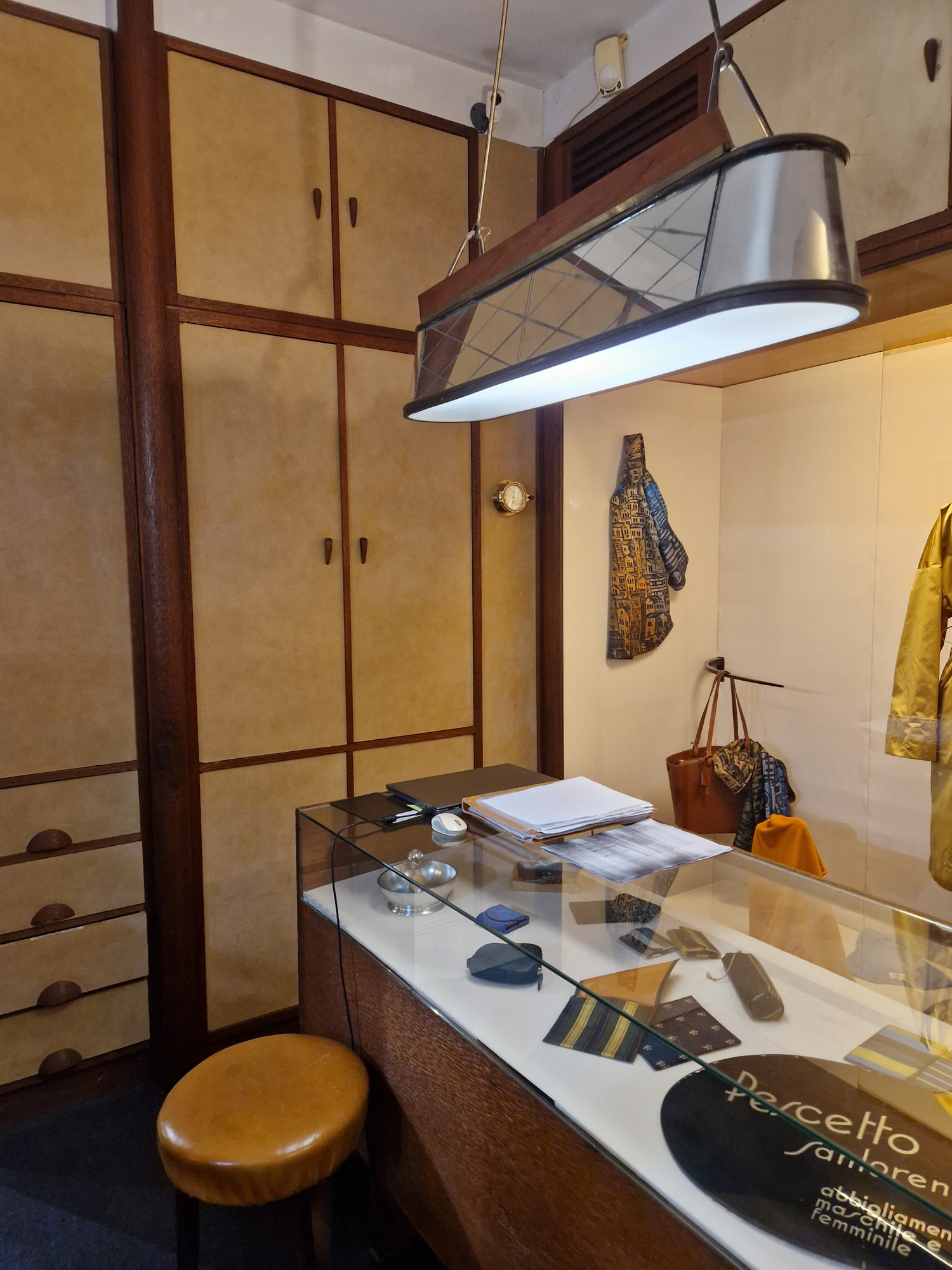
Pescetto
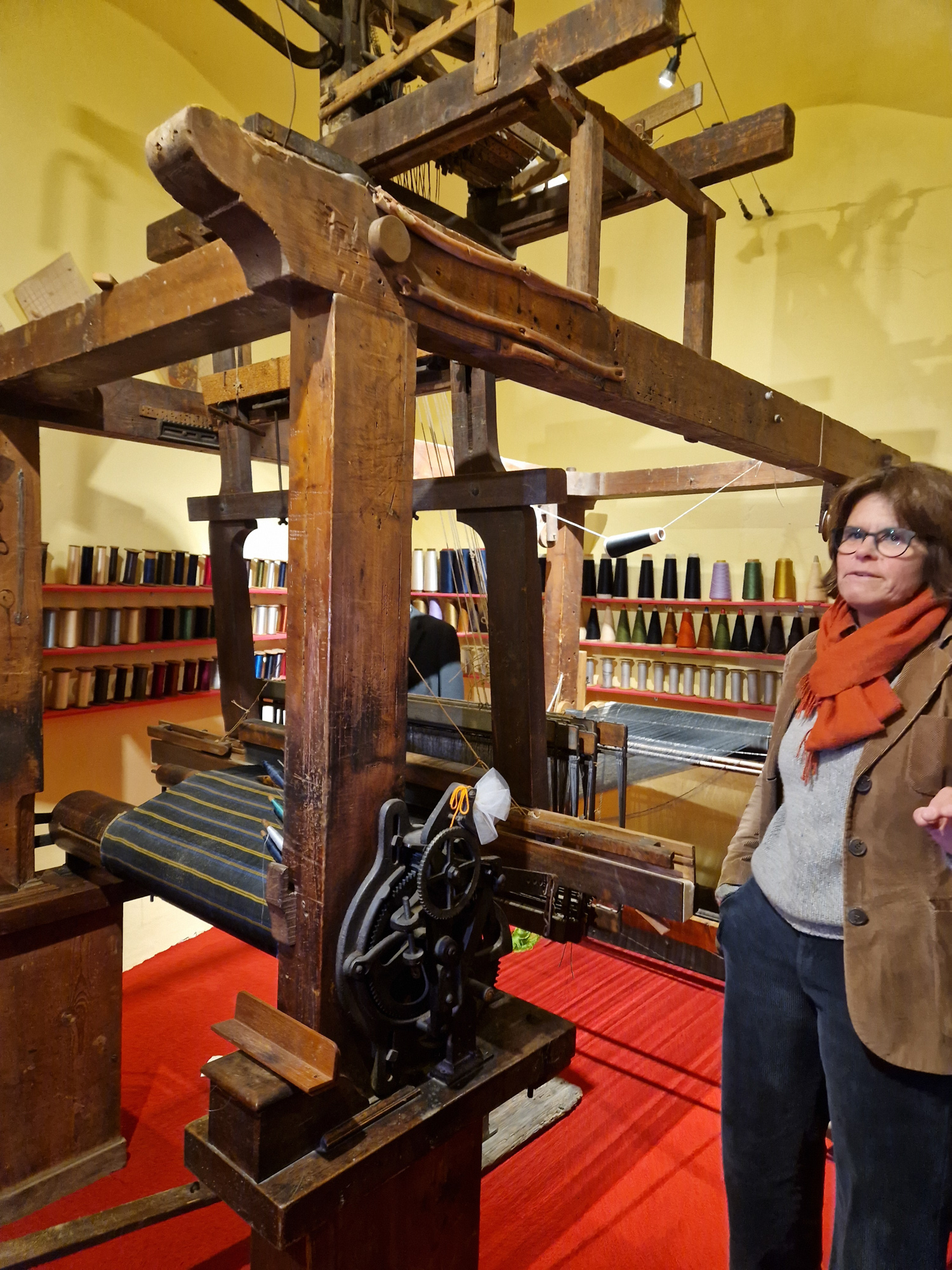
Pescetto
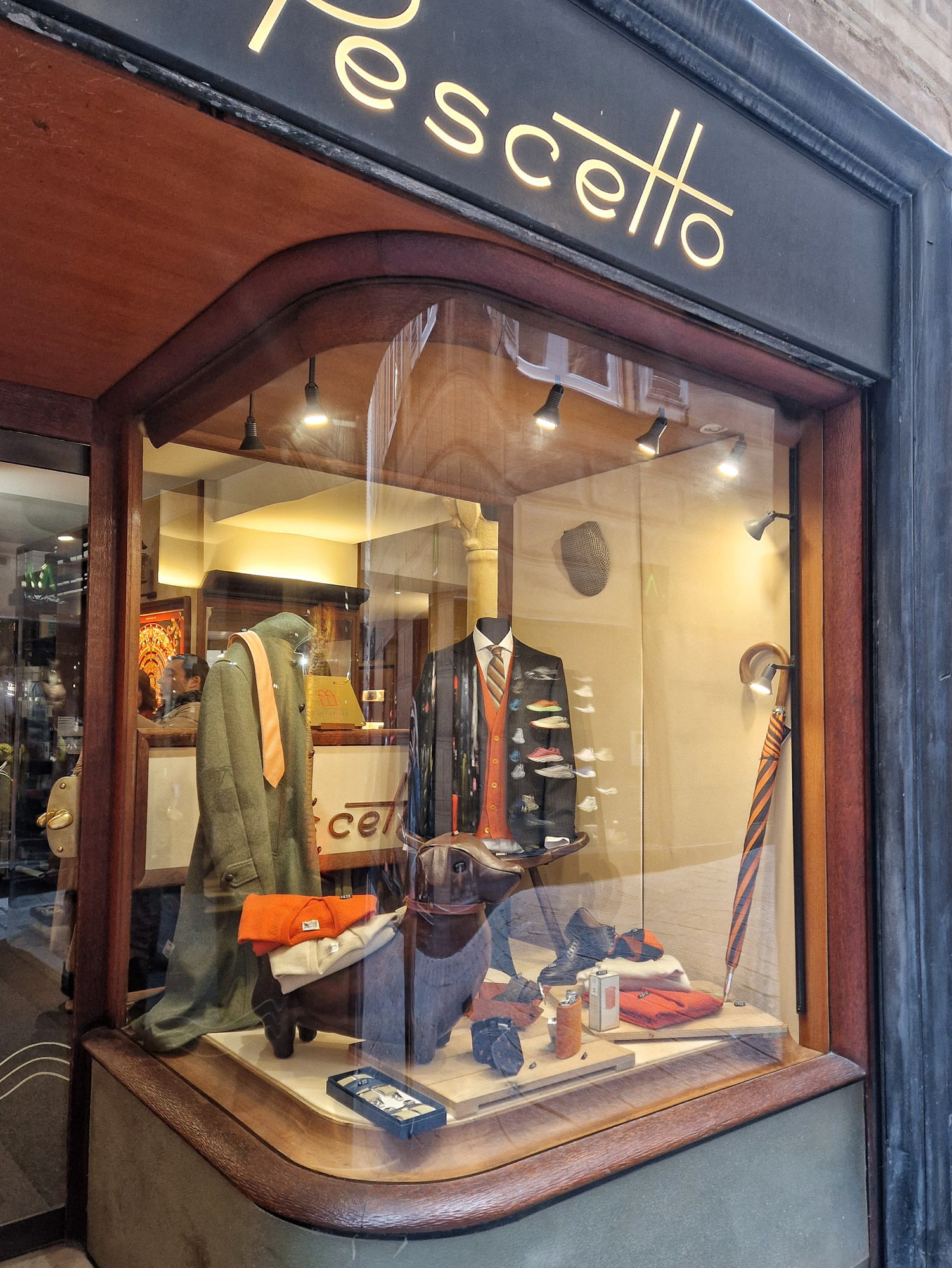
Pescetto
Dinner: Analytical Cuisine and Modern Spaces
The most fashionable avant-garde finds a home at Etra, a project focused exclusively on evening service. The restaurant unfolds inside a contemporary art gallery with theatrical lighting, where directional spotlights illuminate the tables and the artwork on the walls. Chef Davide Cannavino’s culinary line is bold and marine, featuring dishes like dry-aged red mullet with house-made garum or geometric reinterpretations of offal, capable of dialoguing with the exhibited canvases without yielding to easy commercial rhetoric.
Not far away, the exploration of signature cuisine continues at Cucina di Sintesi, which is open for dinner, with lunch limited strictly to Fridays and Saturdays. The philosophy of the venue is encapsulated in its name, offering a minimalist, almost monastic environment. The dishes are graphic compositions with an extremely high concentration of flavor, such as cold spaghetti with an extraction of Ligurian herbs and raw langoustines, or pigeon crafted around the total purity of its meat—a clean, conceptual, and dry style of cooking that reduces raw ingredients to the bare essentials to extract maximum flavor.
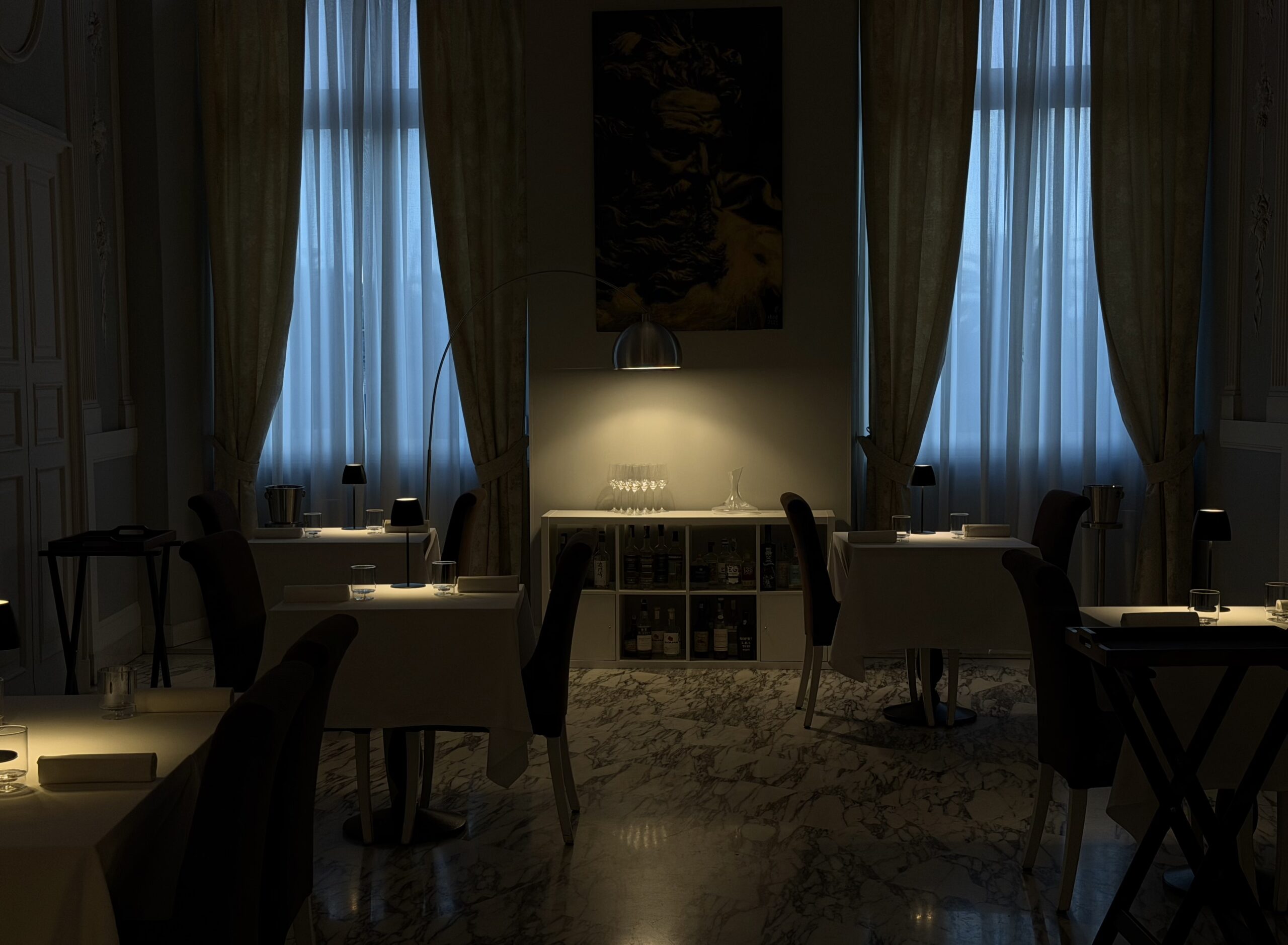
Cucina di Sintesi
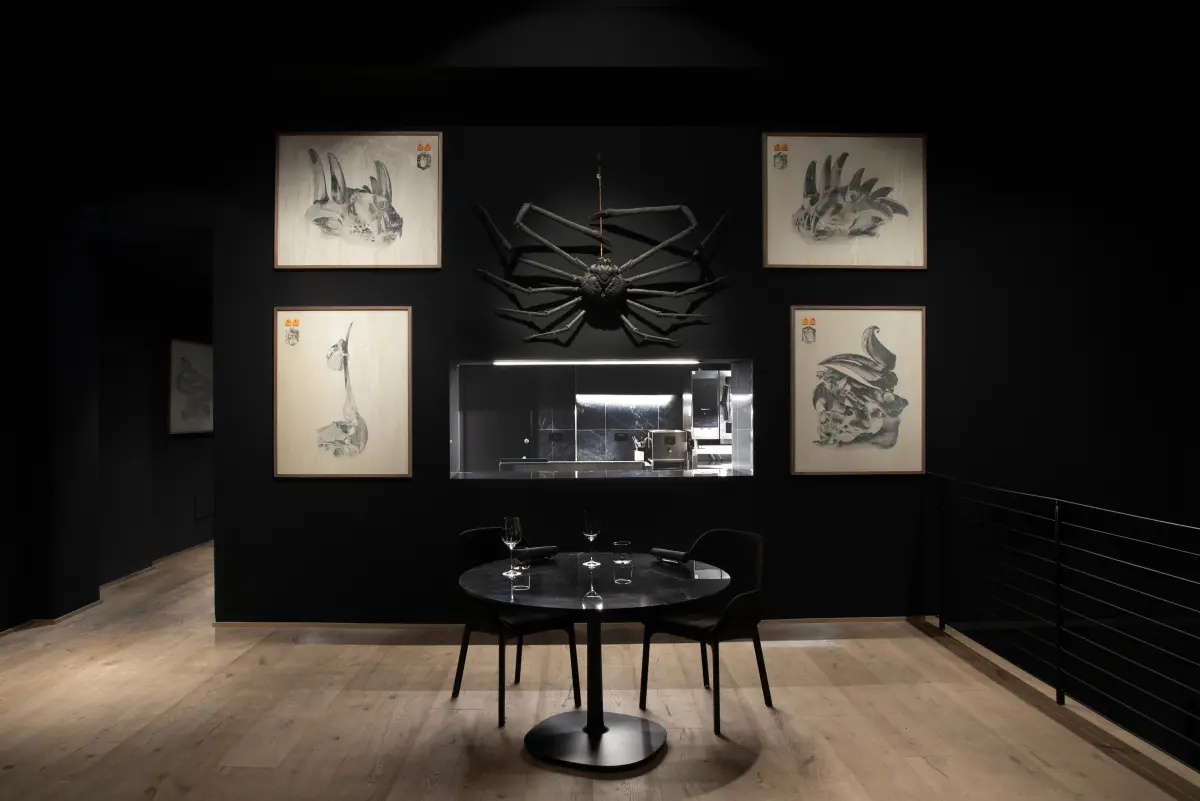
Etra
Late Night: From Luxury to Secret Bars
The day concludes by exploring a mixology scene that oscillates between luxury and the discreet charm of secret bars. Hosted within the magnificent frescoed salons of Palazzo Imperiale, Les Rouges expresses a striking contrast between the majesty of seventeenth-century ceilings and the modernity of the bar counter. The drink list develops around intelligent twists on great classics, such as their famous historic Negronis revisited with infusions of local herbs, to be sipped under the gaze of painted mythological deities.
For those who prefer the intimate codes of American speakeasies, Malkovich is a secret bar with an entrance hidden behind the backroom of an unsuspecting venue. It offers a dim, Prohibition-era atmosphere, background jazz music, and highly curated blends. Here, cocktails are served in eccentric vintage glassware, featuring unusual pairings that utilize Ligurian wine reductions and artisanal bitters.
Completing the map of the Genovese night is Locksmith, a secret bar with an equally enveloping atmosphere reminiscent of an old-school private club. It offers a bespoke service where bartenders do not merely present a menu; instead, they dialogue with the guest to build a custom drink based on rare spirits and precise drops of botanical essences, treating mixology as an exact science.
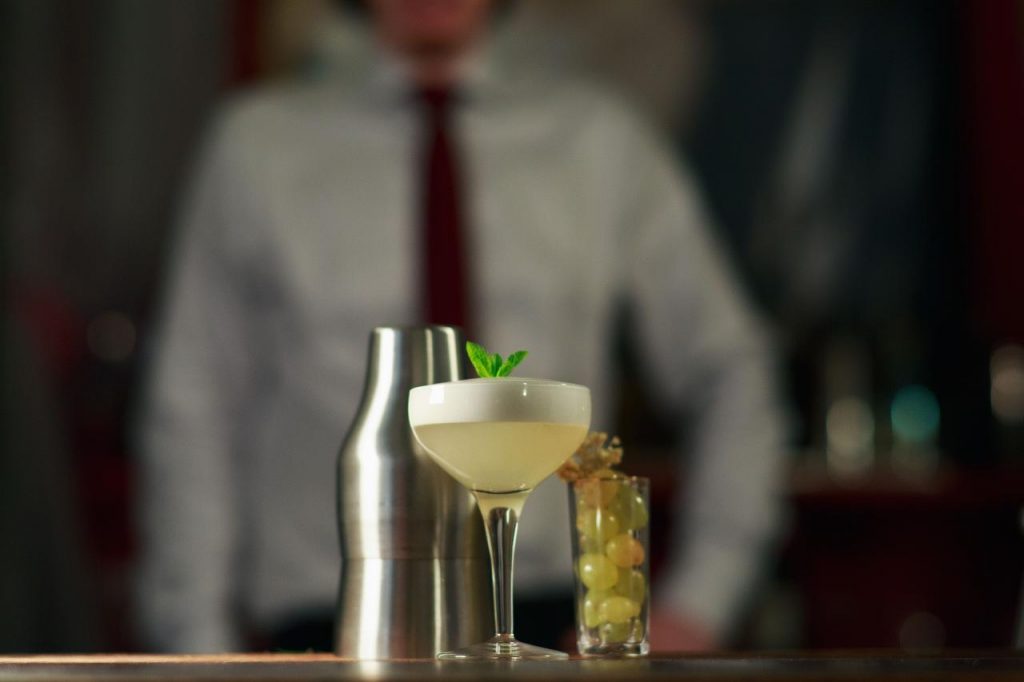
Les Rouges
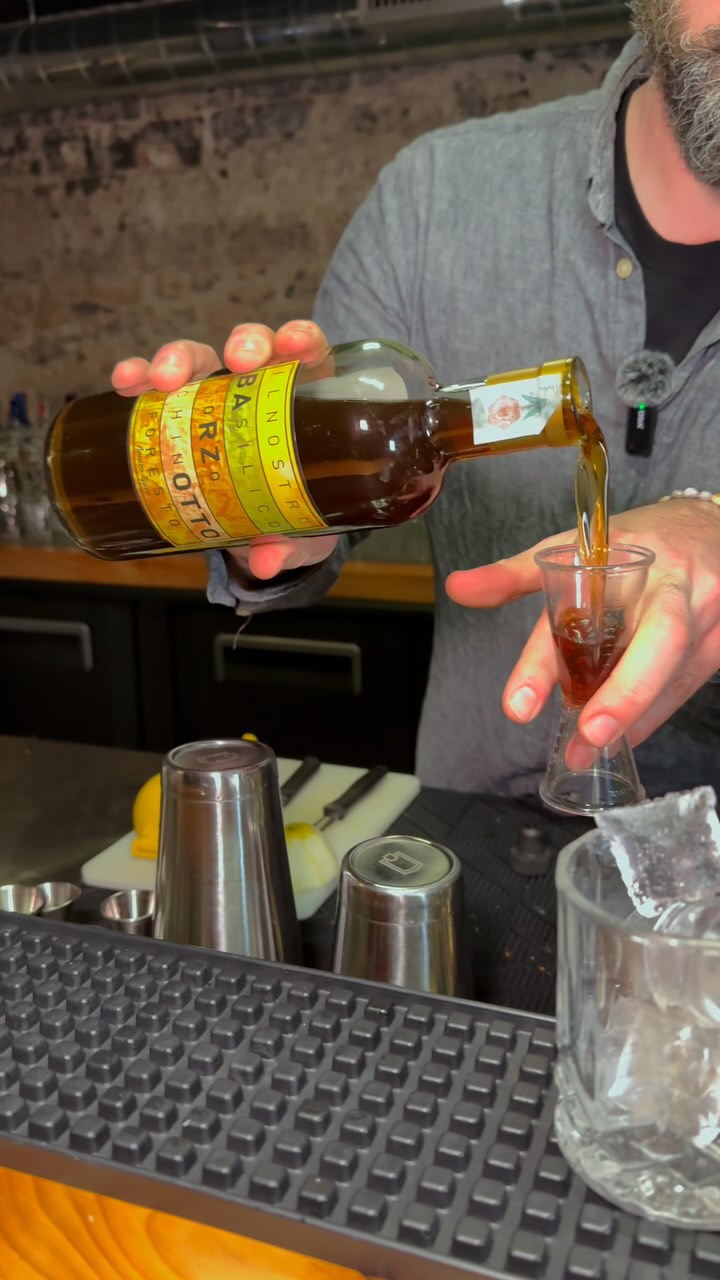
Locksmith
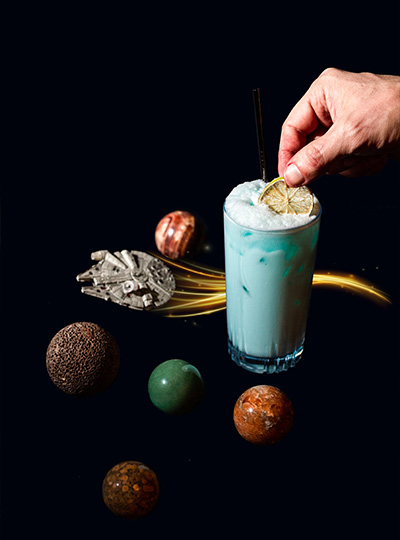
Malkovich