
Pulejo Roma: The Aesthetics of Whispered Luxury and Davide Puleio’s Philological Research

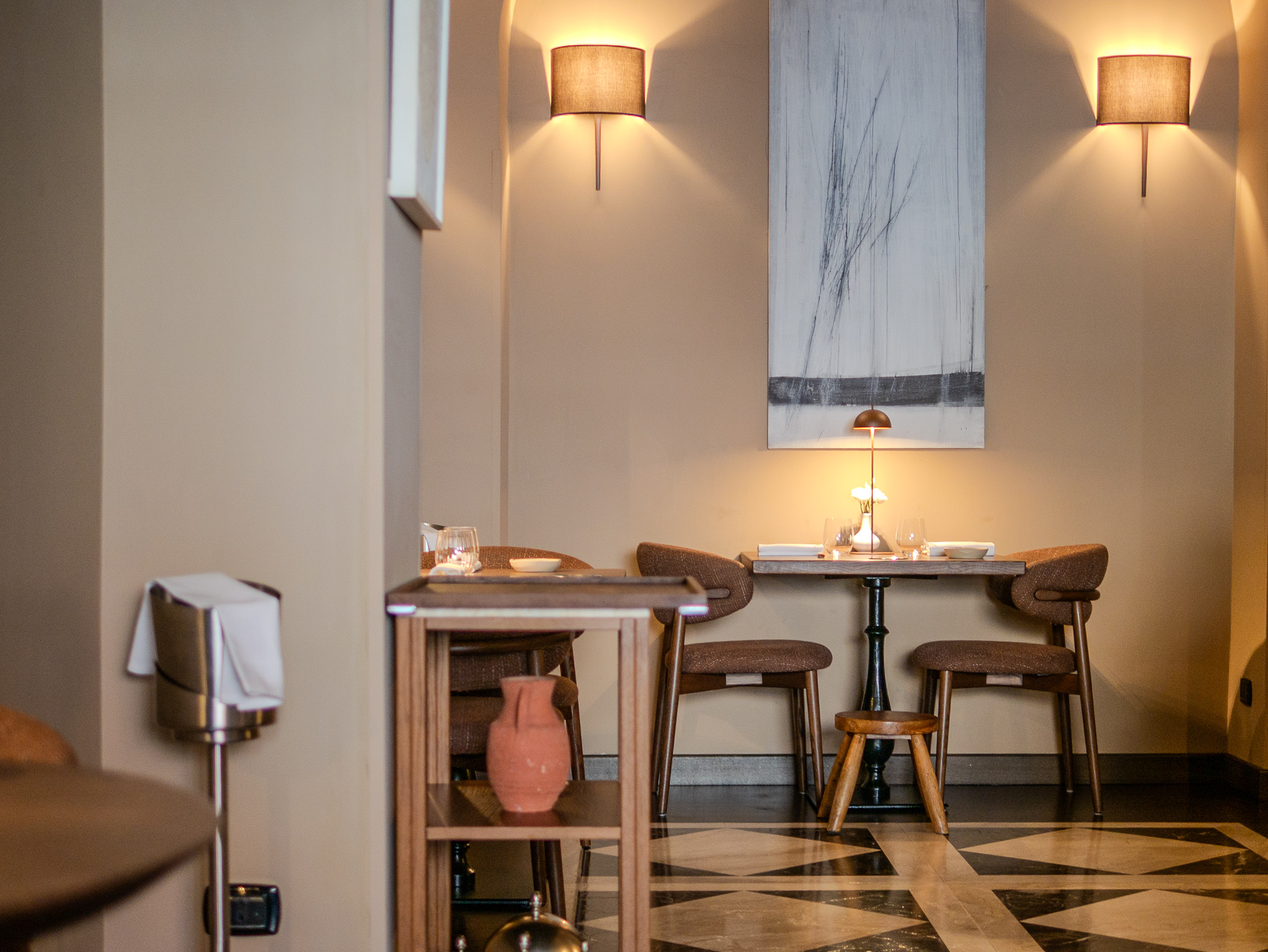
There is an idea of luxury that spreads like a pervasive sense of well-being rather than glittering with excess. Restaurant Pulejo, in the Prati district—a short walk from the Vatican, yet blissfully removed from the frantic pulse of tourist crowds—was born and thrives within this concept. Its interiors, recently fully renovated, radiate warmth in their essentialism: spaces that serve as a declaration of refined simplicity, a manifesto of what is nowadays described as quiet luxury. A redefined luxury that whispers instead of proclaiming, welcoming rather than displaying. The space itself becomes the protagonist in how it embraces guests and makes them feel—a chill, almost zen haven in which to seek refuge from the noise outside.
At the center of this vision is Davide Puleio, born in Rome in 1989, a chef with a solid and well-crafted path. After graduating from culinary school, his first major experience was in the brigade of Il Convivio by Angelo Troiani, where he learned what handling high gastronomy truly means. The year spent at Noma in Copenhagen was undoubtedly his toughest training ground, followed by a move to London at Agnar Sverrisson’s Texture to absorb the energy of a multifaceted, cosmopolitan metropolis. He then returned to Rome at Pipero as Luciano Monosilio’s sous chef.
However, one of the decisive milestones of his professional establishment was L’Alchimia in Milan, where he earned a Michelin star in an urban context far removed—in sensitivity and cultural coordinates—from his Roman roots. This experience enriched him and prepared him for a thoughtful return to the capital. The opening of Pulejo marks this arrival, crowned in 2022 by the re-confirmation of the star just seven months after opening, sealing a journey that is both rigorous and genuinely ambitious.
The resulting cuisine bridges memory and technique, vision and substance, all aimed at maximizing guest comfort. Playfulness is present, but never as self-indulgence or sterile display; whenever a playful note emerges, it is reassuring. Between cultured nods to history and bolder contemporary digressions, Puleio dresses fine dining in a genial informality that makes it an immediate pleasure.
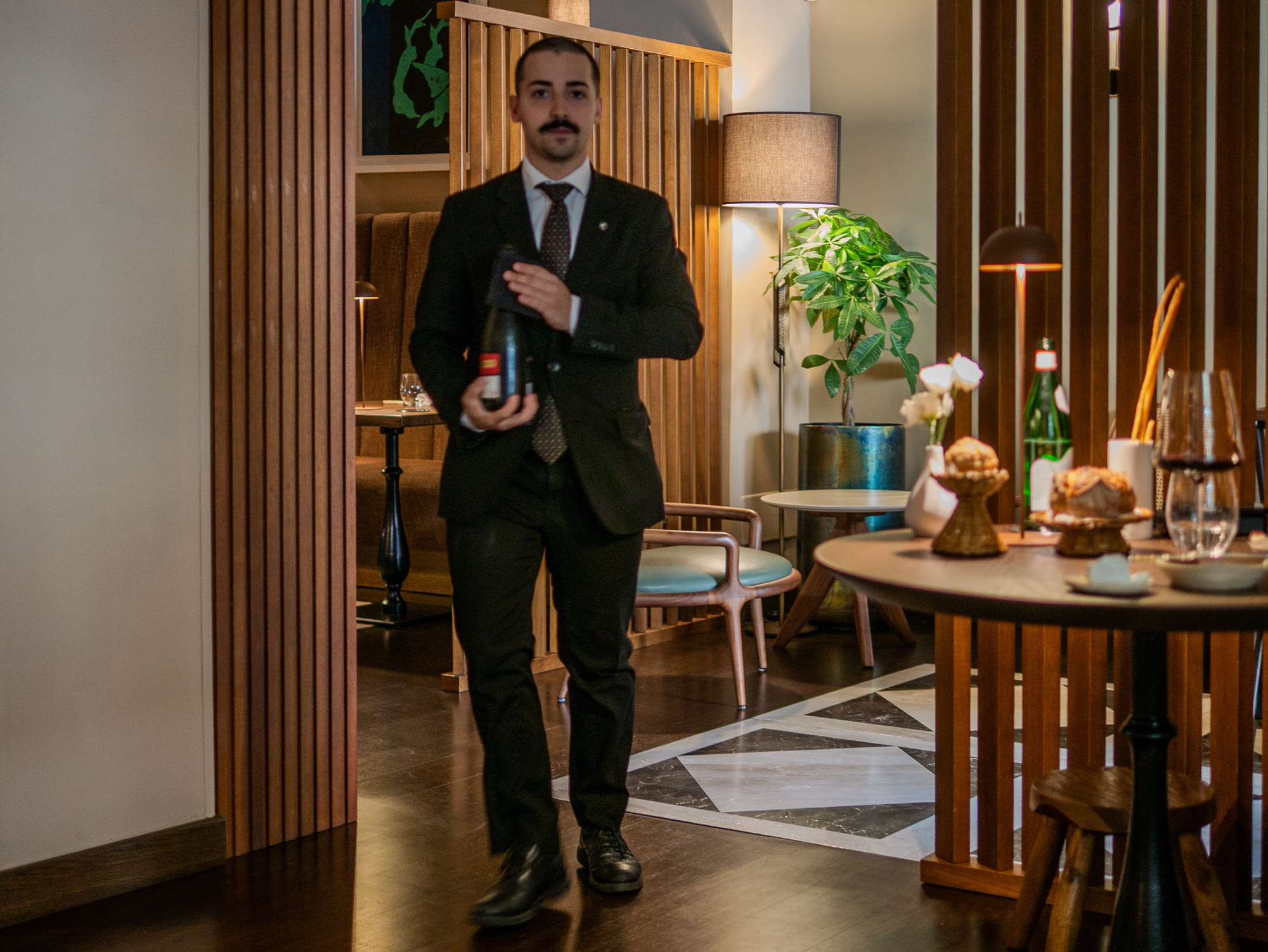
In the dining room, hospitality is led with empathy and care by Eugenio Galli, while the cellar is curated by the very young sommelier Gianluca Tronci—twenty-nine years old, professionally raised in Trastevere’s venues before moving to Pipero and now settled at Pulejo, where he manages the wine selection with sensitivity and expertise.
October 2024 also marked a new chapter with the opening of Isotta | Trattoria Cortese, a parallel project conceived by Davide Puleio alongside Matteo D’Anzi. Located in Rome's Torrevecchia neighborhood, the core idea is the reconfiguration of local traditions while leaving their indulgent appeal intact.
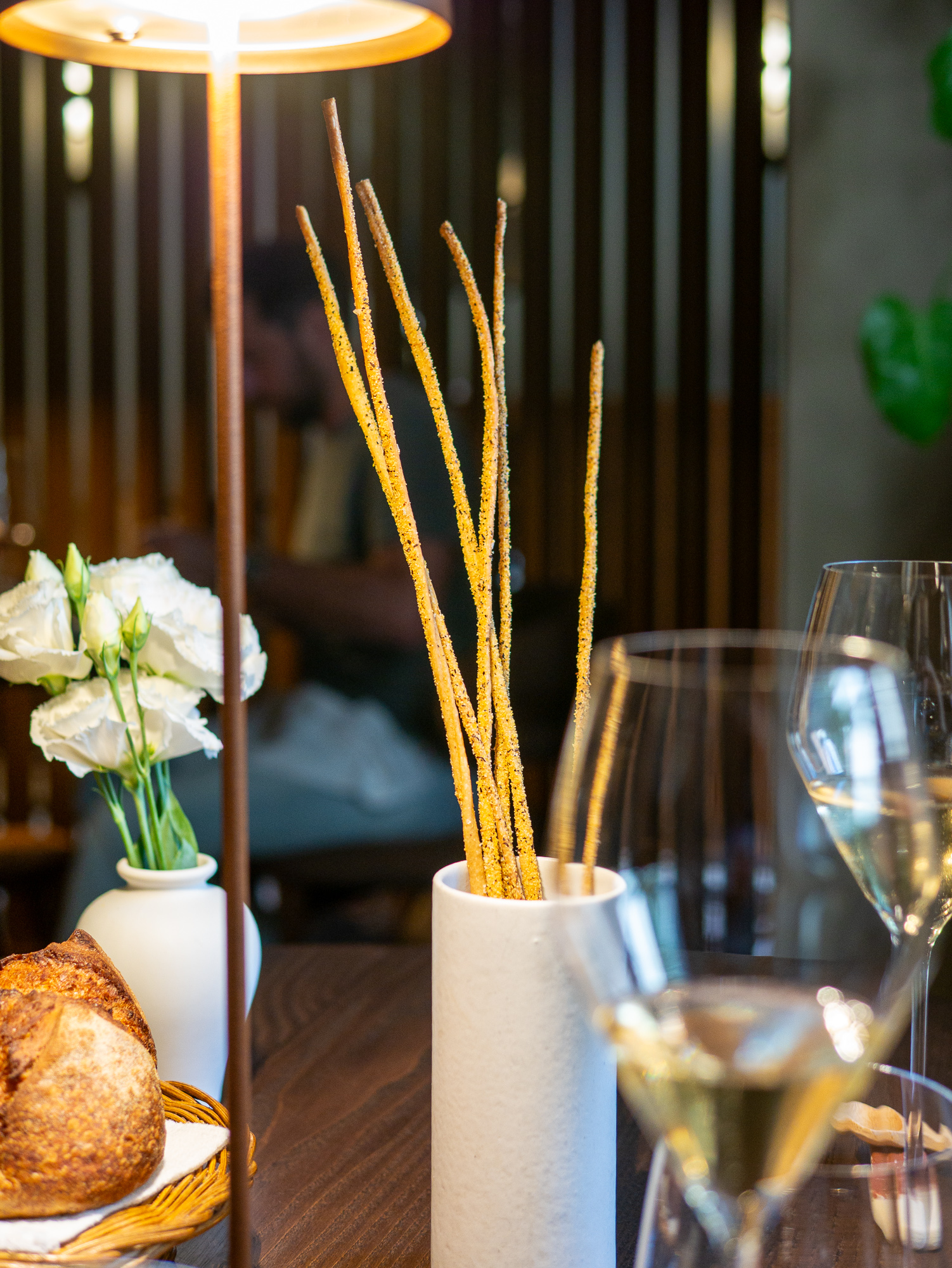
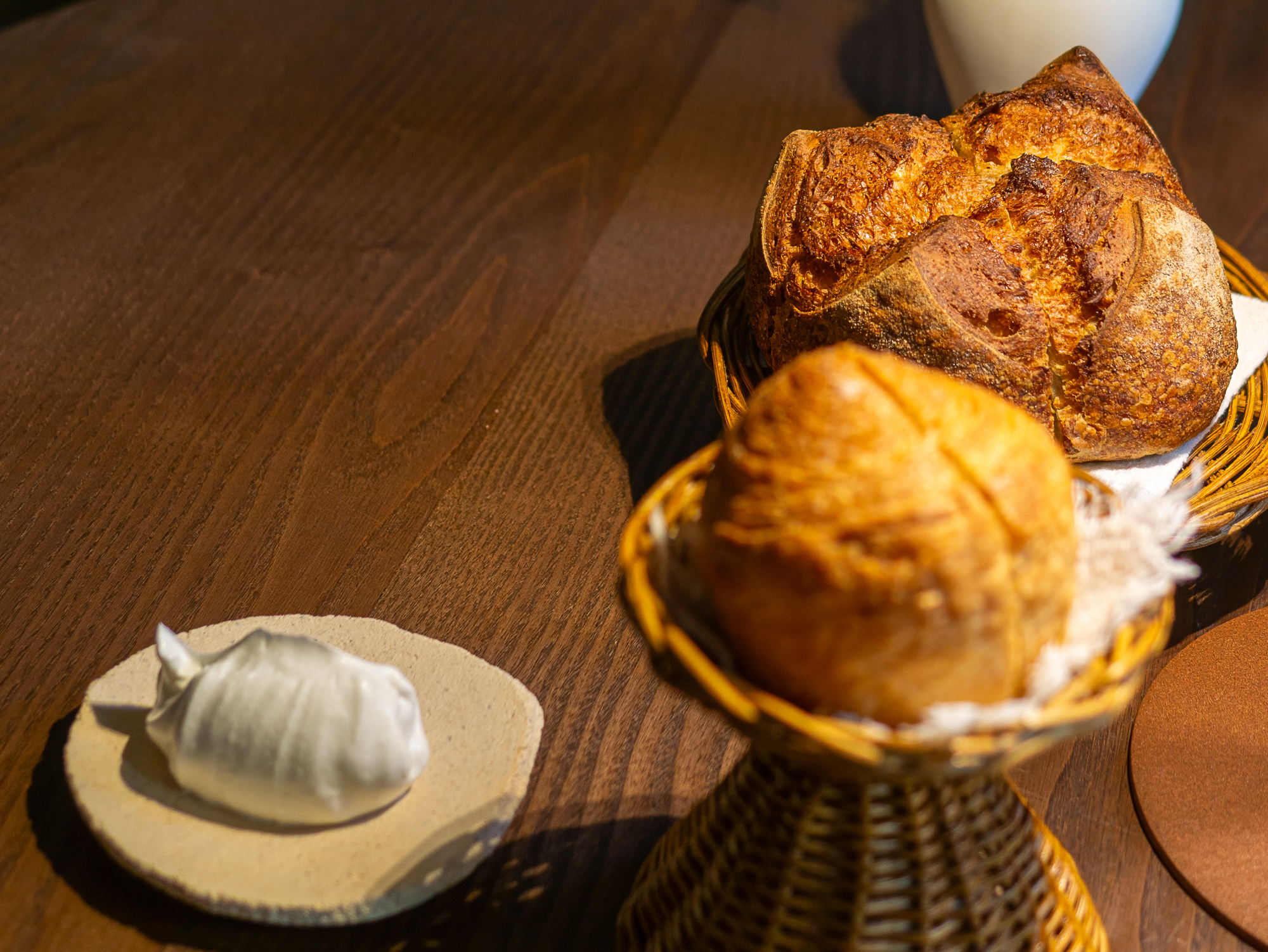
Bread opens the meal: fragrant leaves infused with butter, rosemary, and pepper; olive oil and corn breadsticks; and a semi-whole wheat loaf forming a concise primer on leavening, completed by a salted butter from Piedmontese Alpine Brown cows.
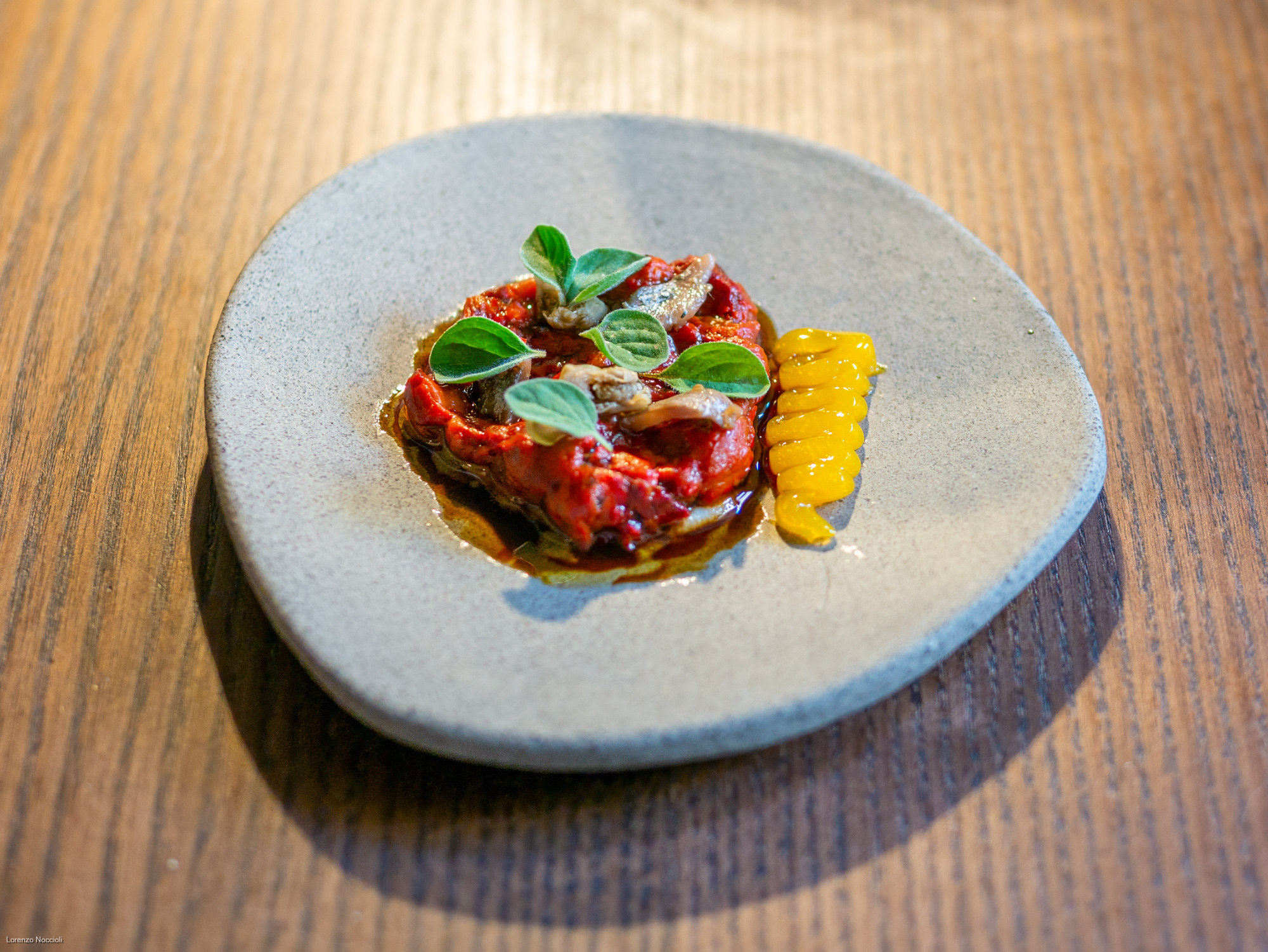
The parade of bite-sized appetizers that follow traces the chef’s professional routes across Milan, Rome, and Asia. The “pepper as beef,” aged and treated for about a week, takes on a fleshy, almost beef tartare-like texture. Oregano, capers, Cetara anchovies, and a Parmigiano sauce build a multifaceted flavor profile around it, while a cured egg yolk binds and rounds everything off. The wild rocket focaccetta served on the side restores an almost homey dimension.
Setting the pace in the glass arrives an Extra Brut Champagne—Piper-Heidsieck’s Cuvée Réserve Essentiel—a non-intrusive sip driven by citrusy freshness intertwined with softer notes of toasted fruit and cream.
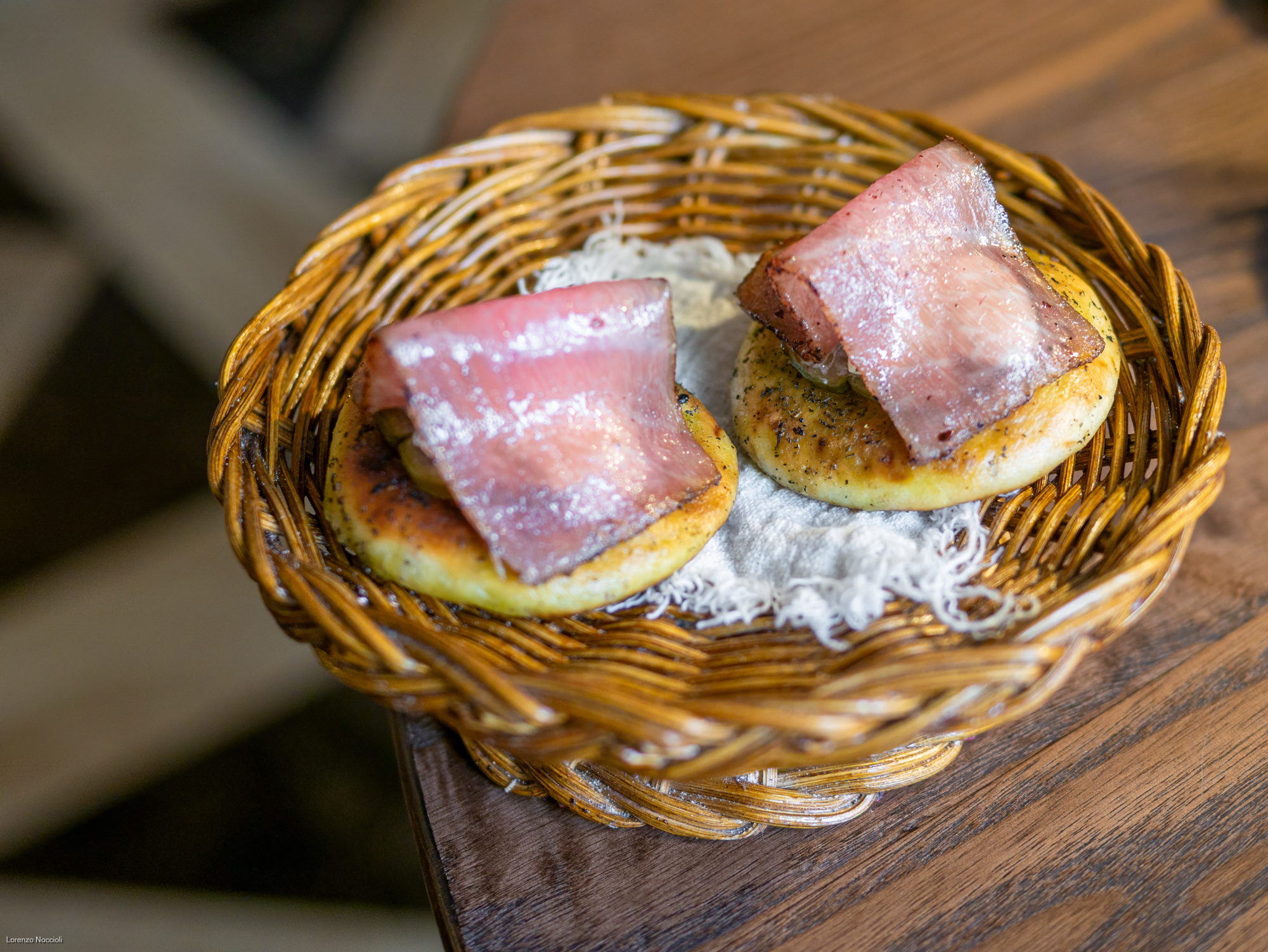
The Manakish, a traditional Lebanese potato focaccia grilled and scented with za’atar (a Middle Eastern spice blend of thyme, sesame, and sumac), is elevated with yogurt sauce, mustard seeds, and pickled cucumbers. Tuna belly cured in sumac adds buttery richness and an elegant salinity.
Roman heritage emerges in a dual presentation of artichoke: crispy chips alongside a cream obtained from ash-cooking, where Roman field mint refreshes and grounds everything back in territorial classicism.
Spheres of polenta taragna, puffed and filled with buffalo stracchinato cheese and wild fennel, play on the contrast between a golden crust and a lactic center, coaxing you into another bite.
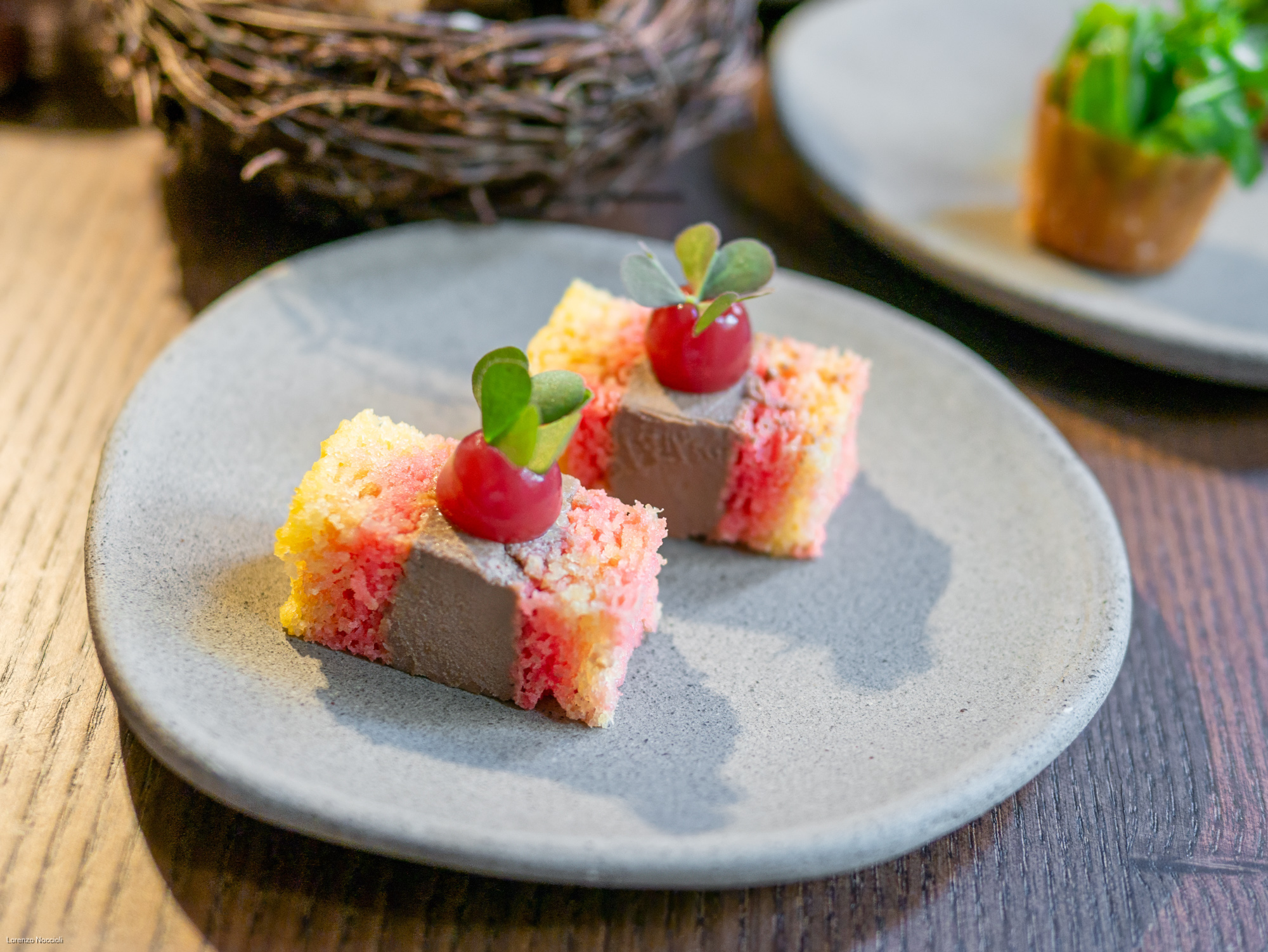
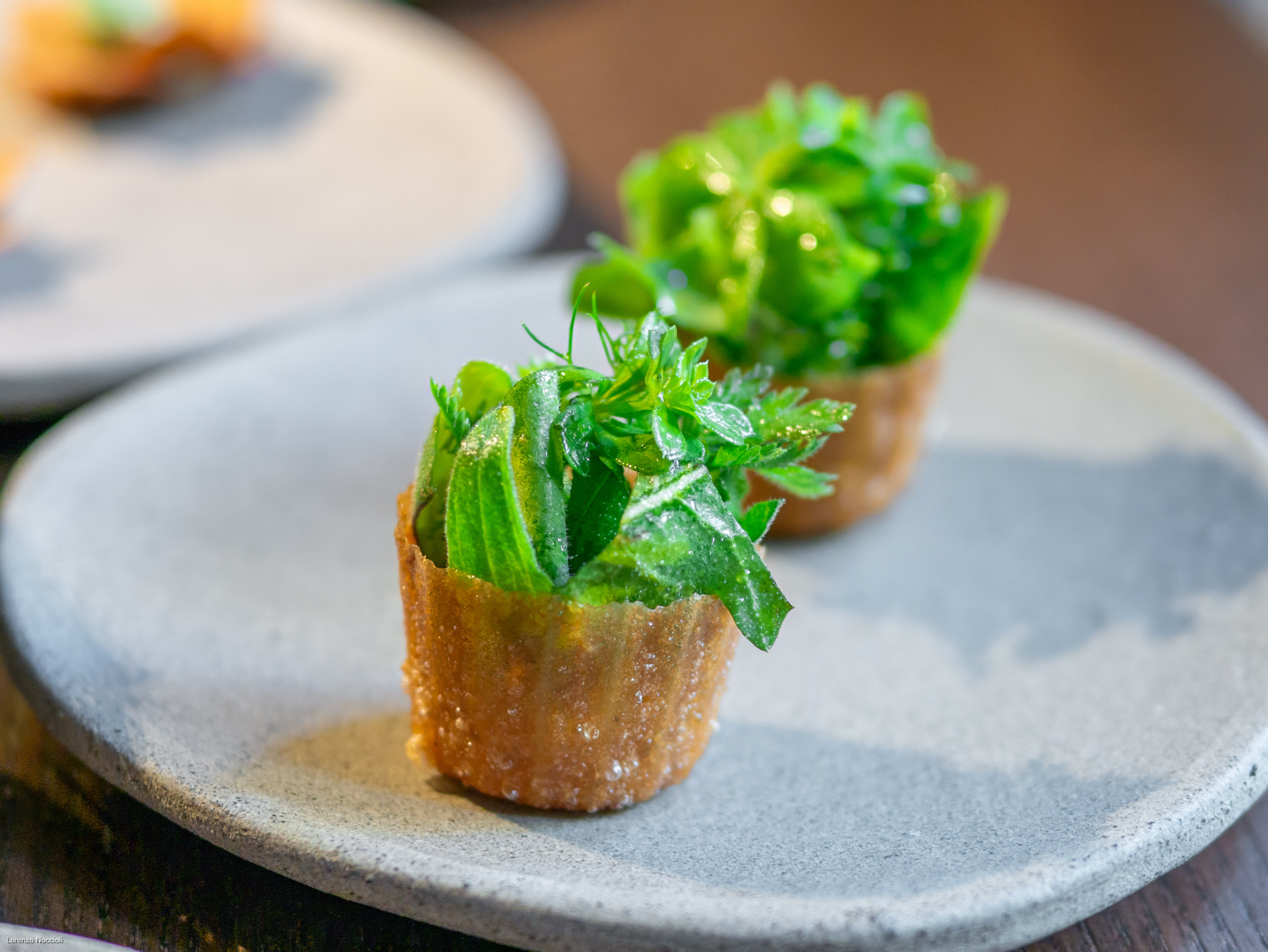
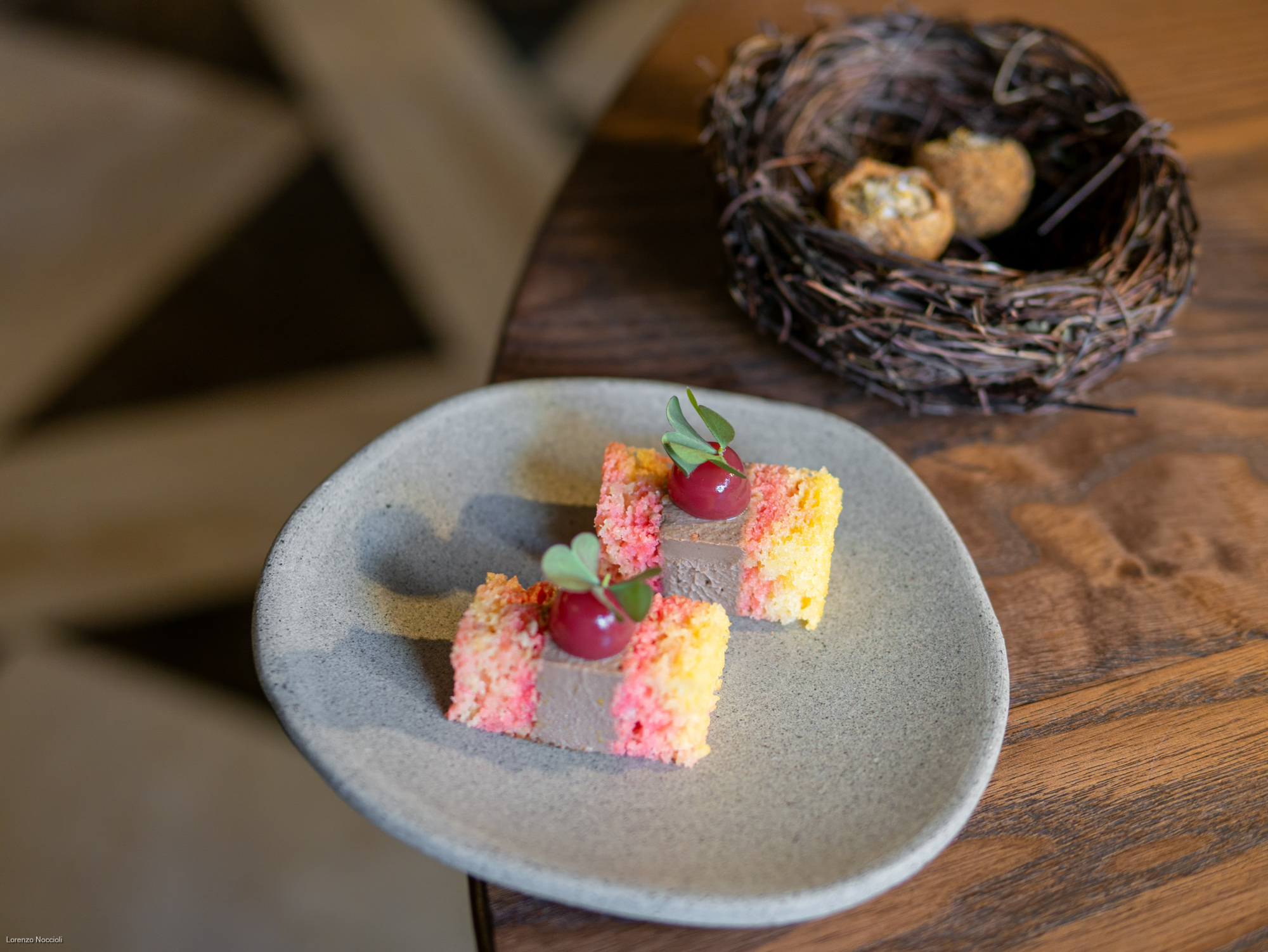
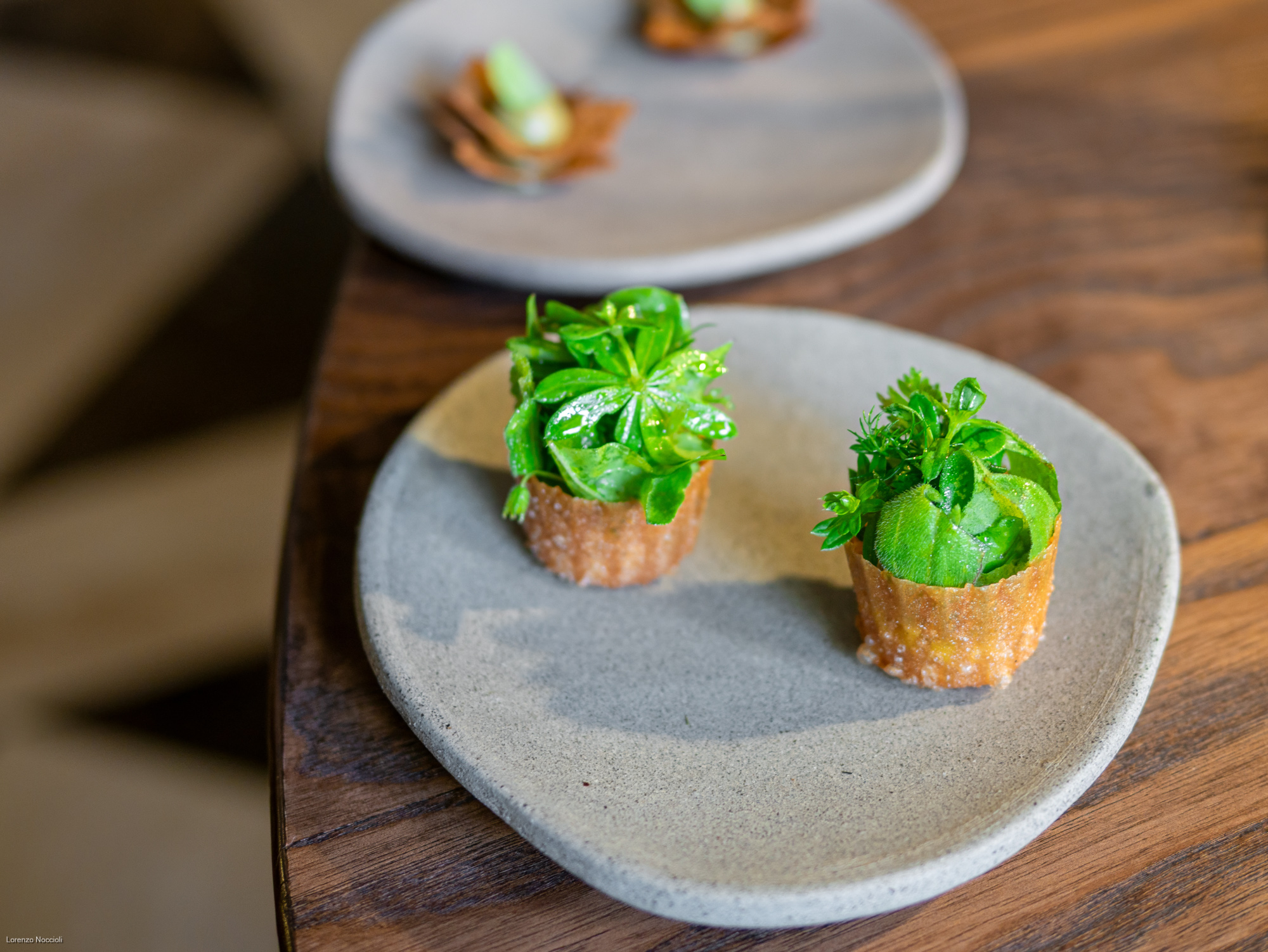
Asian inspirations light up with Pae Ti, traditional crispy tartlets filled with smoked mackerel, dill mayonnaise, and wild greens. Yet cultured culinary references are not lacking, such as the savory diplomatici—an Alchermes génoise, chicken liver parfait, and raspberry gel.
The Fiano di Avellino Riserva Venum3 by Marianna Venuti provides pairing notes of herbal and floral aromas, candied citrus, and a savory freshness that supports without ever overpowering.
Eggplant becomes almost a subject of study, explored in all its possibilities: seared and scooped out, extracted and reassembled, paired with sheep’s milk kefir—both pure and as a film—and a fig-leaf oil introducing a sweet, green note tamed by the gentle bitterness of strigoli greens.
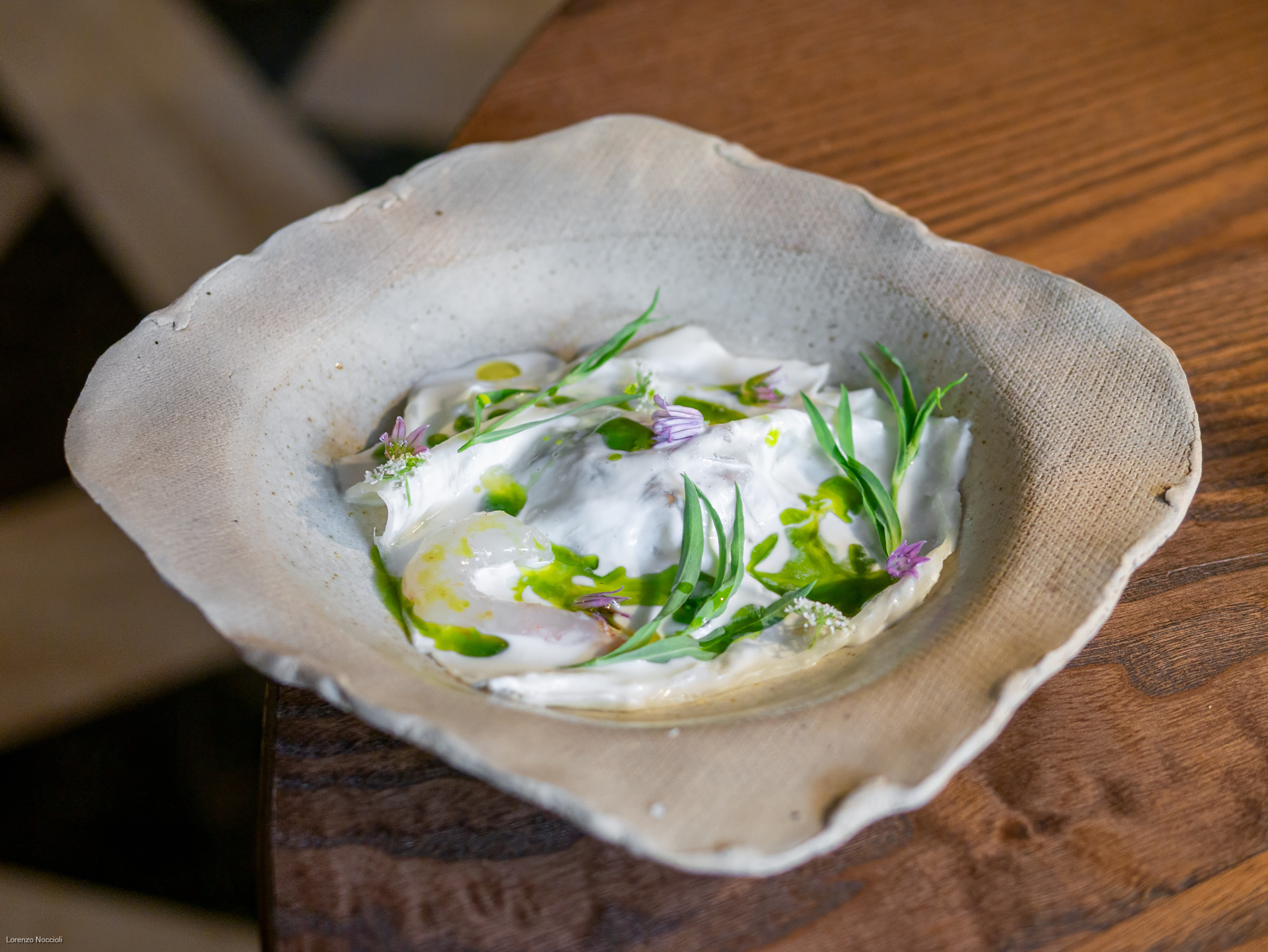
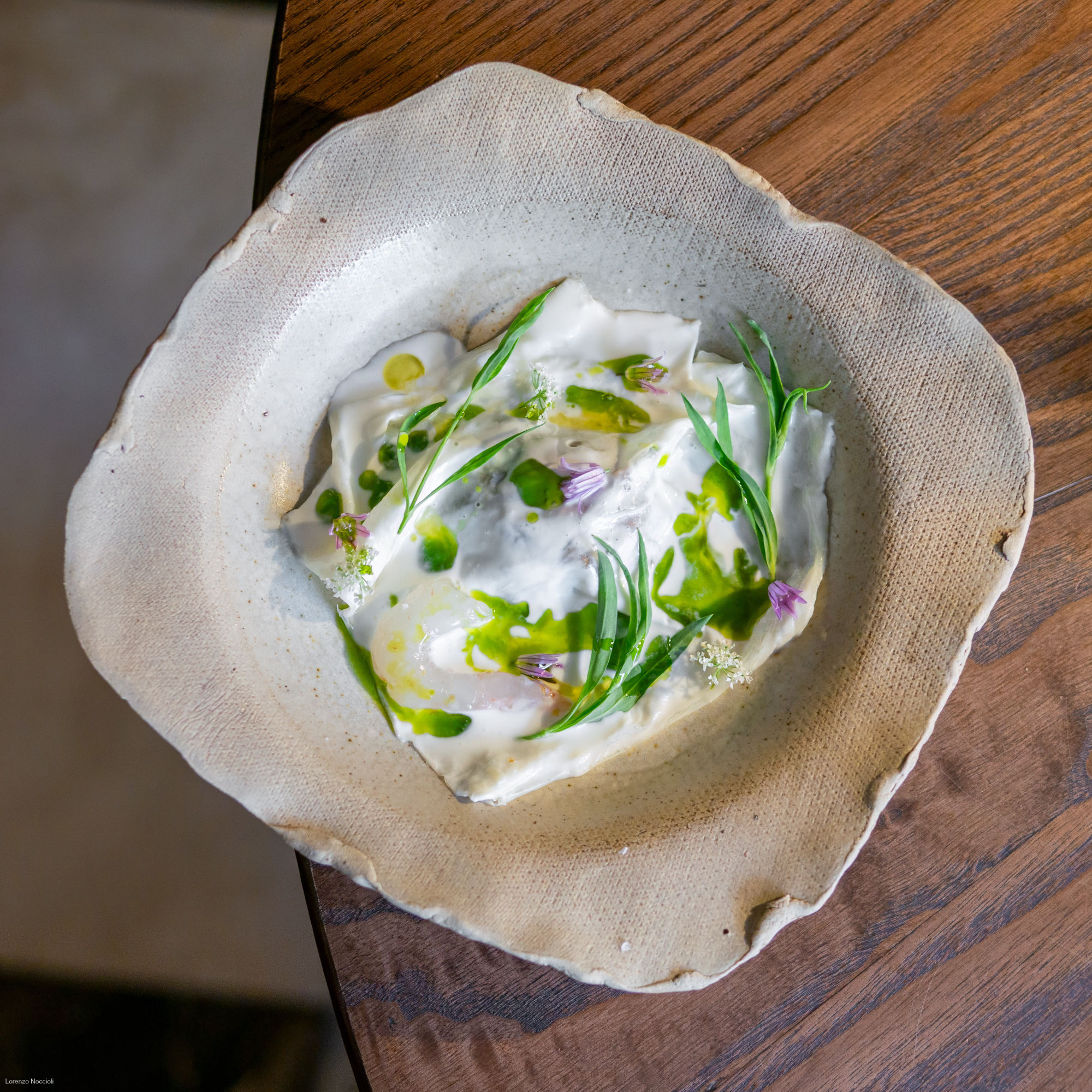
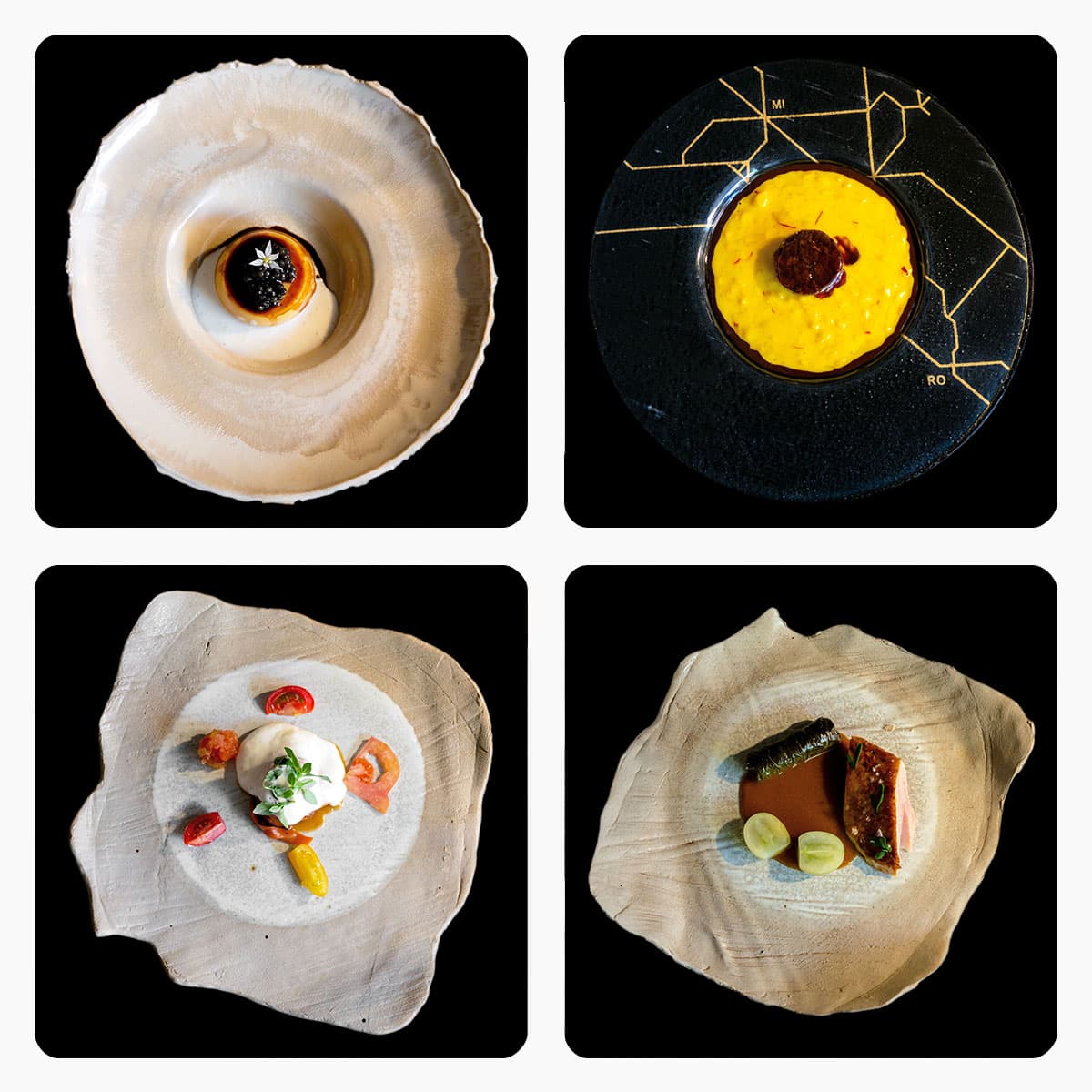
The wordplay of "cren-caramel" extends to taste as well, where the sweetness of brown crab meat, the caramel of its reduced jus, and cooked plum extract are punctured by the pungency of horseradish and the marine salinity of lightly smoked sturgeon caviar.
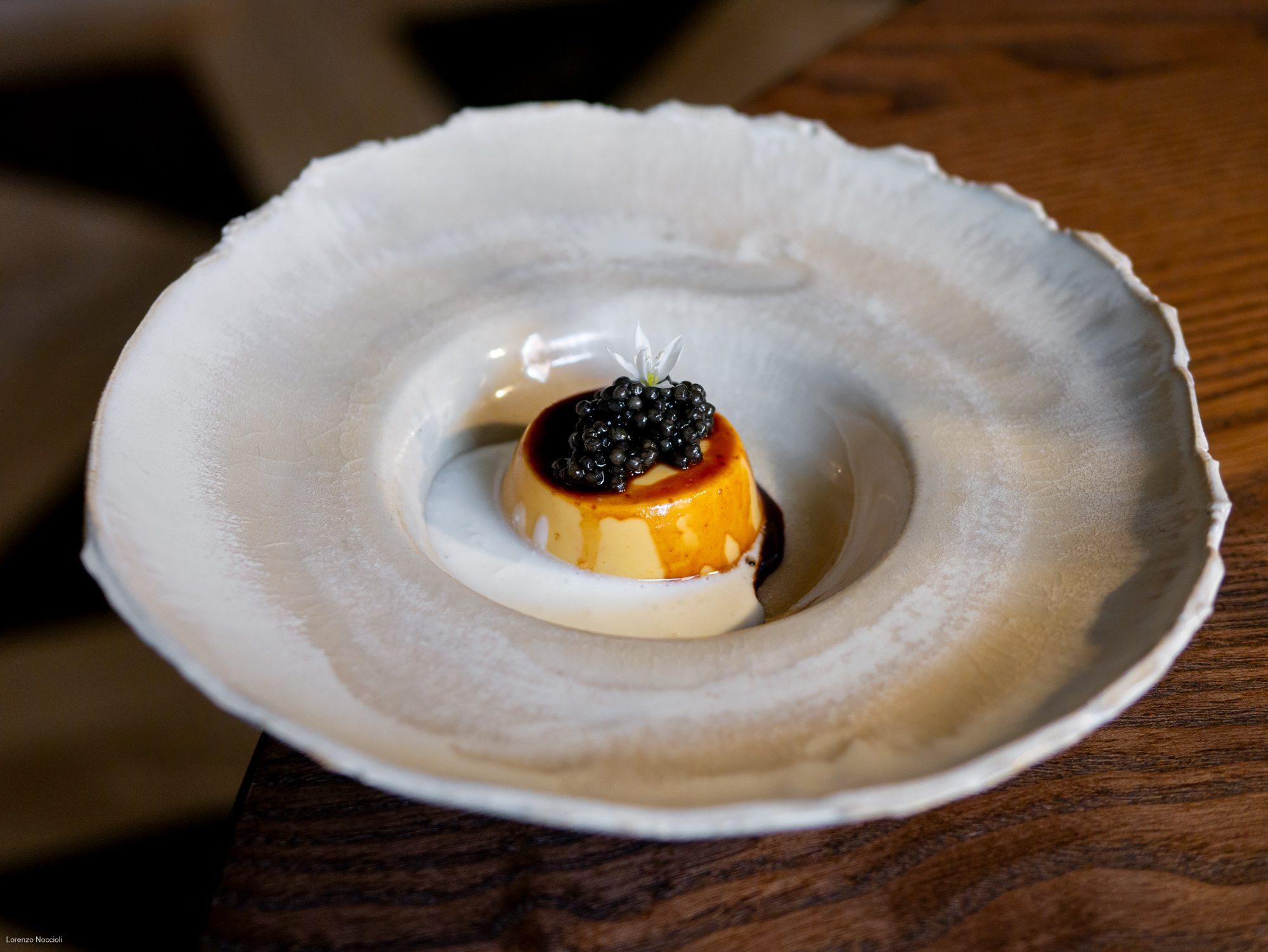
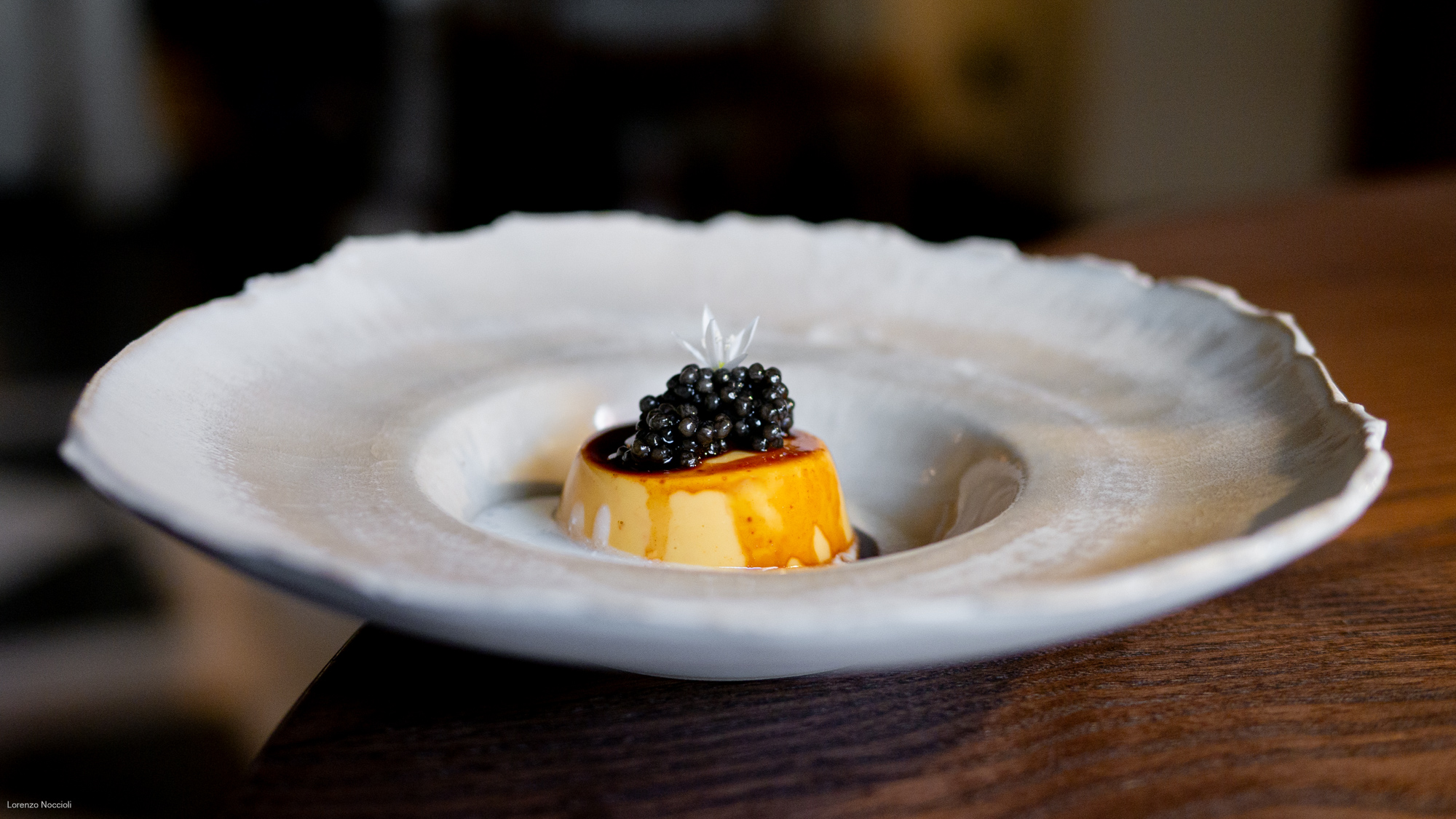
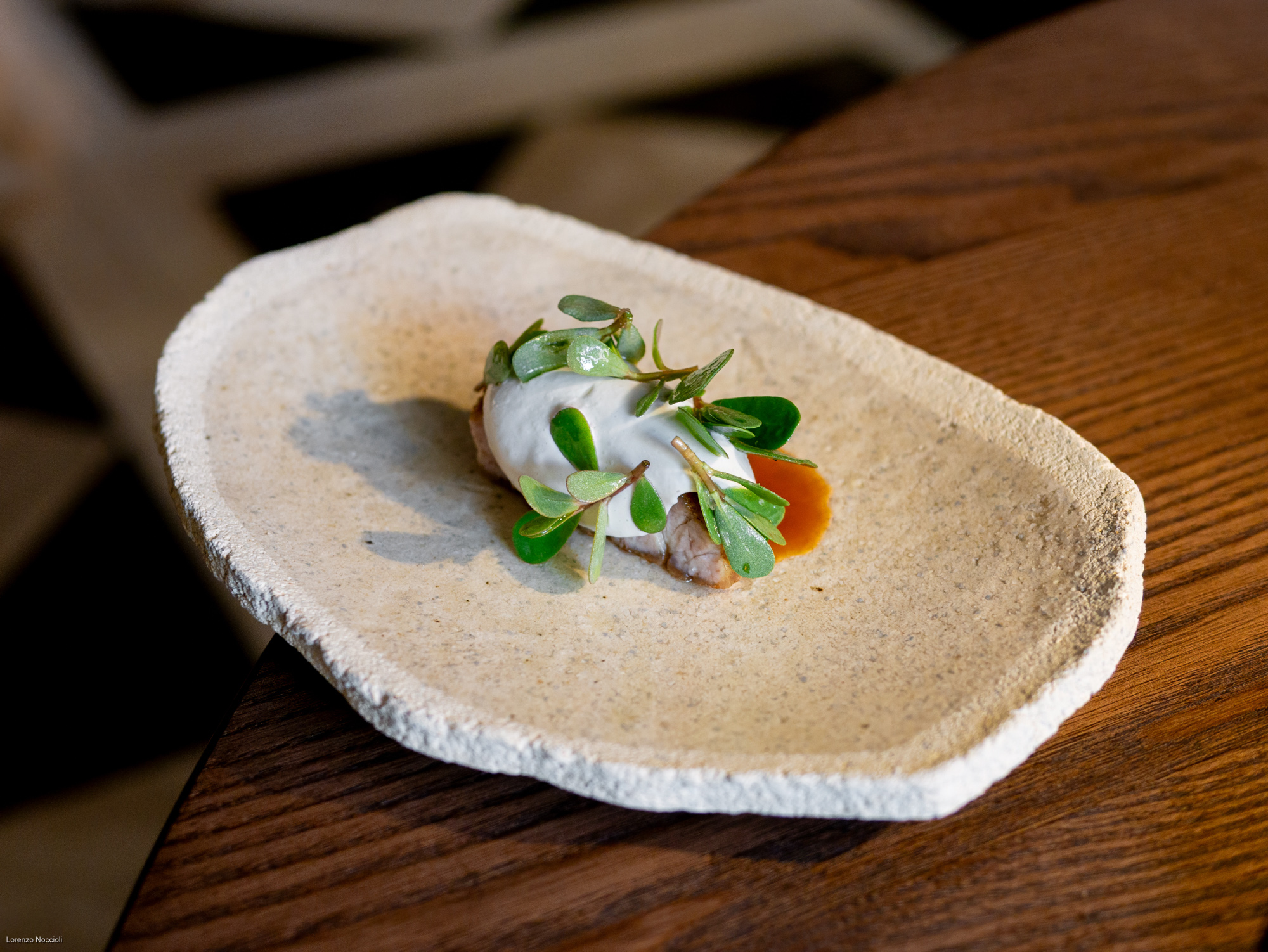
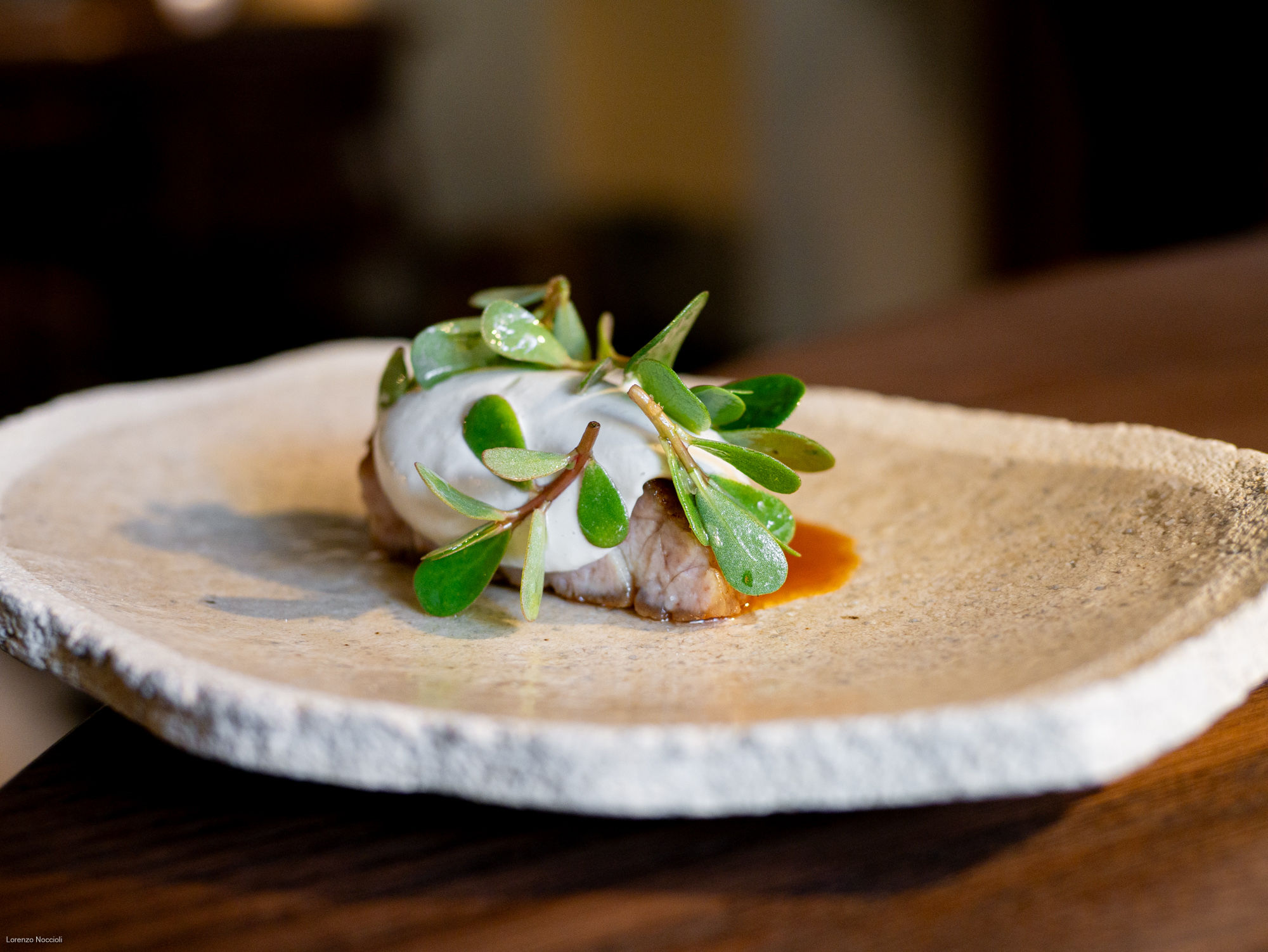
Much like the oysters forming the base of the mayonnaise that envelops the sweetbread in subtle smoke, the sweetbread itself is cooked in butter, fortified with beef jus, and streaked with the tartness of purslane.
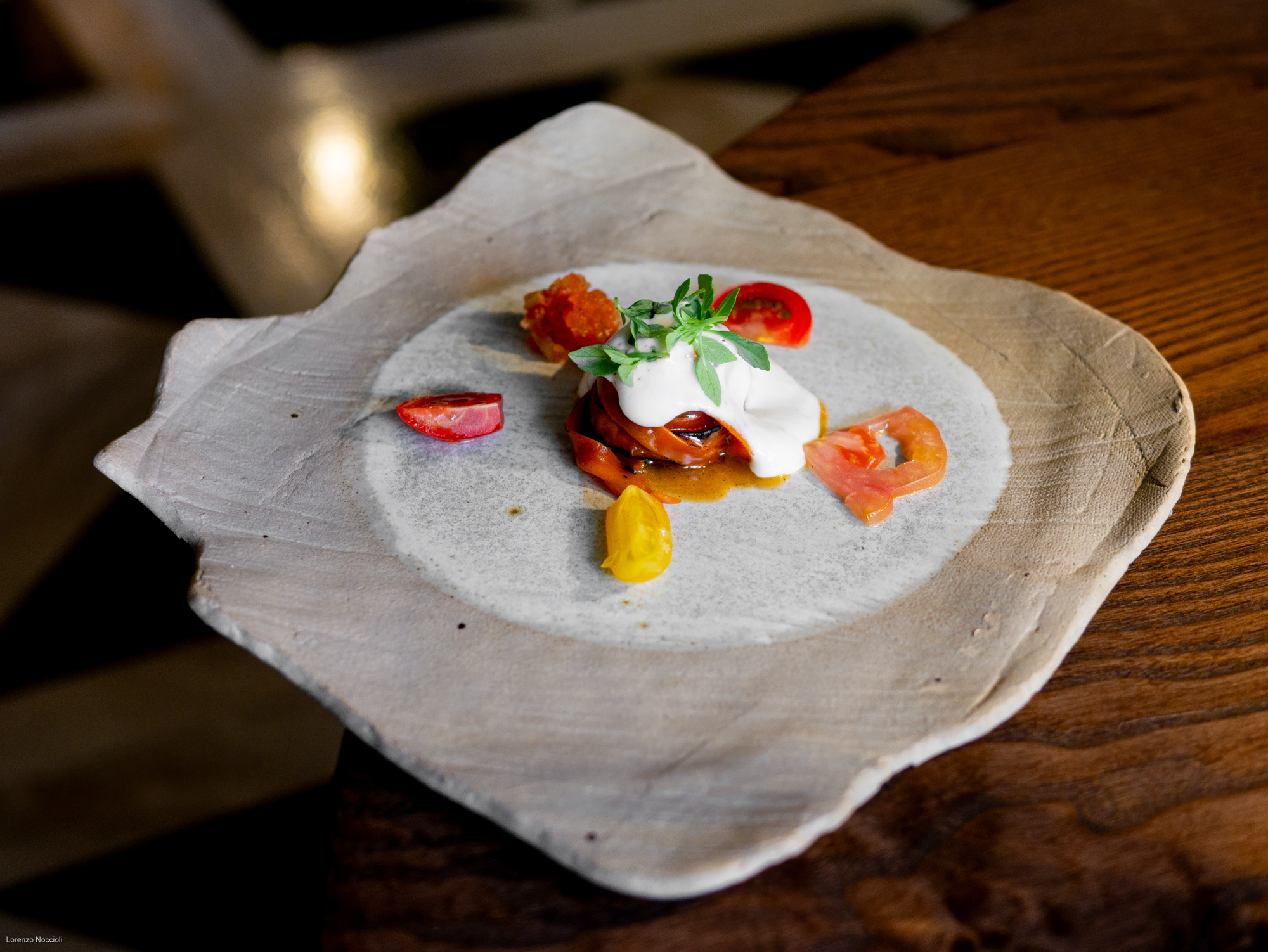
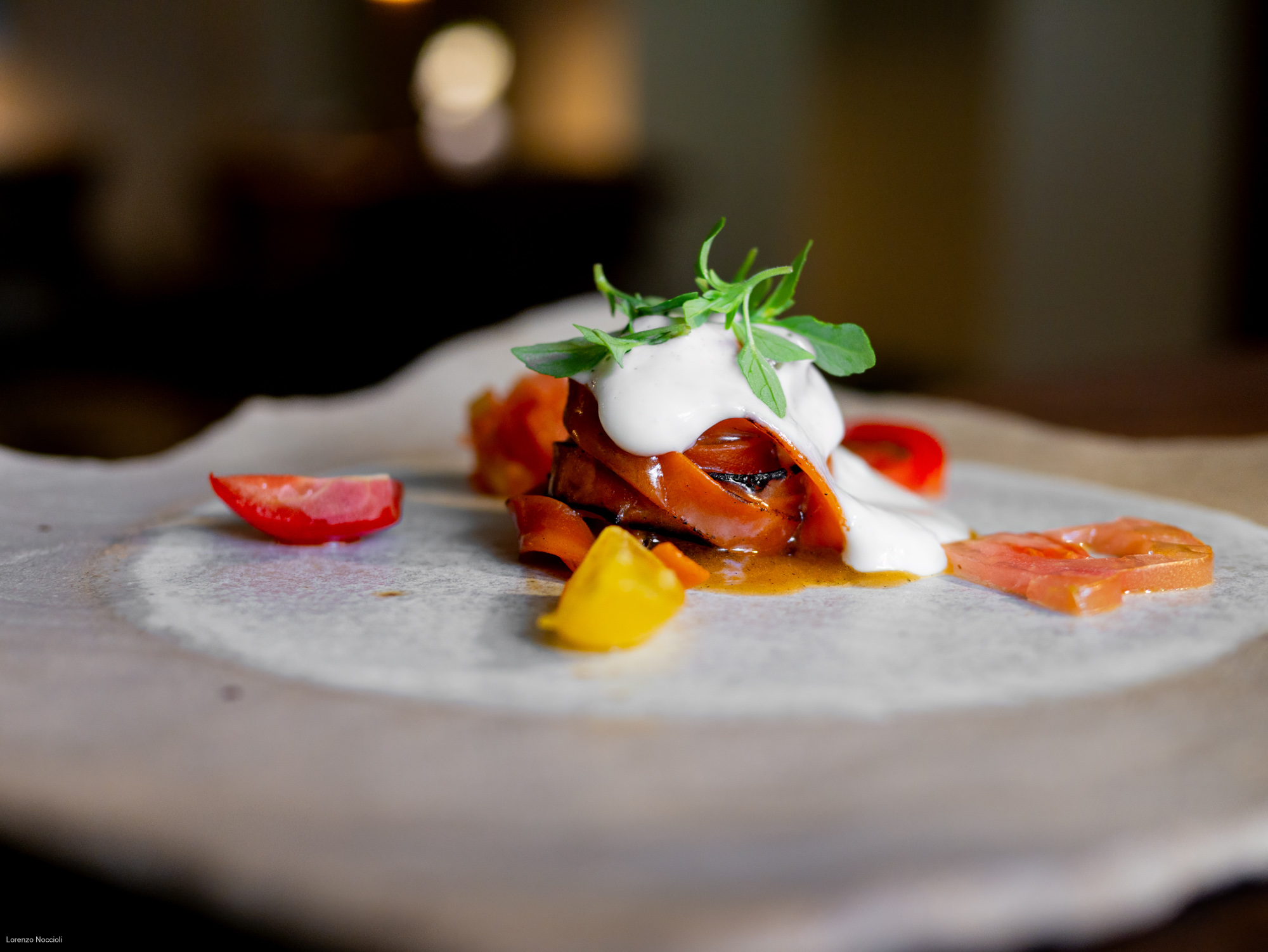
Originating in perfumery, enfleurage is the technique of capturing floral essences into a neutral fat through contact. Here, Pulejo uses beef fat to extract the aromatics of herbs, turning it into a foam that crowns tomato tagliatelle after they have been charred over an open flame and creamed with tomato water.
Jean-Claude Rateau's Clos des Mariages, a blend of young and old Pinot Noir vines, accompanies with discretion and character, leaving center stage to the dish.
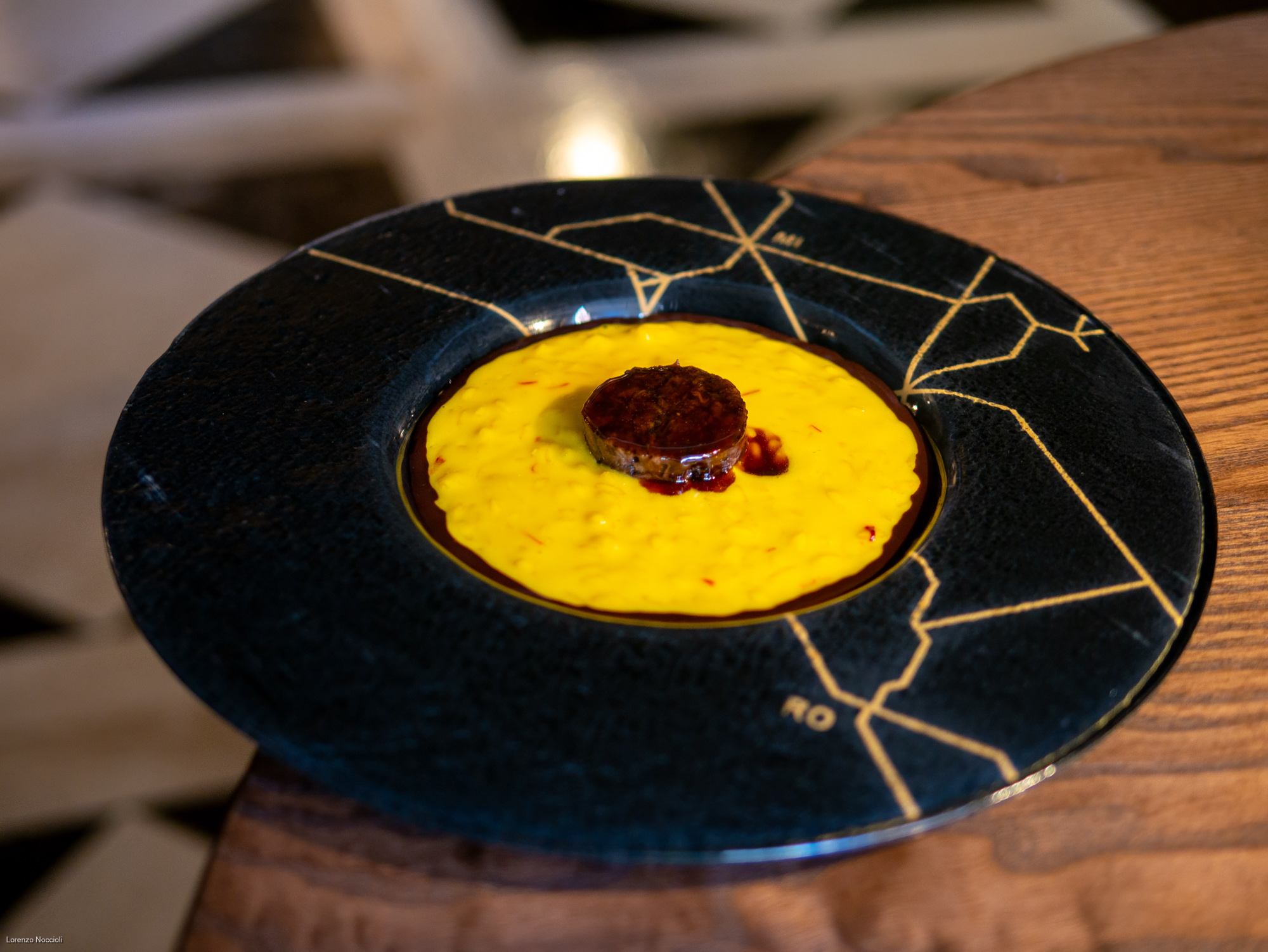
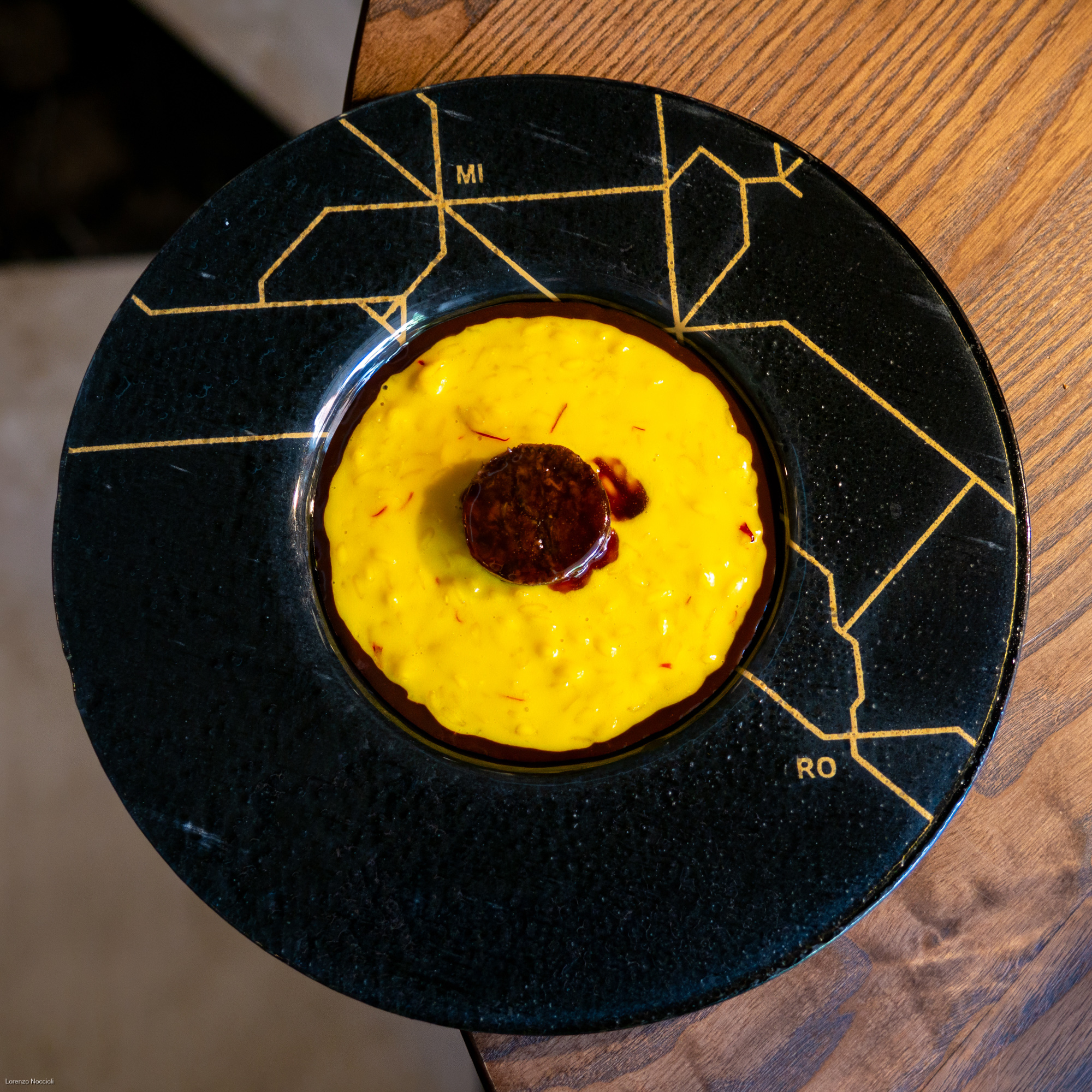
Two unshakeable icons of Milanese and Roman gastronomy converge in the Mi-Ro risotto: a classic saffron risotto hosting a tail royale, its jus, and a dark cocoa gelée. An opulent yet disciplined dish that finds a deep, spicy companion in Stefano Amerighi’s Syrah.
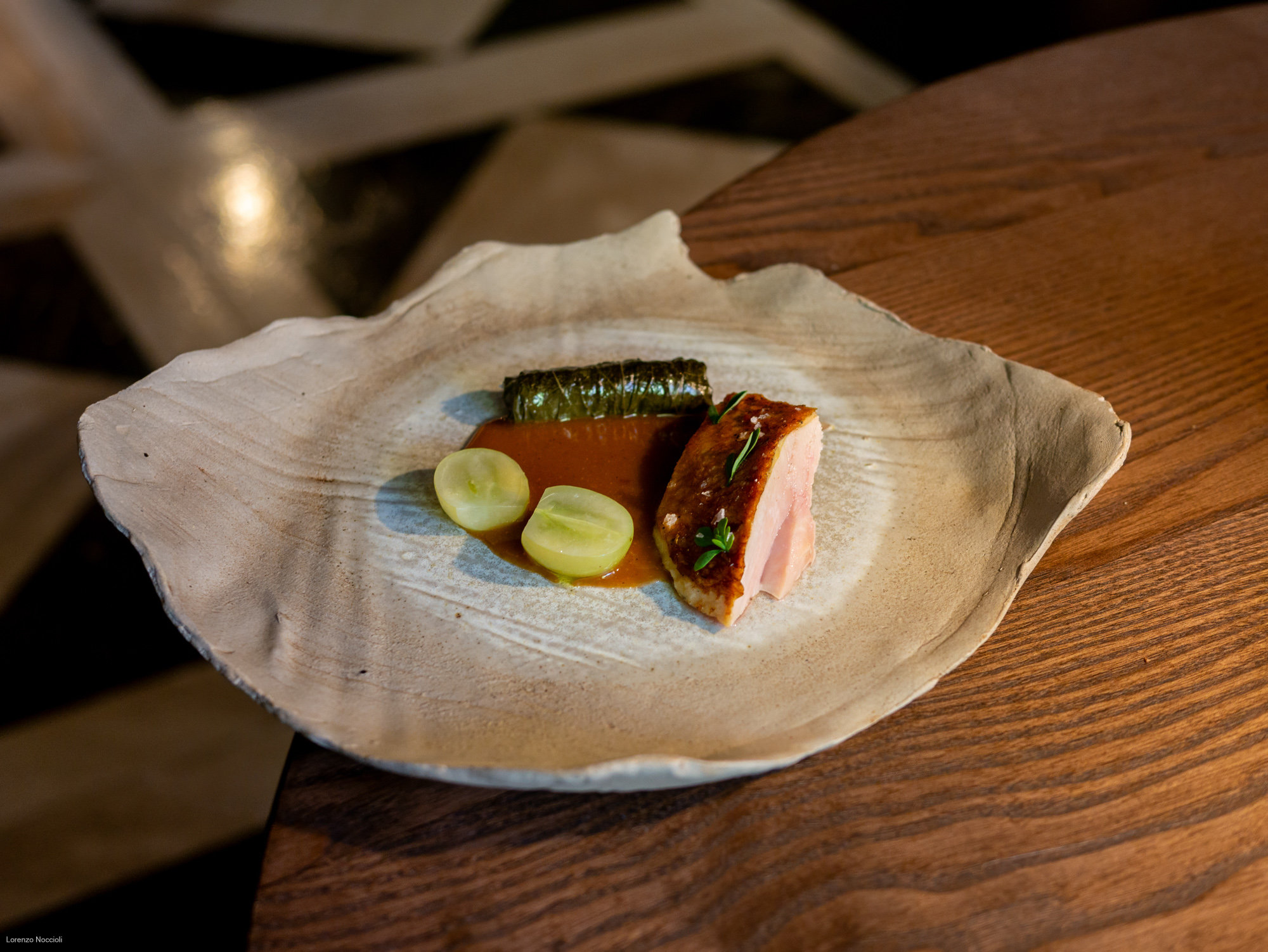
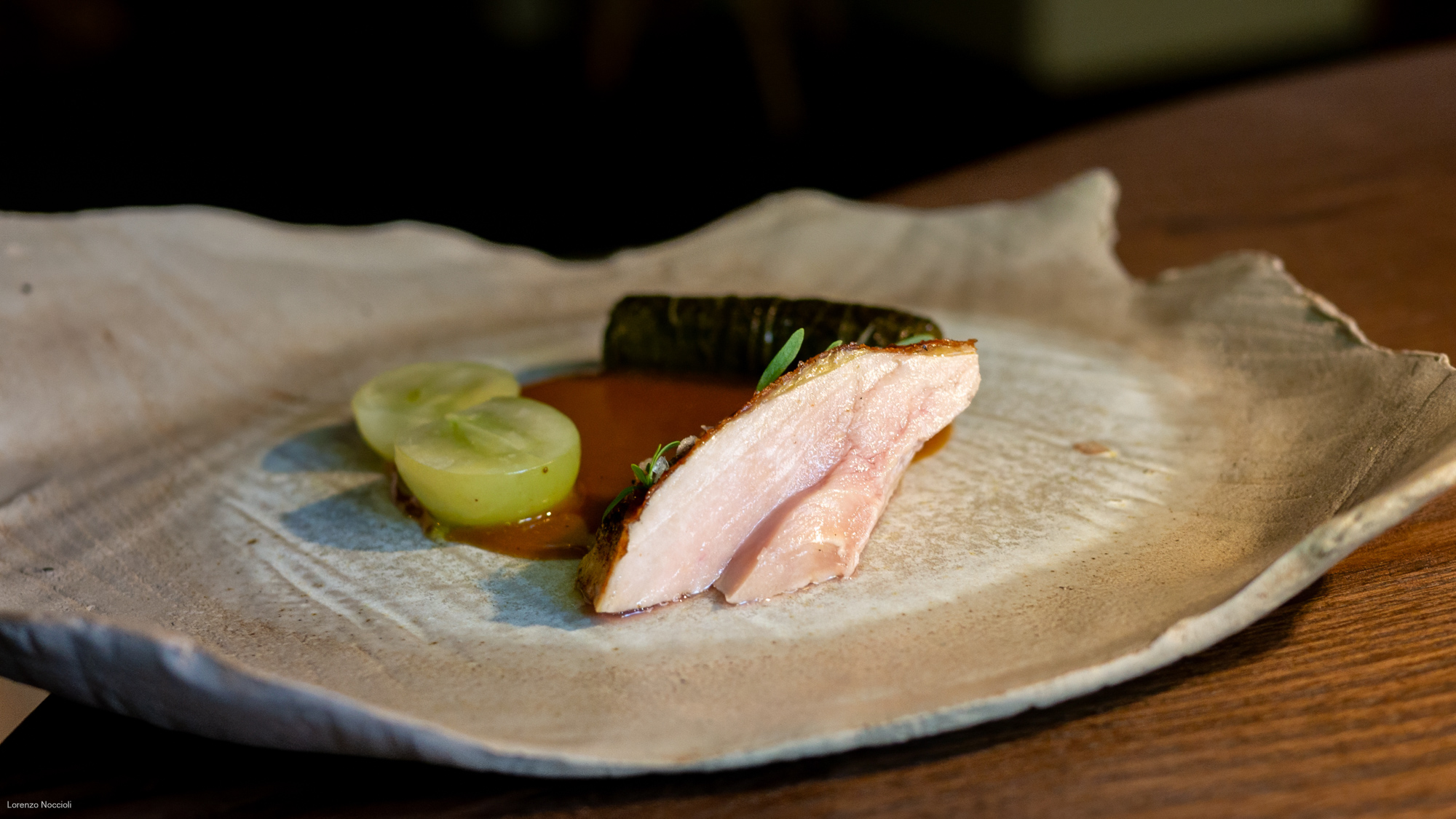
A tribute to 1st-century BC Roman classicism, guinea fowl prepared à la Marcus Gavius Apicius—the first Roman gastronomer to author a recipe book—is presented with grilled breast wrapped in rue leaves, accompanied by grape berries and a vine-leaf roll stuffed with the bird’s leg meat, lard, and rosemary. Remaining within the period setting, an aged Vino Cotto "occhio di gallo" slips into the glass. Traditionally served at the conclusion of Roman patrician and imperial banquets—and cited by Pliny—it is a blend of Montepulciano and Trebbiano obtained by concentrating grape must through low-temperature boiling.
Preceding the desserts created by young pastry chef Mariuccia Ceglie is a lemon sorbet with almond-water foam, licorice oil, and caper powder.
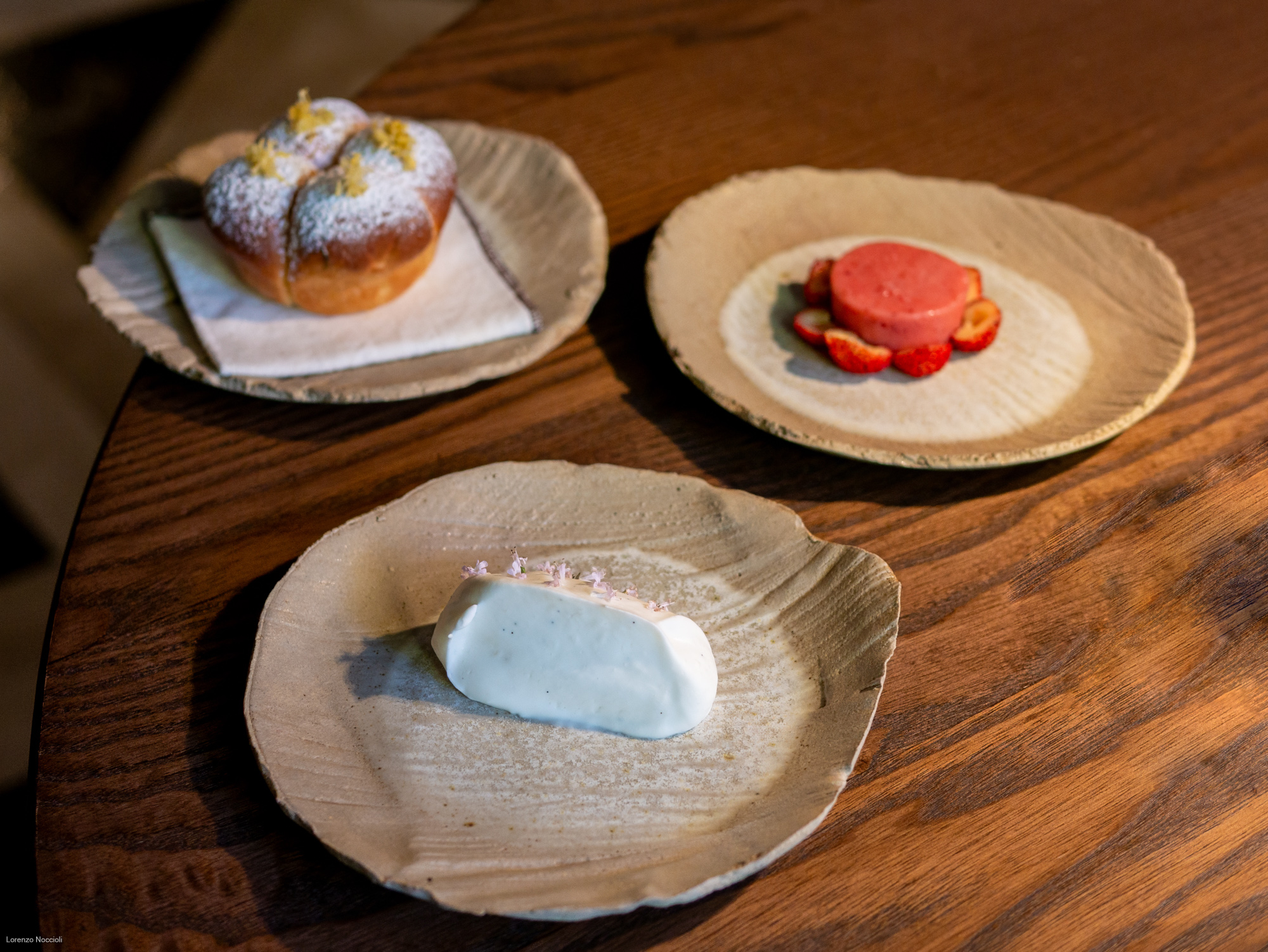
Technique and lightness coexist jovially in the rhubarb dish, presented as a gel, compote, extract, and sweet-and-sour slices, paired with ricotta ice cream and star anise powder, alongside an almond frangipane puff pastry. Very bon ton is the brioche dusted with lemon zest, meant to be nibbled alongside vanilla chantilly and wild strawberry sorbet.
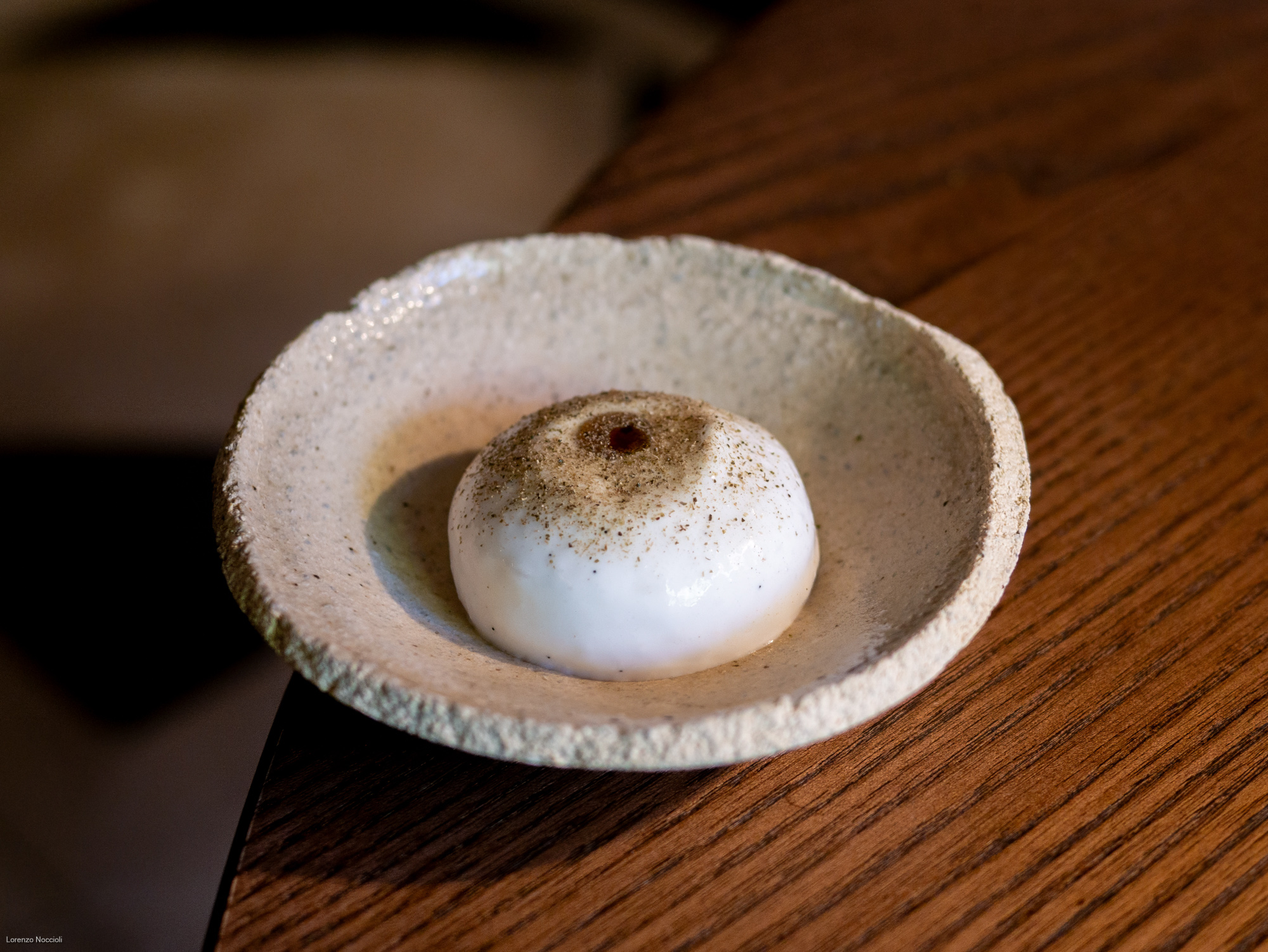
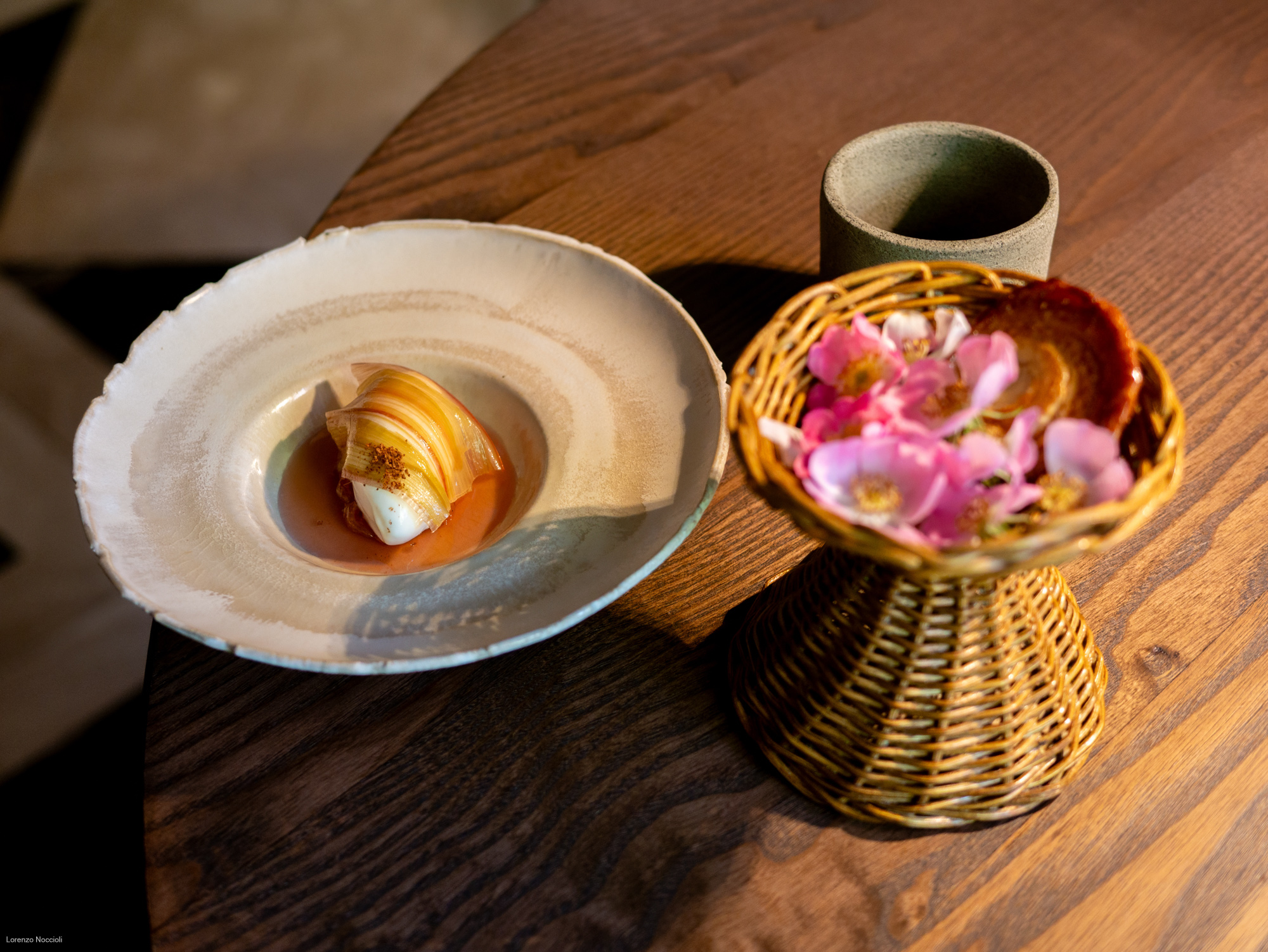
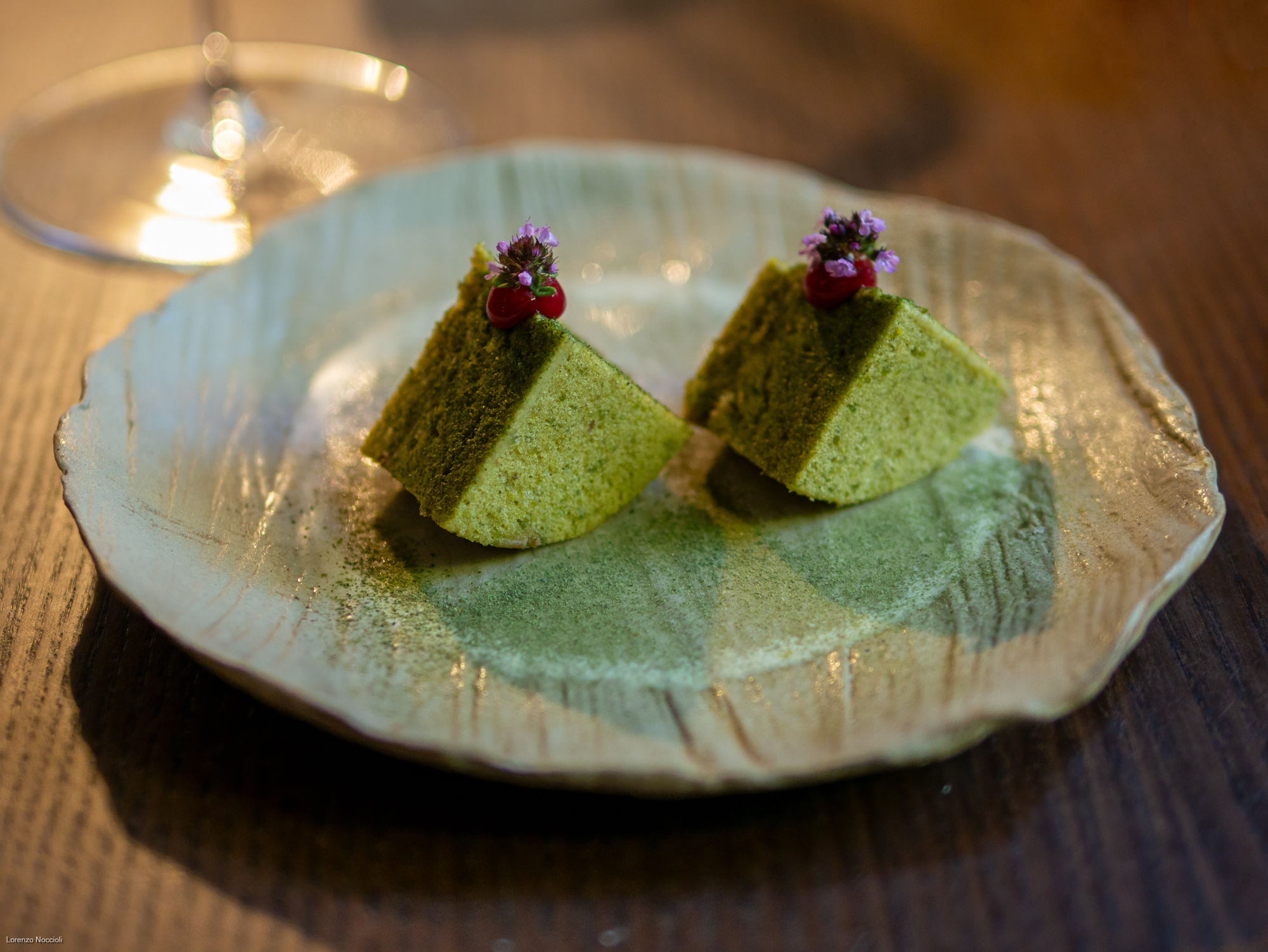
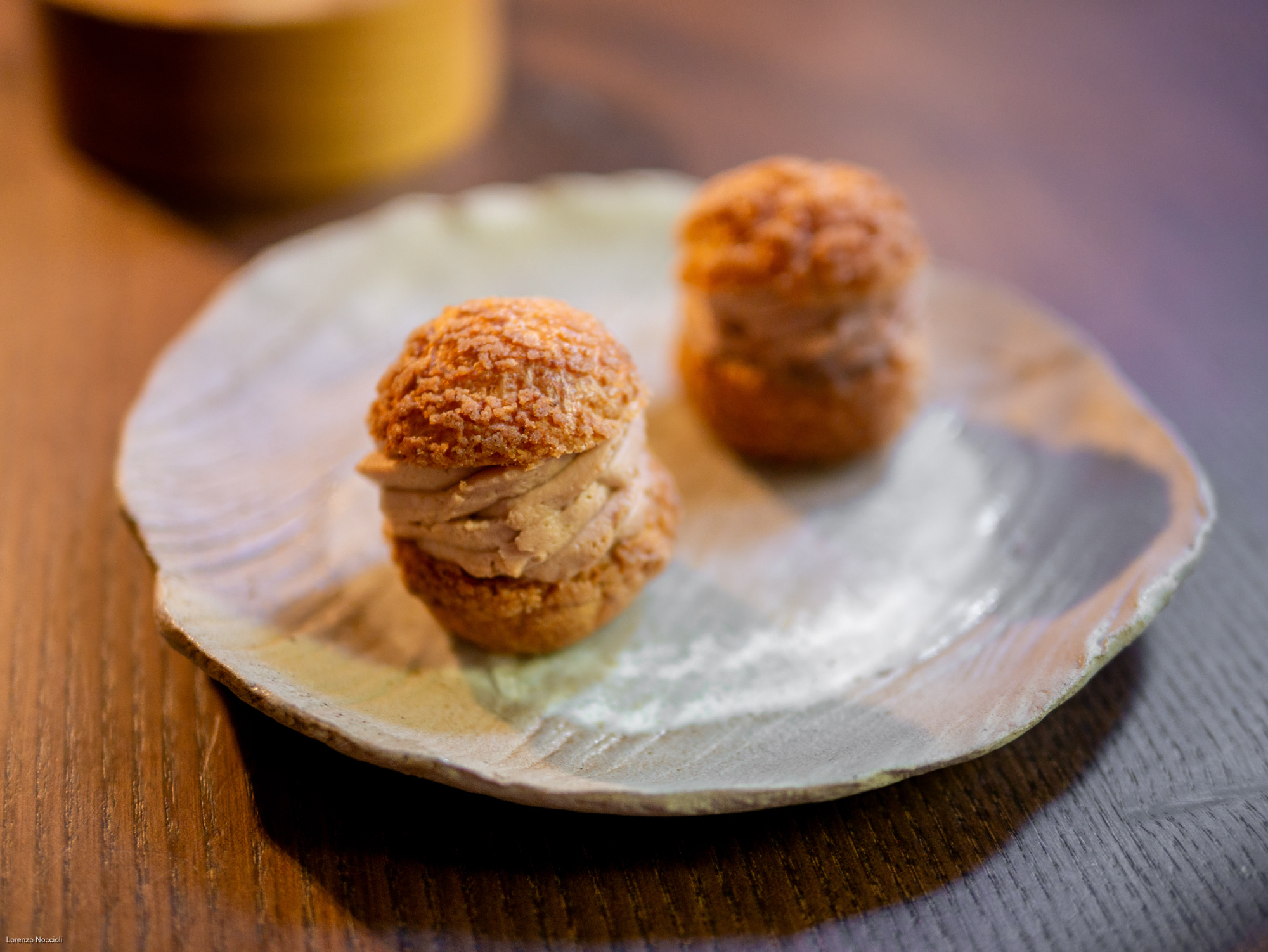
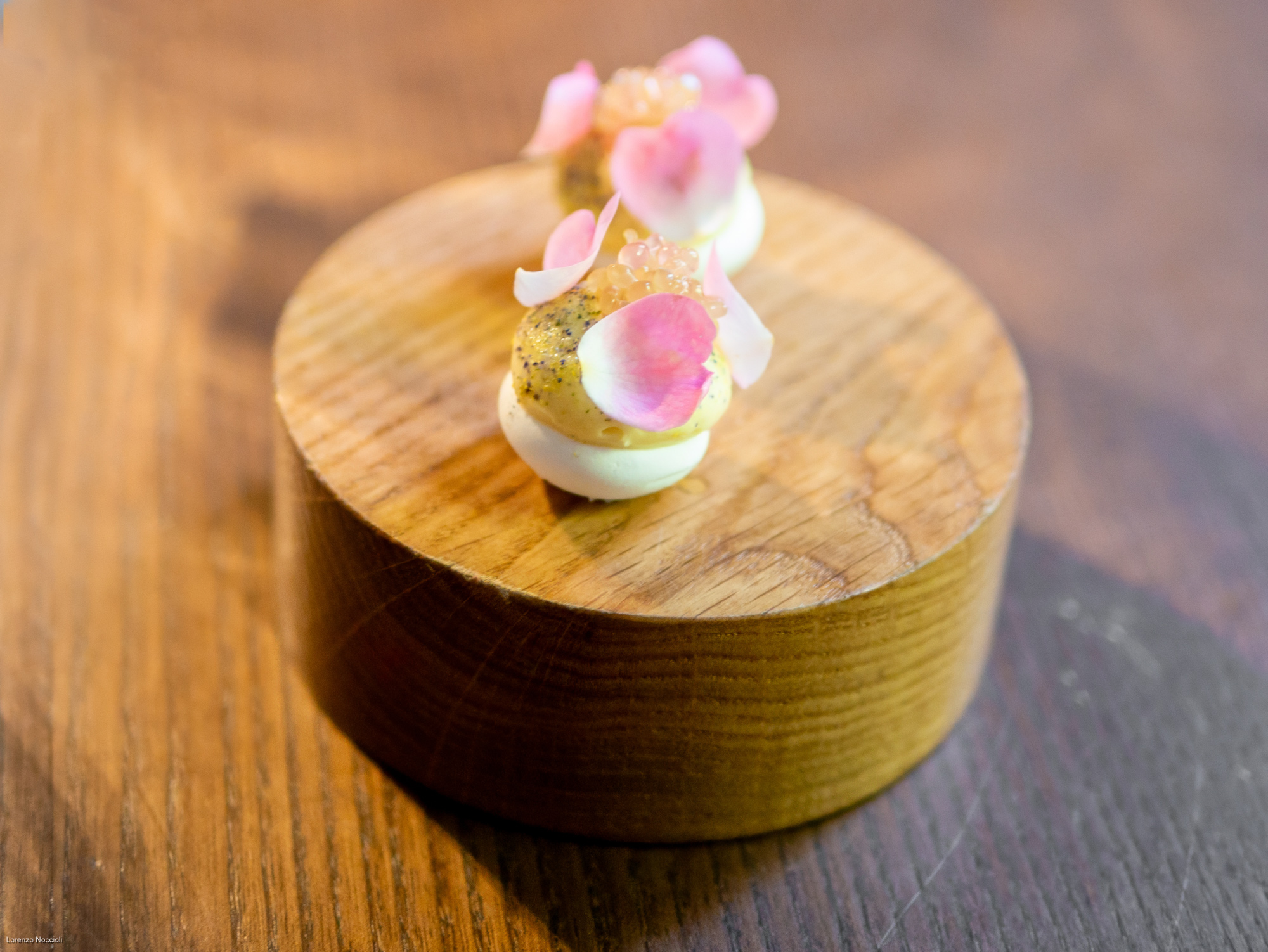
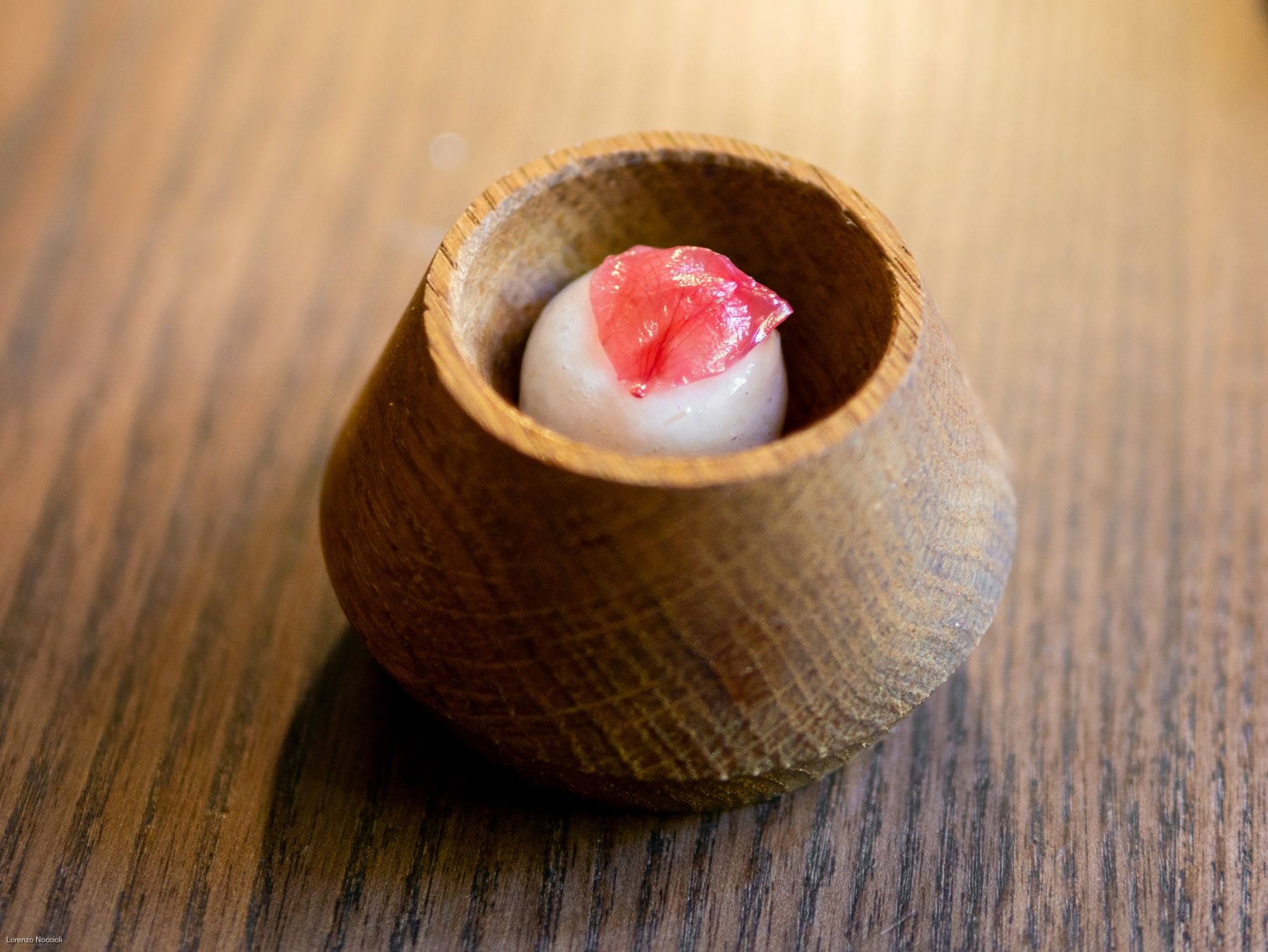
A final toast comes with Elderflower Champagne—an elderflower water fermented for 4 days and aged another 3 days in the bottle—accompanying the final mignardises: pistachio Opéra with raspberry gel and sea lettuce powder; choux bun with chocolate caramel and muscovado sugar banana; meringue with elderflower diplomat cream and finger lime; and a lychee and rose sphere.