
Uliassi’s LAB Remains an Avant-Garde Unicum in Italy

Now in its sixteenth edition, the most restless culinary laboratory on the Adriatic coast introduces itself this way: through the words of Mauro Uliassi himself, who recounts in the first person, on video, the genesis of LAB 2026, stripping the method of all rhetoric and laying bare its discipline.
Meanwhile, on November 12, the Michelin Guide Italy 2027 stripped the Senigallia restaurant of the third star it had held for eight editions. The Uliassi family responded with rare restraint and grace, saying they were deeply saddened, yet respectful of the guide’s judgment.
Still, I believe we can allow ourselves a bit of conjecture—starting, for instance, with our email inboxes.
Some time ago, Michelin sent out a survey regarding the Italian guide, featuring a questionnaire based on the Net Promoter Score. It is a marketing tool that asks respondents, on a scale from zero to ten, how likely they are to recommend the product—in this case, the guide—to a friend or colleague. Those who answer nine or ten are promoters, those who land between zero and six are detractors, and the final score is the difference between the two percentages. It measures reader loyalty, certainly, but also how respondents perceive the guide, since the numerical rating is paired with open-ended questions.
Anyone asking readers to explain in their own words what they think of the guide is trying to gauge its perception. It is therefore fair to assume that inside Michelin, some doubts about its own reputation exist—and that the image they fear most is that of an aging institution no longer appealing to younger crowds.
What, then, is the quickest fix to appear young? Rejuvenating the restaurant roster—and the most naive, simplistic way to do that is by looking at the birth certificate of the person representing it: the chef. One is led to think that precisely this weighed into the decision to demote Uliassi, elevating age to a metric of merit. To a superficial assessment that stops at an ID card, Uliassi might look like the elder statesman of three-star chefs—and, what is more, the most vulnerable. He does not have a prestigious hotel group behind him; he does not have a constellation of venues bearing his name as a subtitle; he does not cultivate side ventures outside the restaurant; he does not frequent television, nor does he deliver maître à penser sermons with which certain chefs multiply their media presence. He stays in the kitchen—where a cook is supposed to be. In an era of brand extension, devotion to one’s craft ought to count as a badge of honor; instead, it acted as an aggravating factor.
That Michelin is free to set its own parameters is beyond dispute; that an age filter makes any sense when faced with Uliassi’s cooking is far more questionable. Then again, perhaps it would suit everyone—and Michelin first and foremost—to write off Uliassi’s demotion as a banal exercise in demographic box-ticking. If only because the alternative hypothesis would be infinitely more embarrassing: having to admit that its inspectors detected genuine shortcomings in the kitchen. Doing so would mean stepping into the minefield of the judges’ own inadequacy, on a collision course with hundreds of critics, food writers, and inspectors from other Italian and international guides who recognize this table as one of the absolute pinnacles of European dining. In striving at all costs to flash a badge of modernity, the Red Guide triggered a boomerang effect: an attempt to revitalize its image turned into a reputational own goal.
And if Michelin suffered a crack in its authority, for Uliassi this demotion turned into a formidable echo chamber of goodwill—a spontaneous plebiscite made up of tens of thousands of interactions, outpourings of esteem, and cross-platform shares across all his social media and communication channels.
This consensus is all the more significant because it was entirely free of media orchestration. It is not the product of a well-oiled PR machine, but rather the litmus test of a growing impatience toward Michelin in Italy—an audience that, when confronted with verdicts perceived as arbitrary, no longer hesitates to take an open stand, disavowing the oracle.
Scholars of creativity distinguish between two temperaments. There are the conceptualists, who burn through an idea and often burn out with it, and the experimentalists, who refine a method through repeated trials until they become virtually immune to boredom. The chef from Senigallia belongs to the latter camp, and he confirms it when he tells us that for him, inventiveness is a muscle trained every day through study and trial—and the Lab is his gym. Every winter, for sixteen years, the brigade has started over from scratch. The dishes that earn the public’s trust graduate to the “Classics,” while the rest remain as a testament to a boldness unafraid of failure.
To seal the point, he even invokes Dante, and the Ulysses of Canto XXVI: “Fatti non fummo a viver come bruti, ma per seguir virtute e canoscenza” (“You were not made to live as brutes, but to follow virtue and knowledge”). That “fummo” serves as a statement of method. It says that at the Banchina di Levante, no one considers themselves to have arrived, and curiosity has never been filed away as a virtue reserved for youth. They are still learning, and precisely for that reason they work relentlessly; the toil of the Lab stems from a desire to discover, and a cook who wipes his repertoire clean every winter is the least aged person imaginable.
The team is the true asset. Alongside Mauro Paolini, Luciano Serritelli, Andrea Merloni, Michele Rocchi, Yury Raggini, and Peppino Merlino, this year Rosita Mammone heads up pastry. Catia Uliassi commands the dining room with the lucidity of a grandmaster who has already foreseen every diner’s next five moves, yet with effortless naturalness and grace in spades. Sommelier Nicola Galati, a Roman trained at the Beck school, talks about wine without the customary panegyrics. All of this unfolds in a fine-dining sanctuary with no dress code, where a table of twenty-somethings sits beside octogenarian couples in Bermuda shorts—bucking the starched solemnity of comparable restaurants. On the cover of the menu is the silhouette of Nonna Biancamaria—ninety years old, former restaurateur, mother to Mauro and Catia, chief taste-tester, and Instagram phenomenon—who first taught the family the art of hospitality.
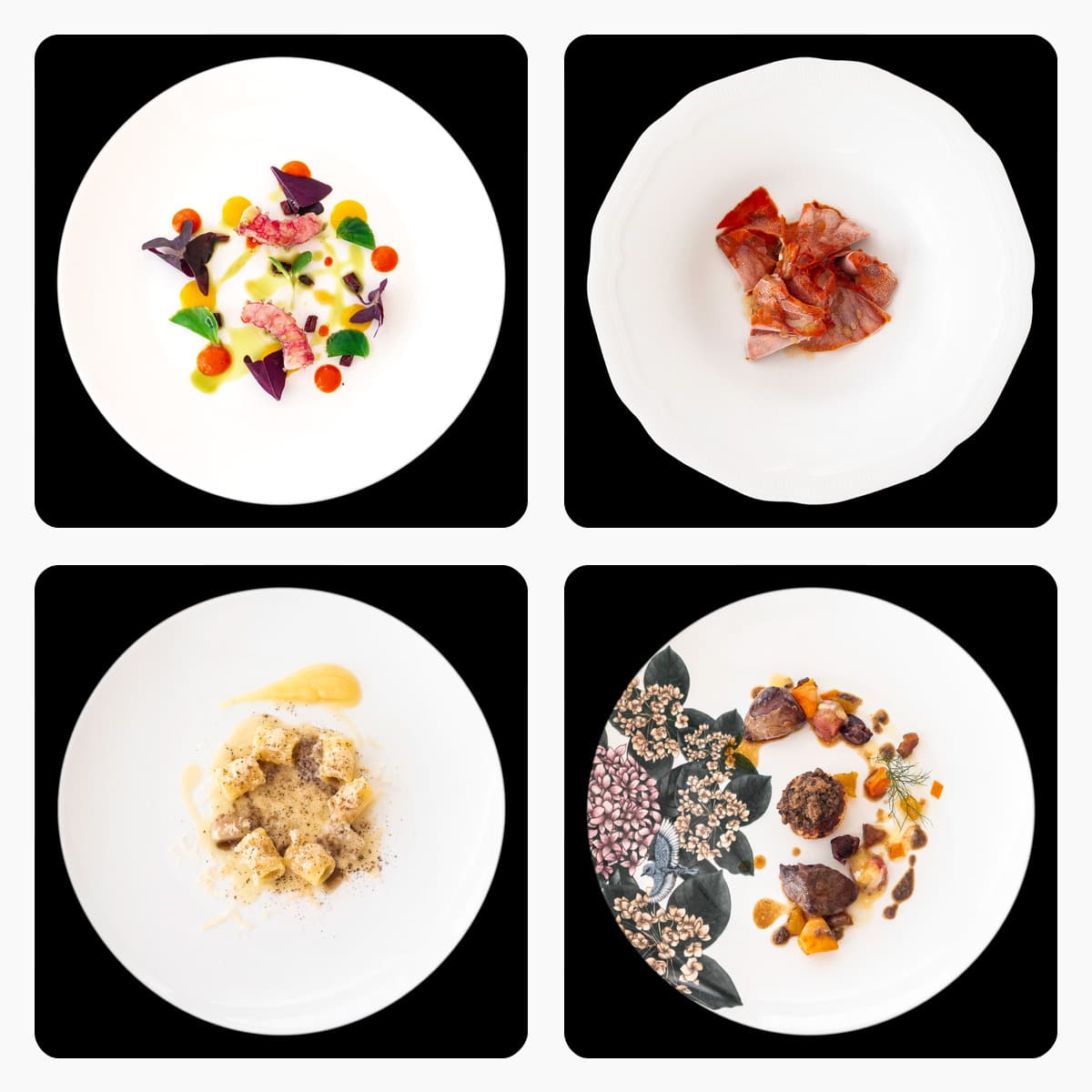
The LAB tasting menu channels the house’s gastronomic archive through geographic leaps, thermal tensions, and botanical grafts that disarm the palate.
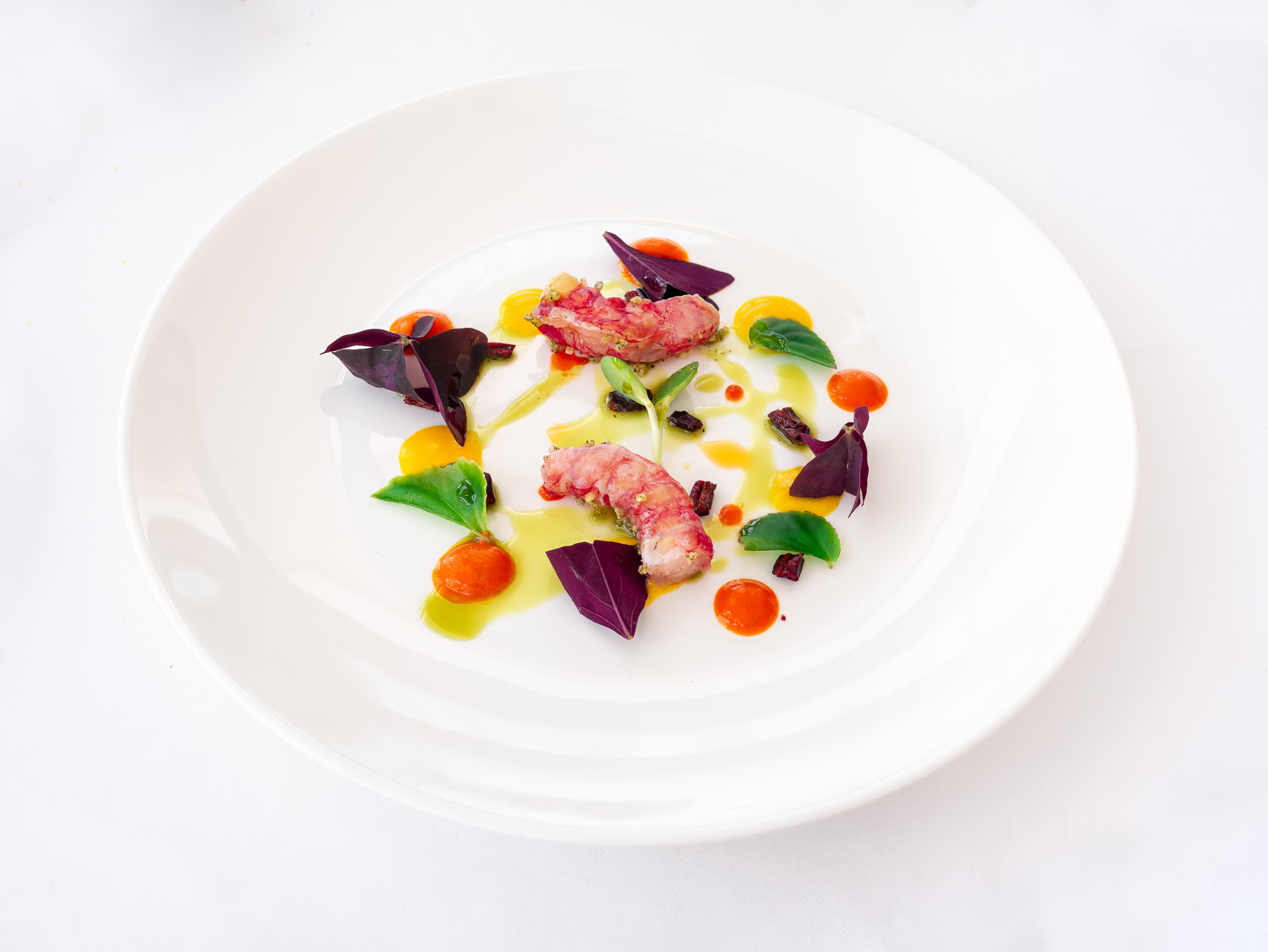
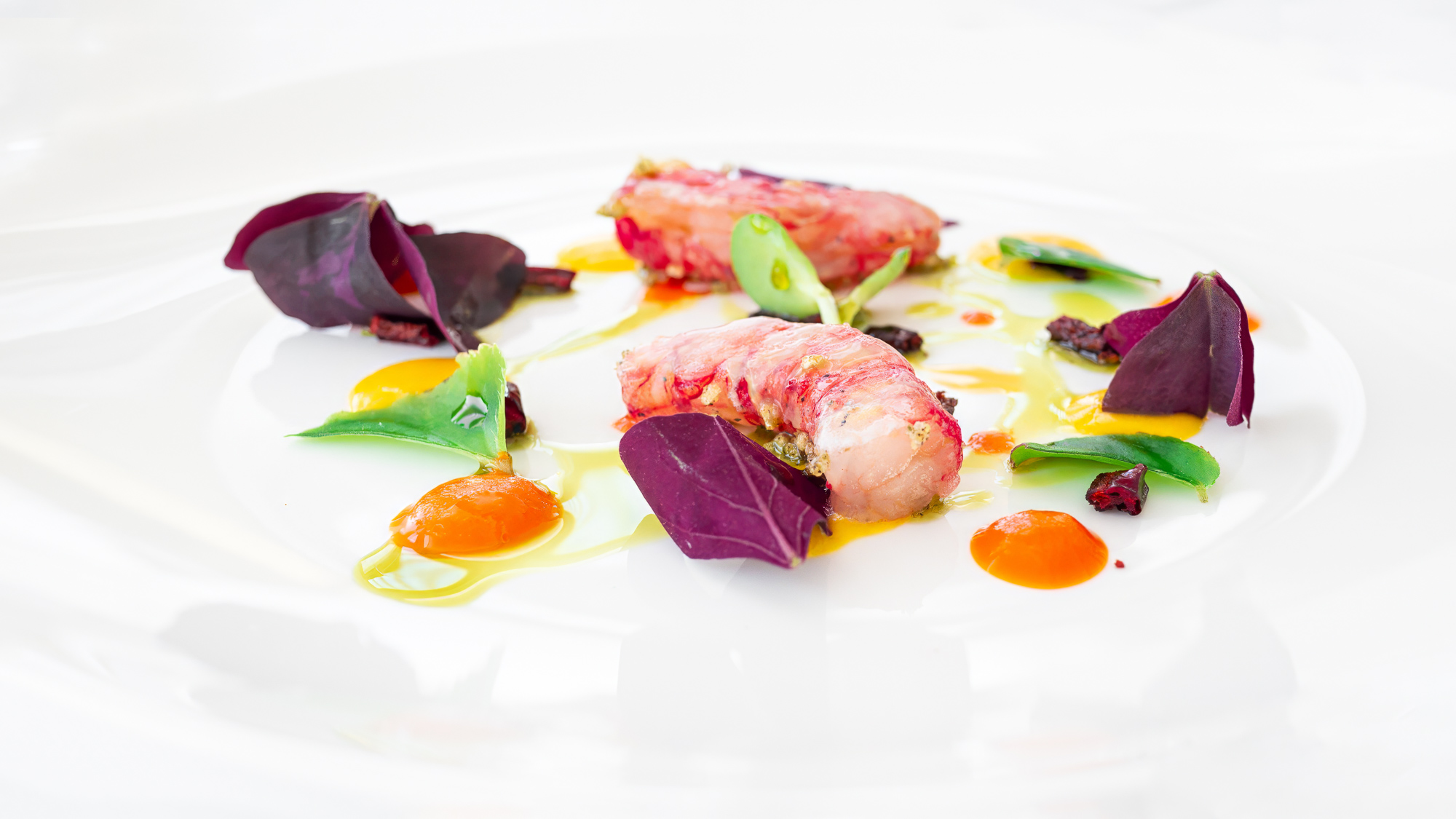
The red prawn journeys toward Southeast Asia, where the crustacean’s briny sweetness meets the balsamic notes of green curry oil, the citrusy freshness of kaffir lime, and the crisp, geopolitical counterpoint of peperone crusco. You finish it with your finger, as bread would distort the flavors.
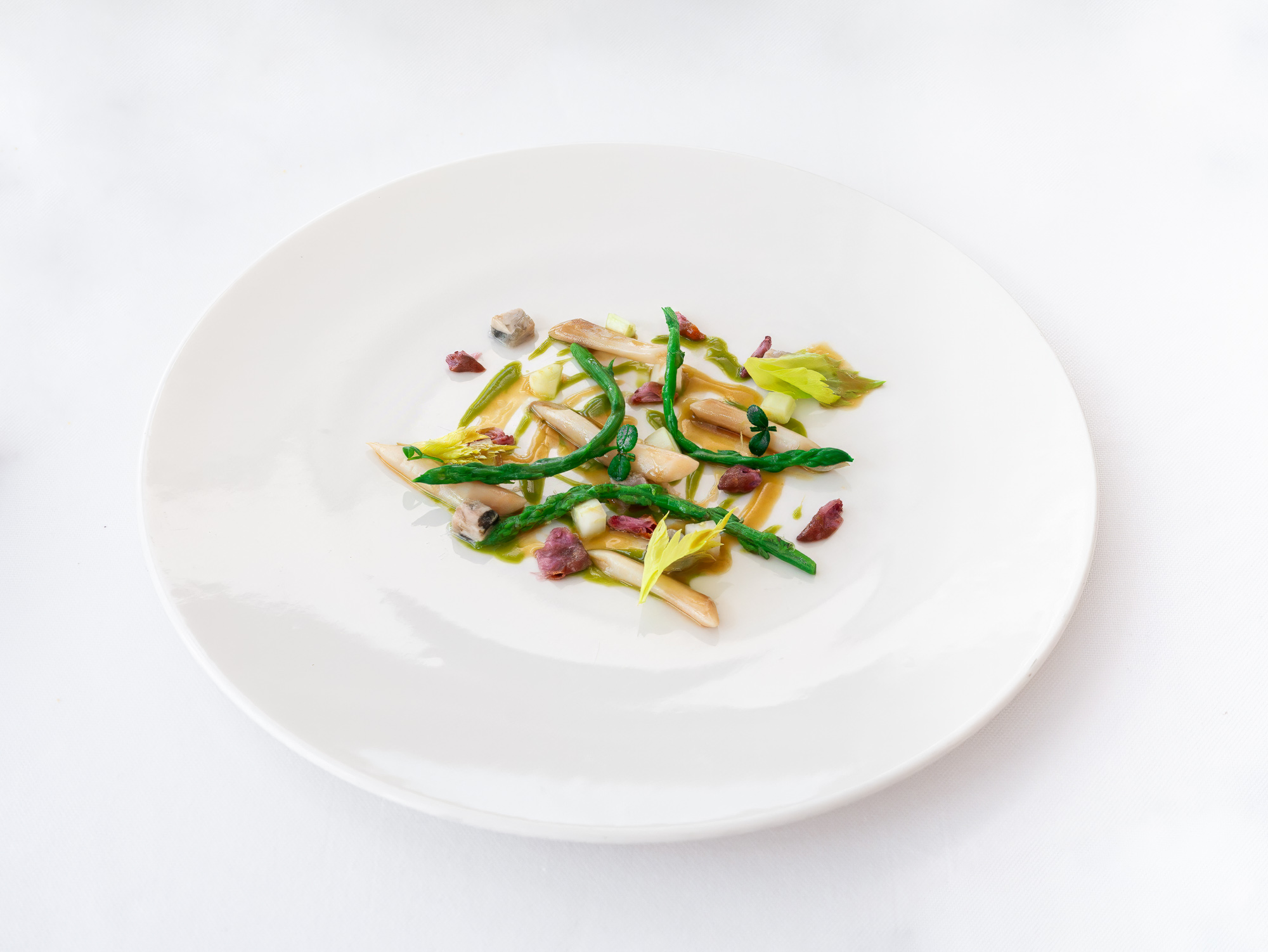
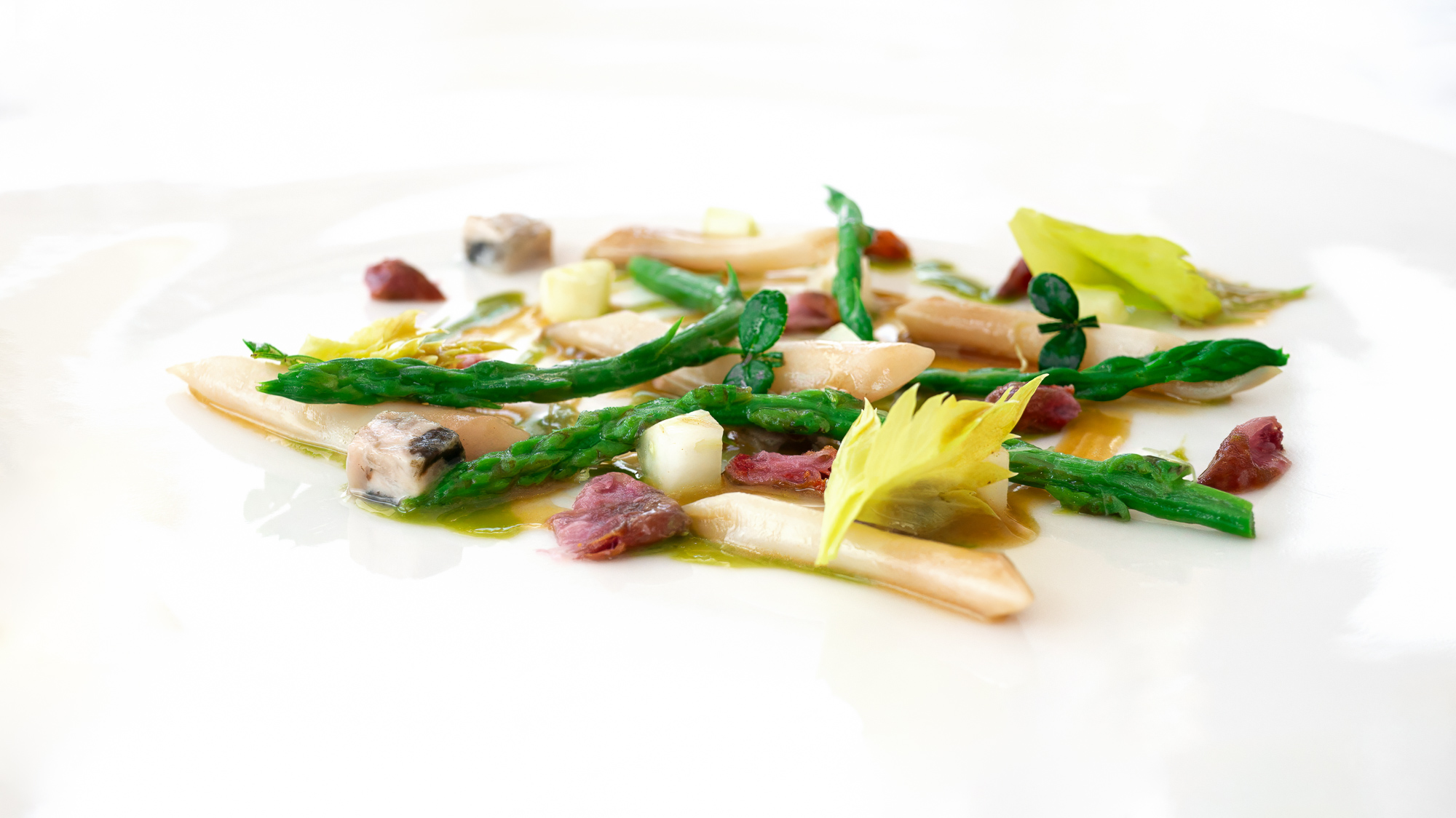
The razor clam retains its succulent snap, resting on a briny reduction of its own innards and enlivened by the sharp acidity of green tomato, the dual texture of celery, frozen peach blossoms, and the citrus kick of Timut pepper oil.
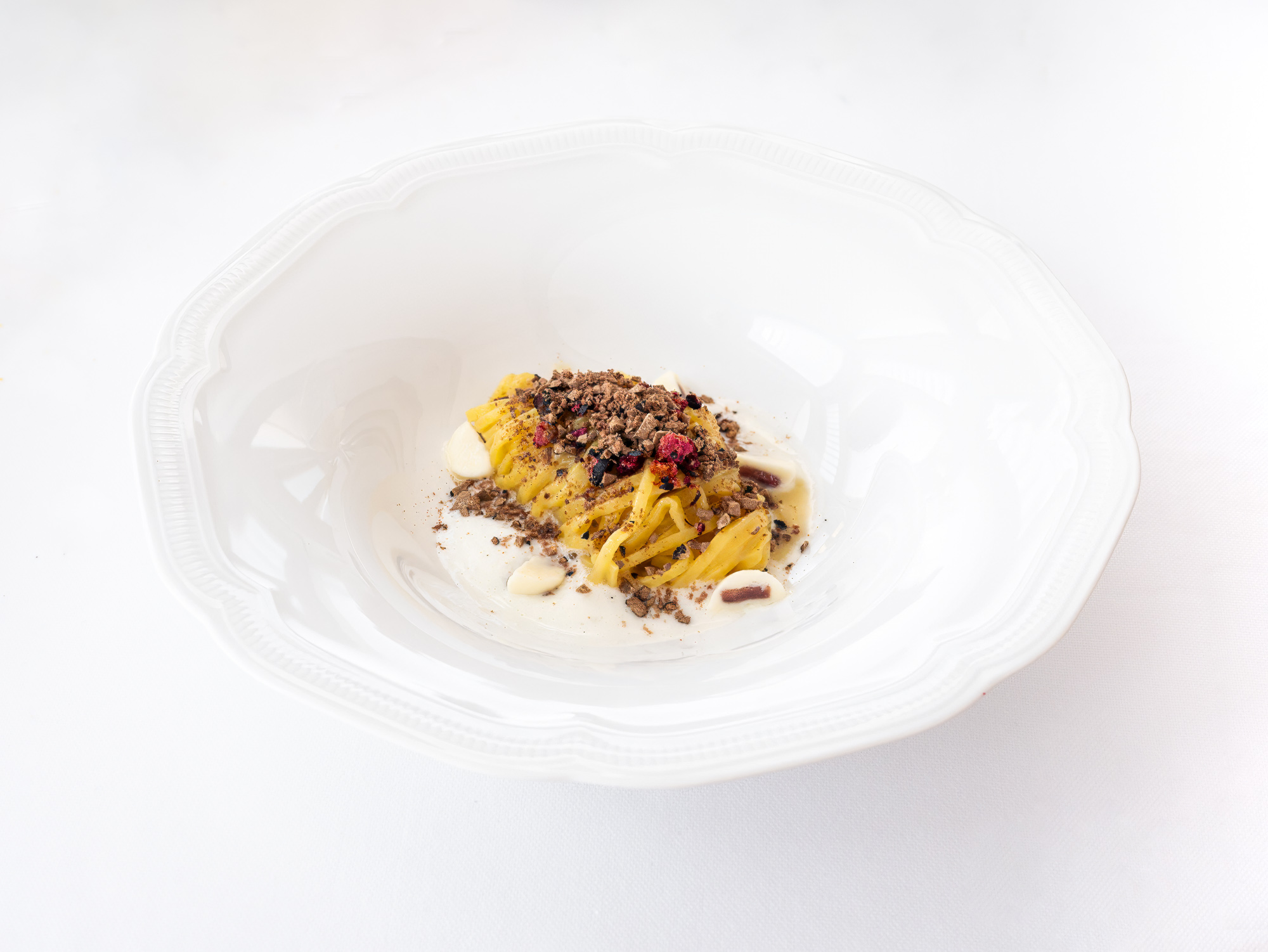
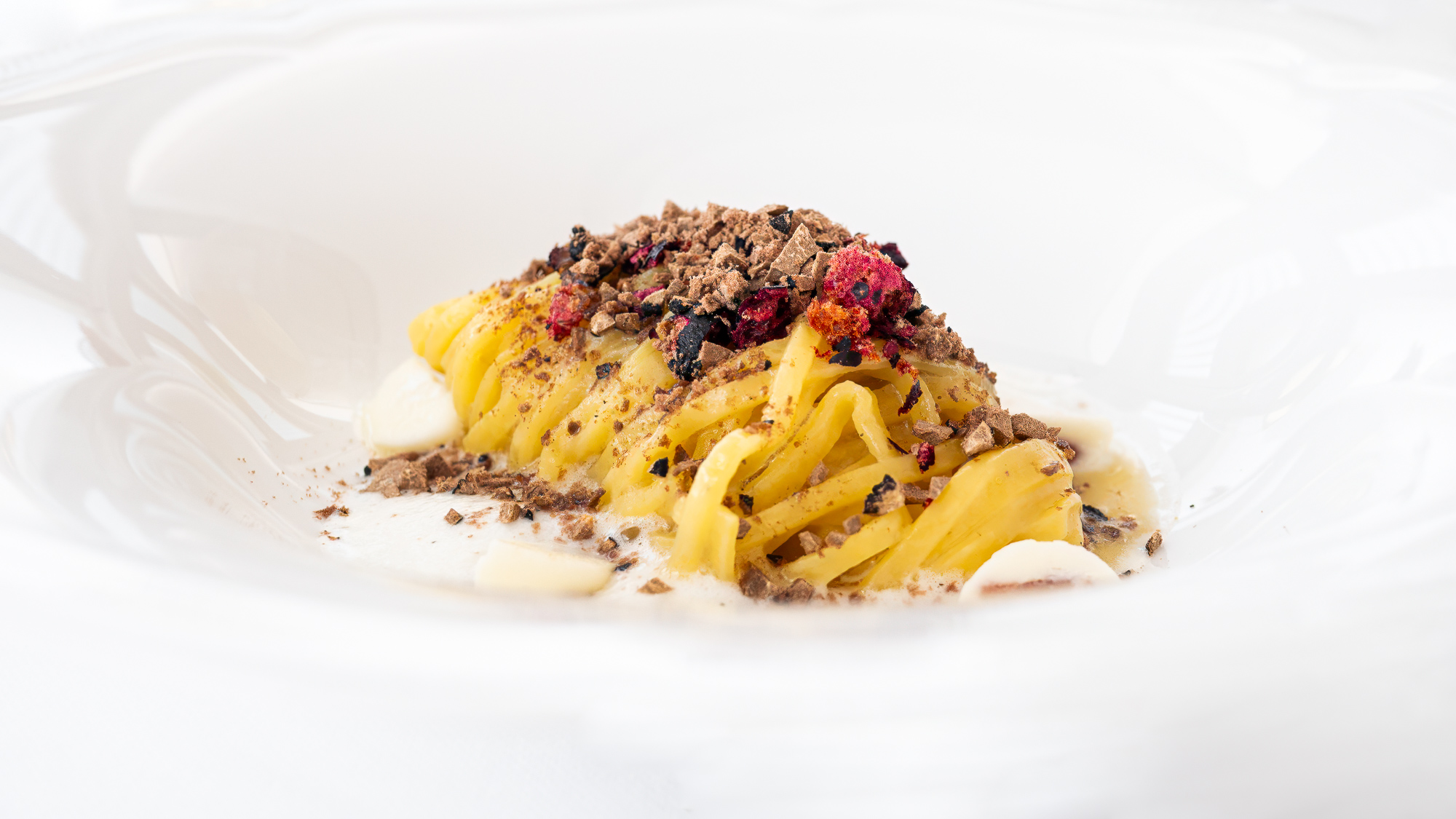
The tagliatelle with butter and anchovies reinterpret the domestic memory of Mamma Bianca: icy cubes of anchovy-stuffed butter melt gradually into the warmth of the pasta, heightening the elective affinity between anchovy and black truffle. As comforting as cream, chocolate, and pistachio.
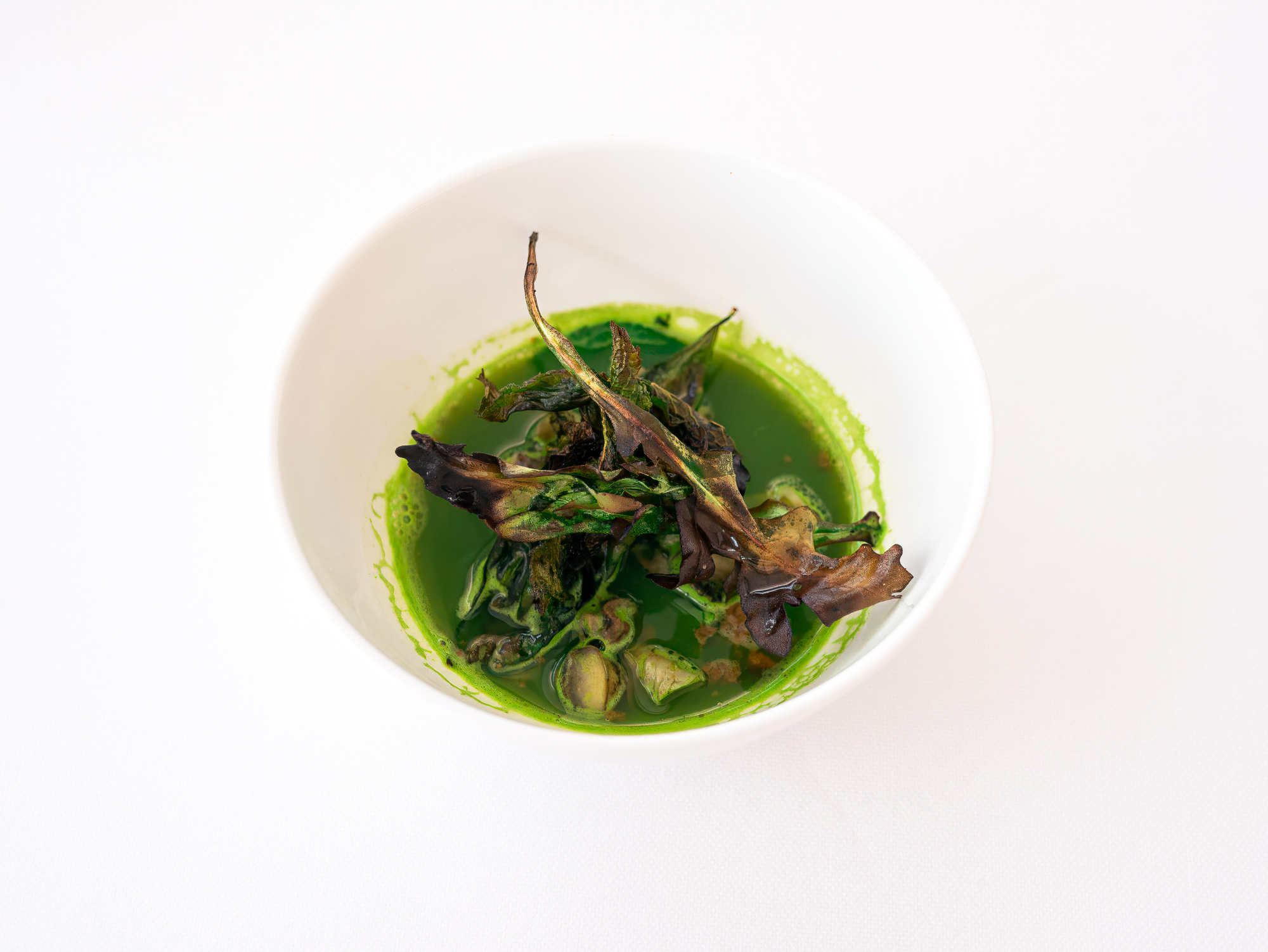
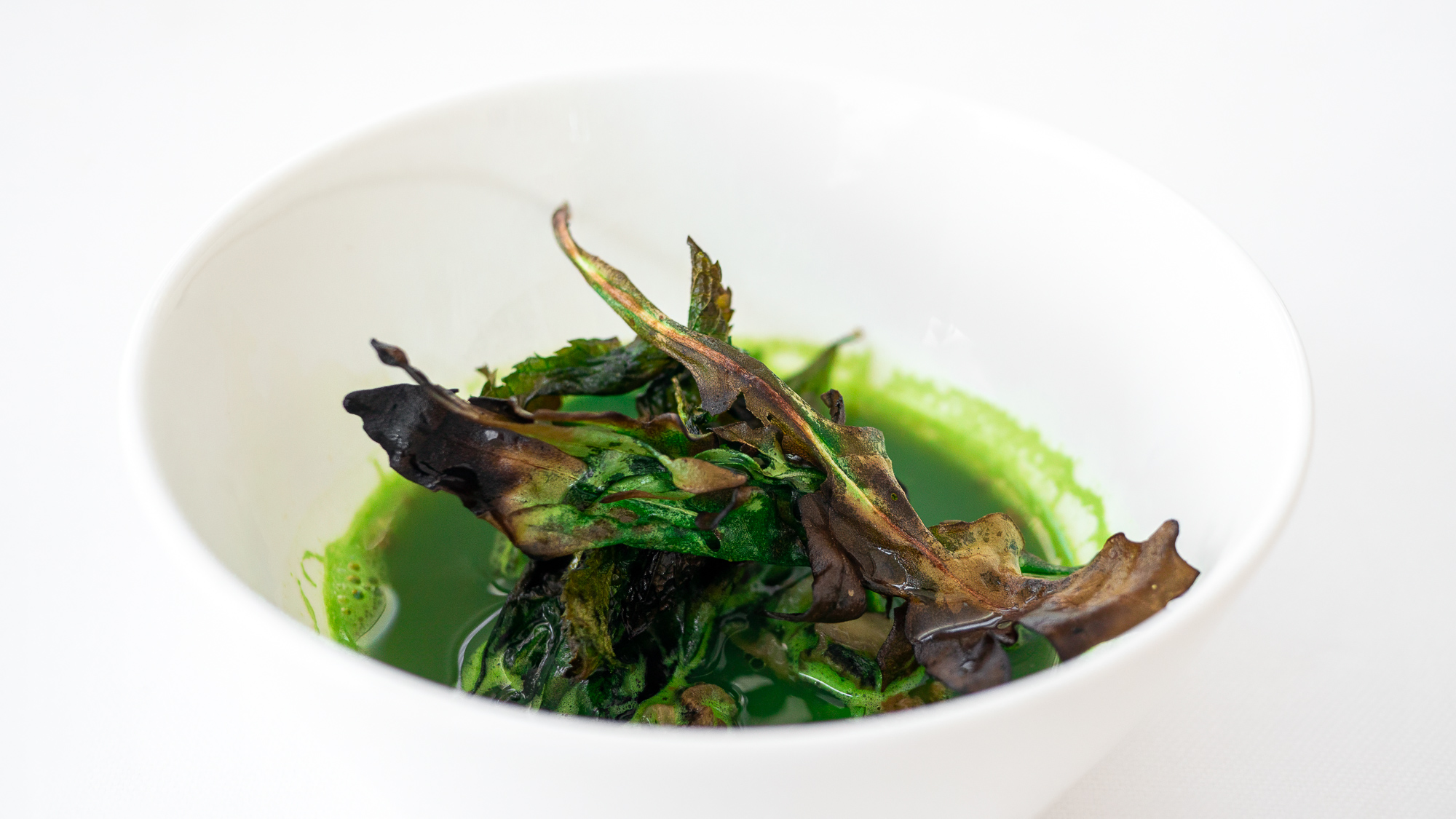
The murex sea snails, boiled for four hours to tenderize their fibers, are submerged in an opulent marine broth infused with clams, sea anemones, plankton, sea urchin, and oysters, harmonized by grilled mint, basil, and arugula lending smoky, faintly bitter notes. Meant to be sipped straight from the bowl.
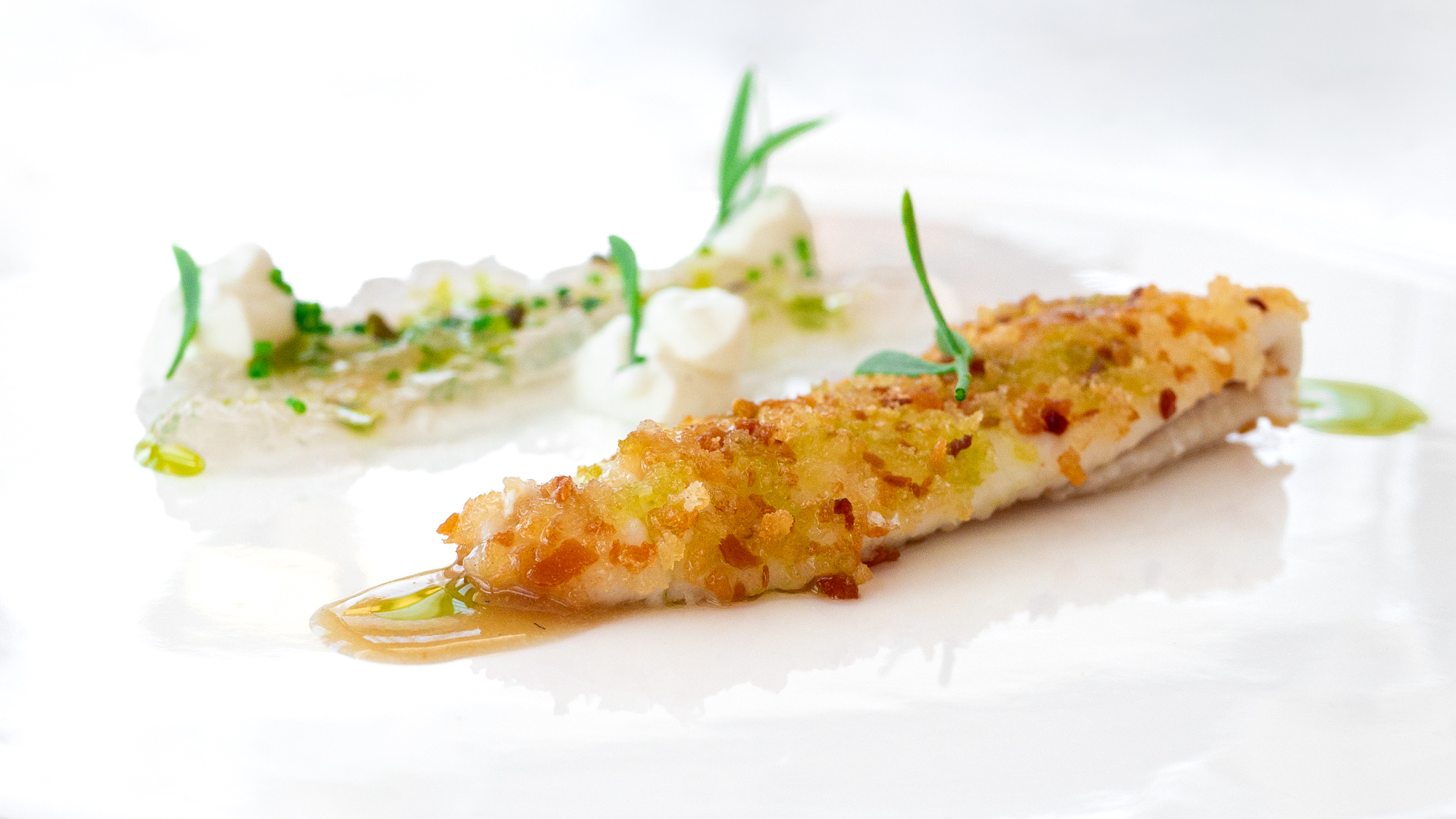
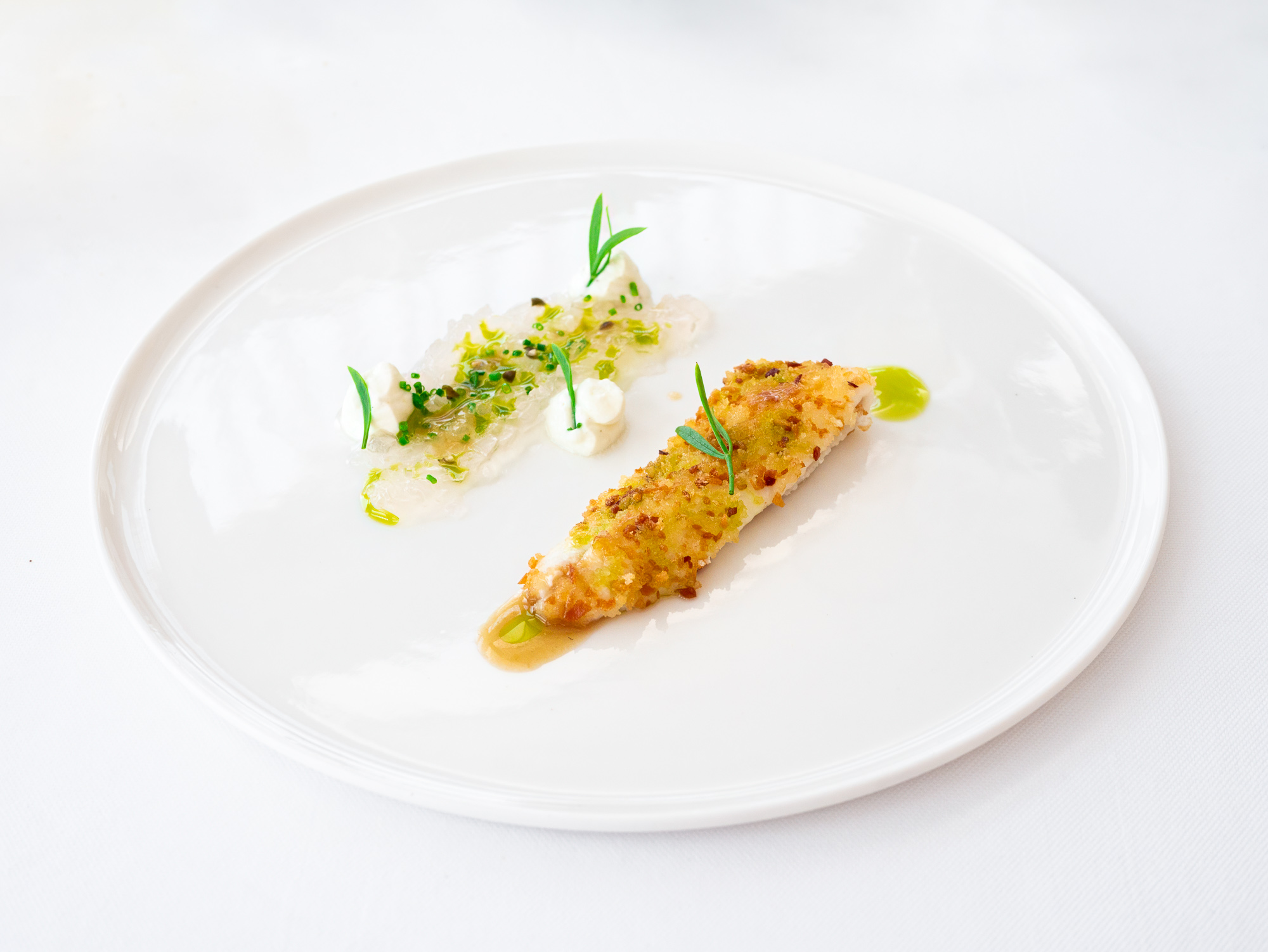
The spirit of filetto al pepe verde is transposed onto sole, breaded on one side only in the Adriatic style and seared in an iron skillet. It is accompanied by a Rotovap-gelled green peppercorn hydrosol, cream flakes, brined peppercorns, and a reduced jus of anchovies, mackerel, and white wine bursting with razor-sharp acidity and marine umami.
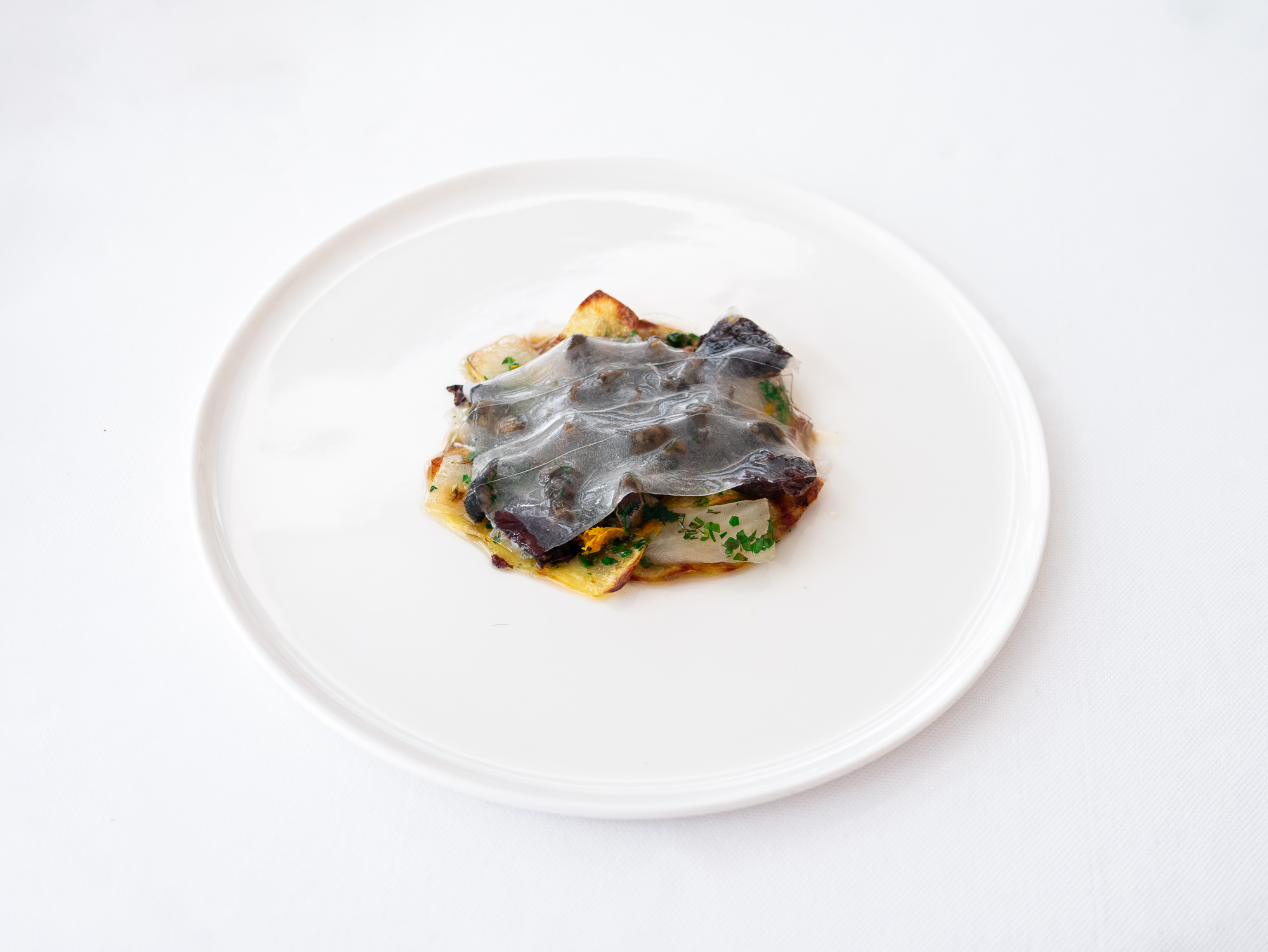
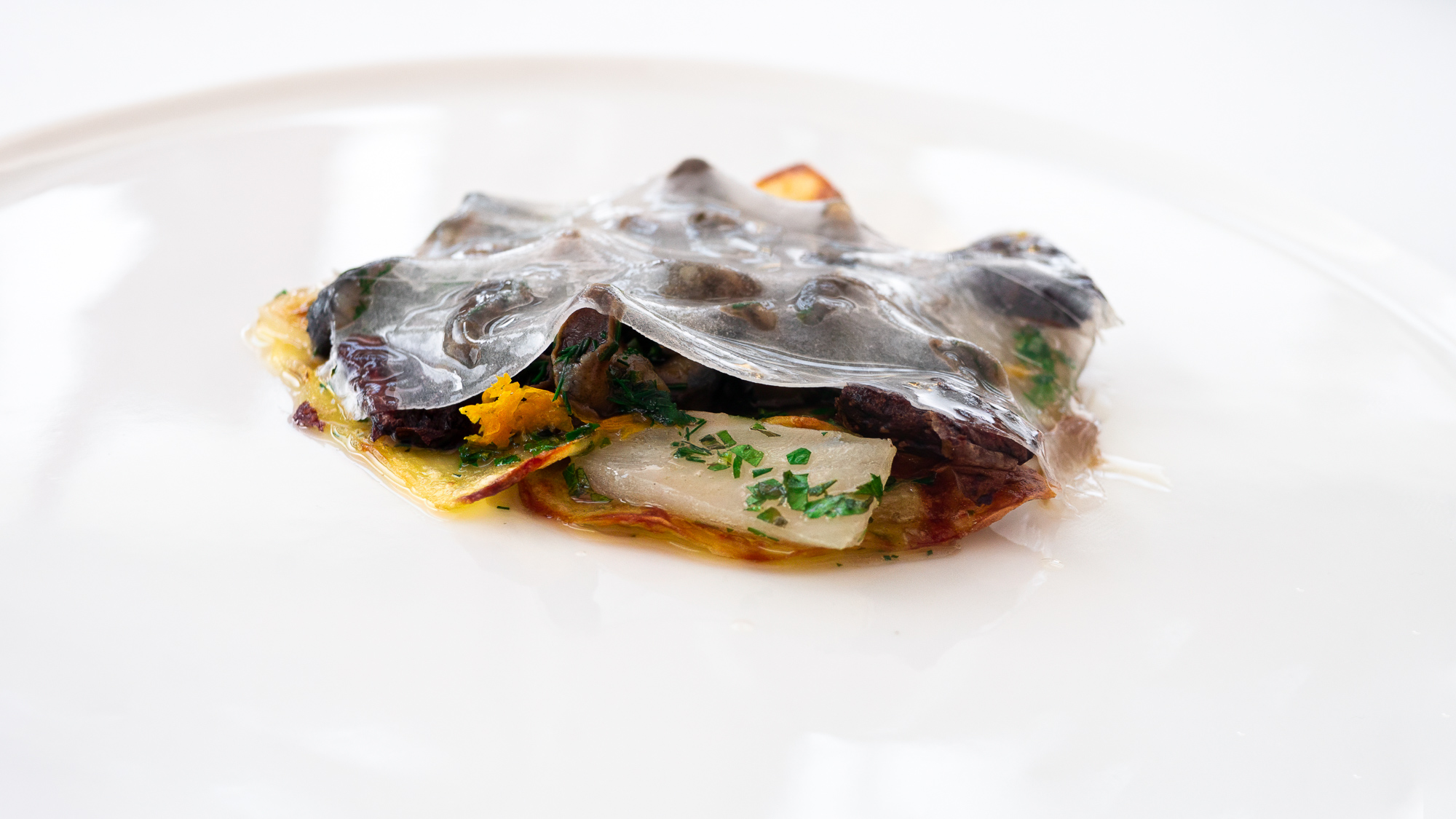
The sea snails “in porchetta”, already shelled and seasoned with thyme, marjoram, and wild fennel, rest atop paper-thin, freshly grilled potato slices, balanced by the richness of lardo di Colonnata and the tang of a carpione gel.
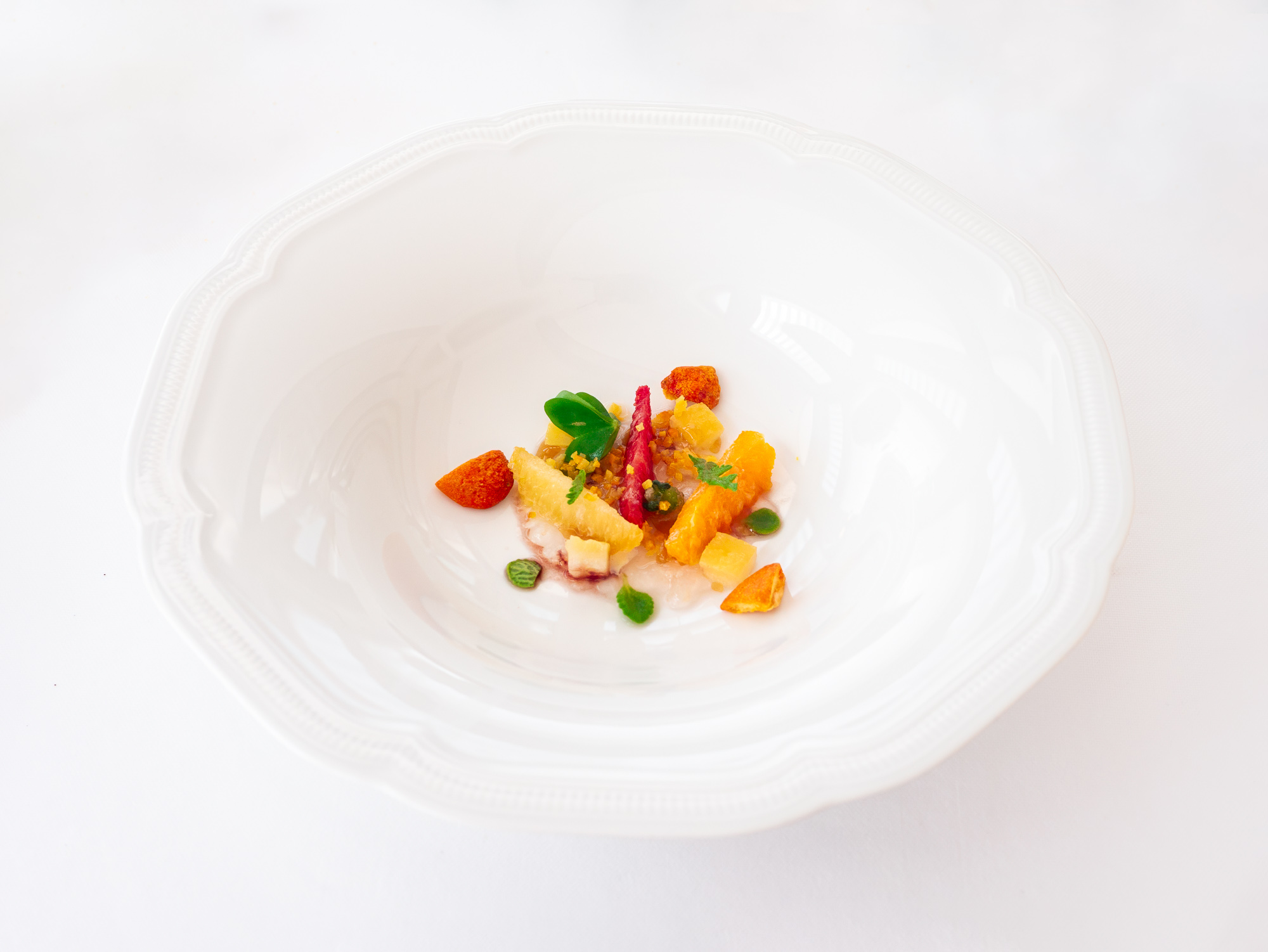
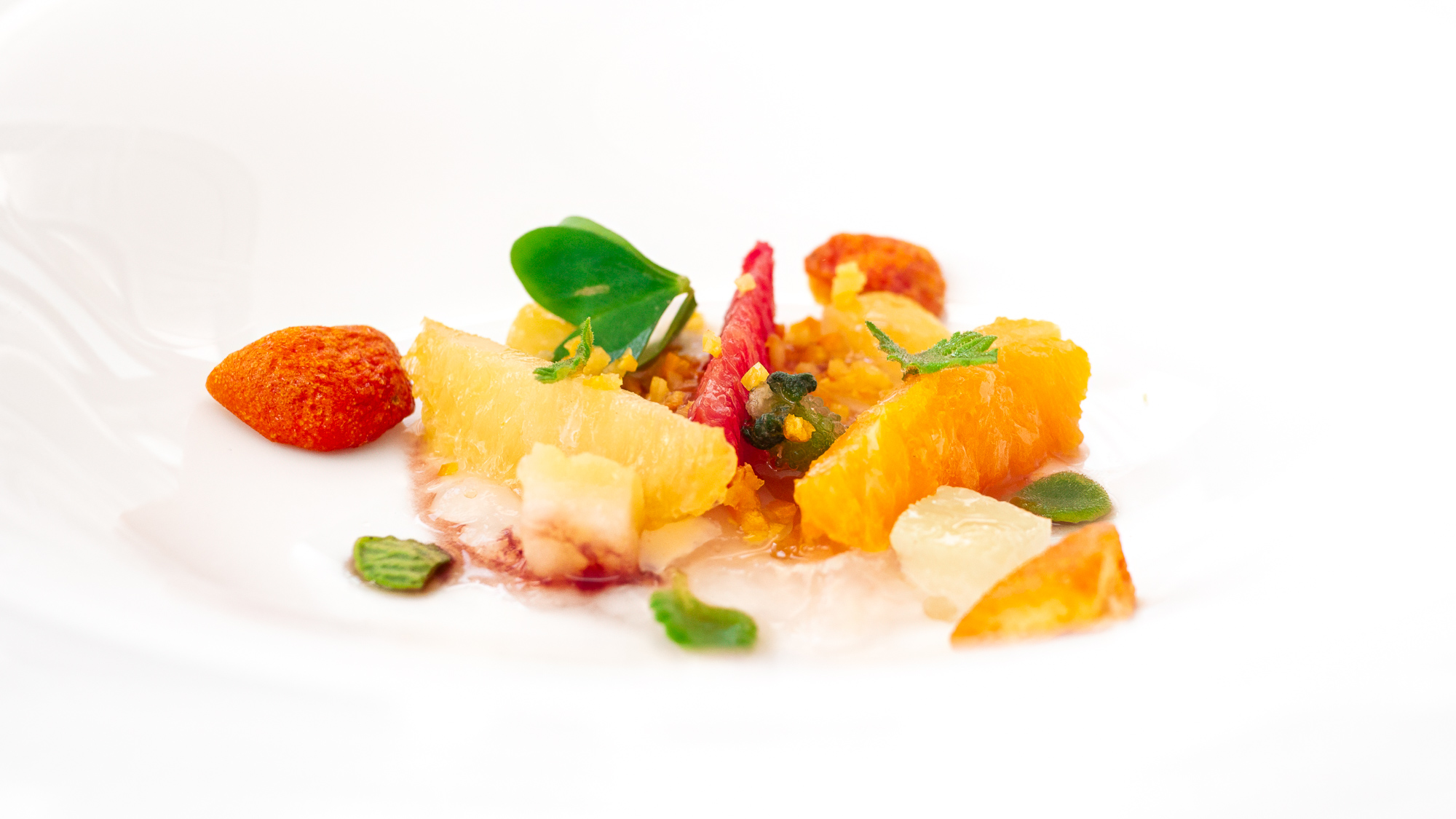
Serving as a palate bridge to the courses that follow is “Citrus and Cinnamon”, where yellow and pink grapefruit alongside oranges—dehydrated at 50 °C and chilled—meet a Rotovap-gelled cinnamon hydrosol and freeze-dried kumquat; an interplay of cold, acidity, and bitterness engineered to reset the receptors.
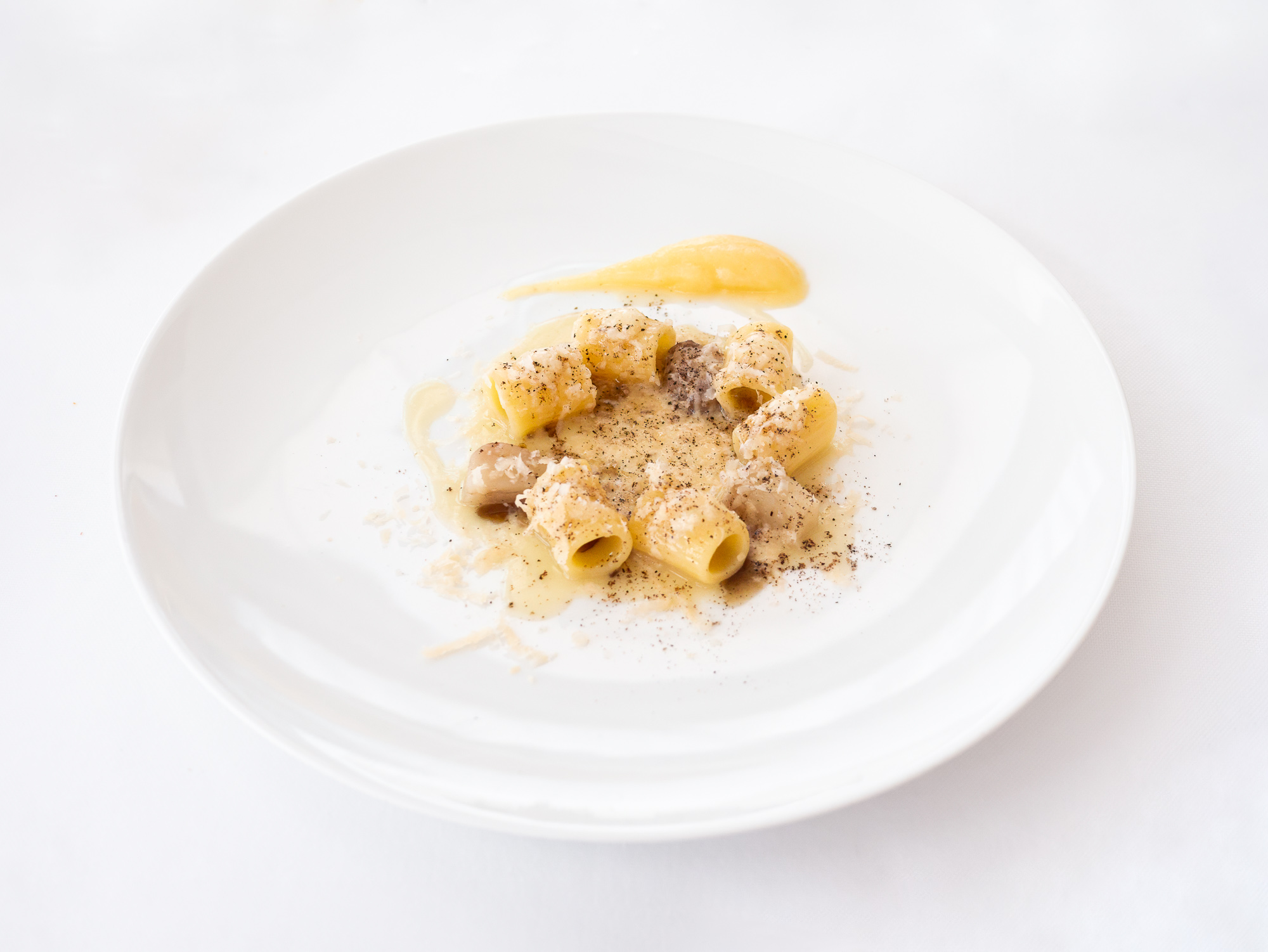
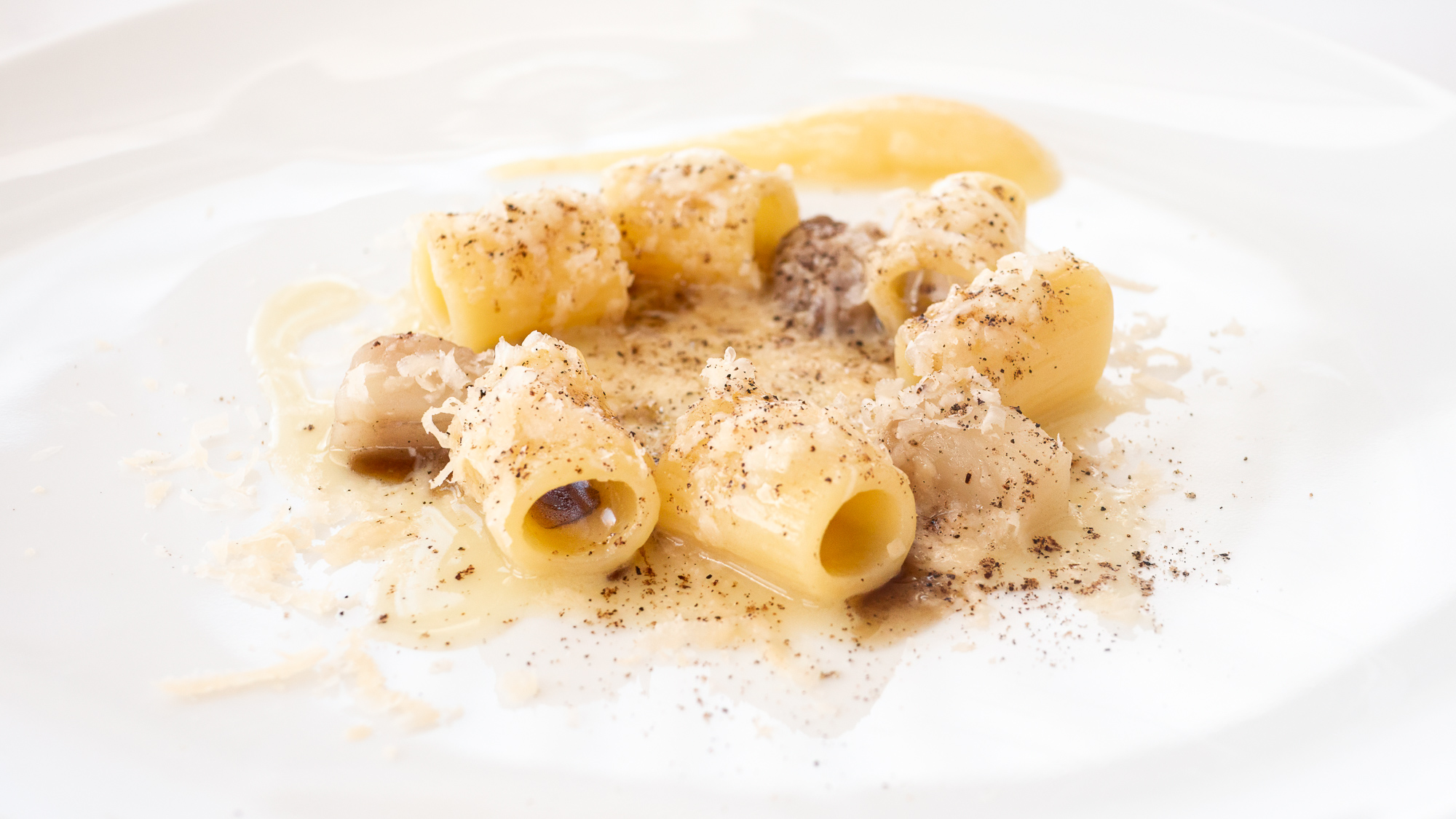
Mezzemaniche Massi cacio, pepe, and pear is a marine take on cacio e pepe made with a turbot-bone pil-pil, beef marrow, cacio di fossa, and a trio of peppers (black, Timut, and Timiz). Toward the end of the dish, the sauce merges with a fresh, tart pear purée to recalibrate the palate.
In the sea urchin kakigori, frozen sea urchin finely shaved into an ethereal granita rests over a lightly smoked milk cream, punctuated by saffron and coffee oil to layer sweetness, ferrous accents, and bitterness.
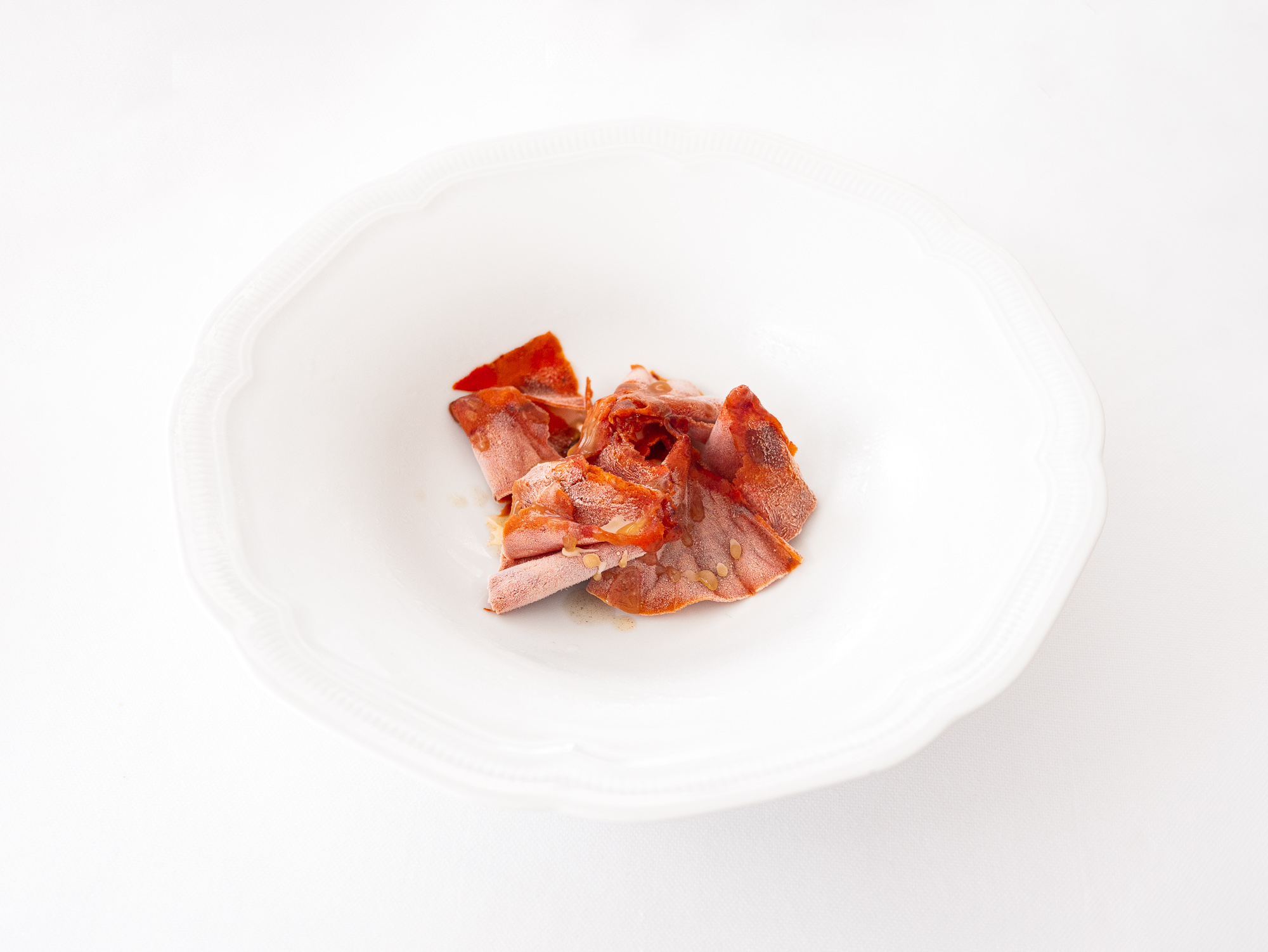
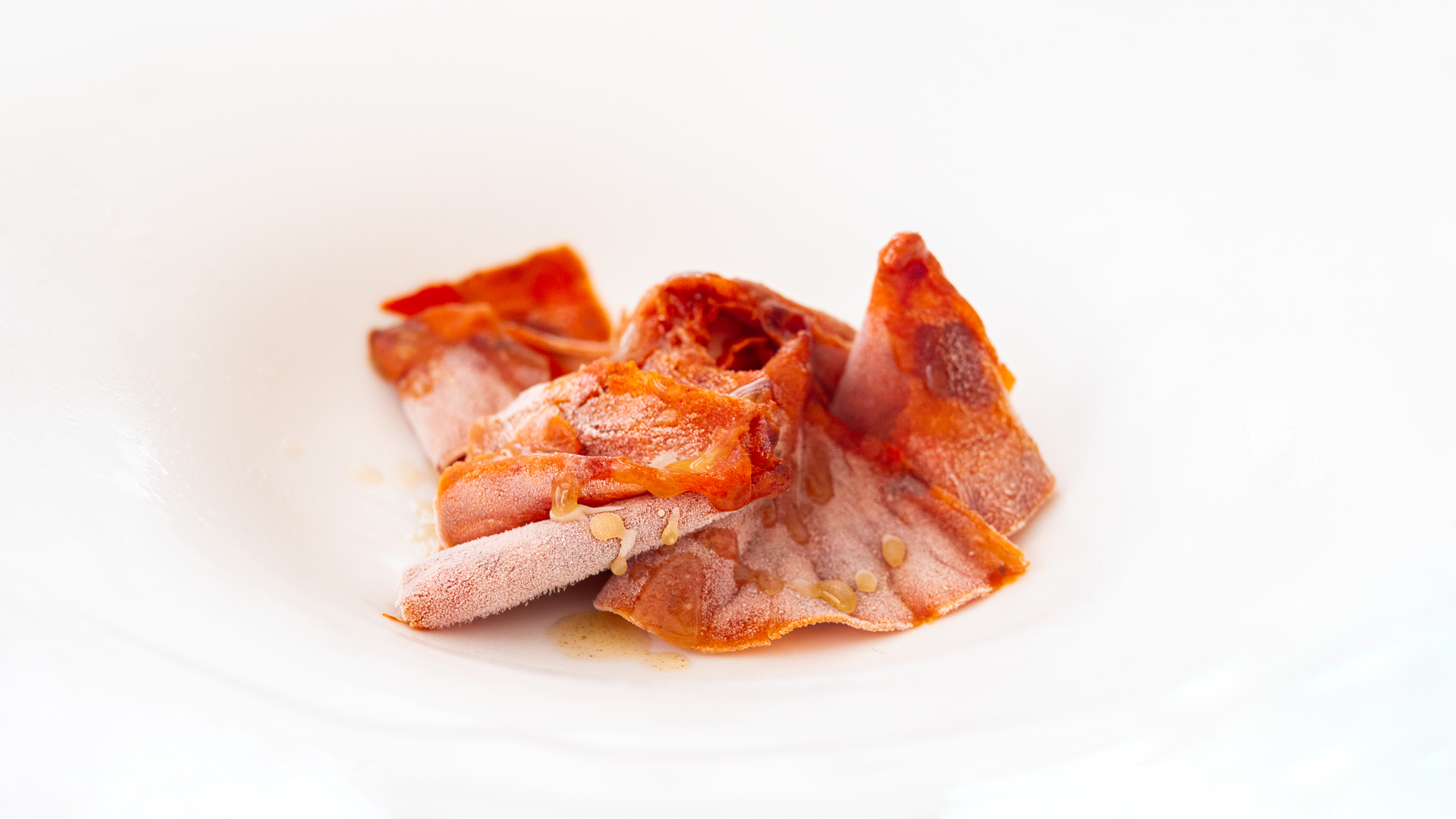
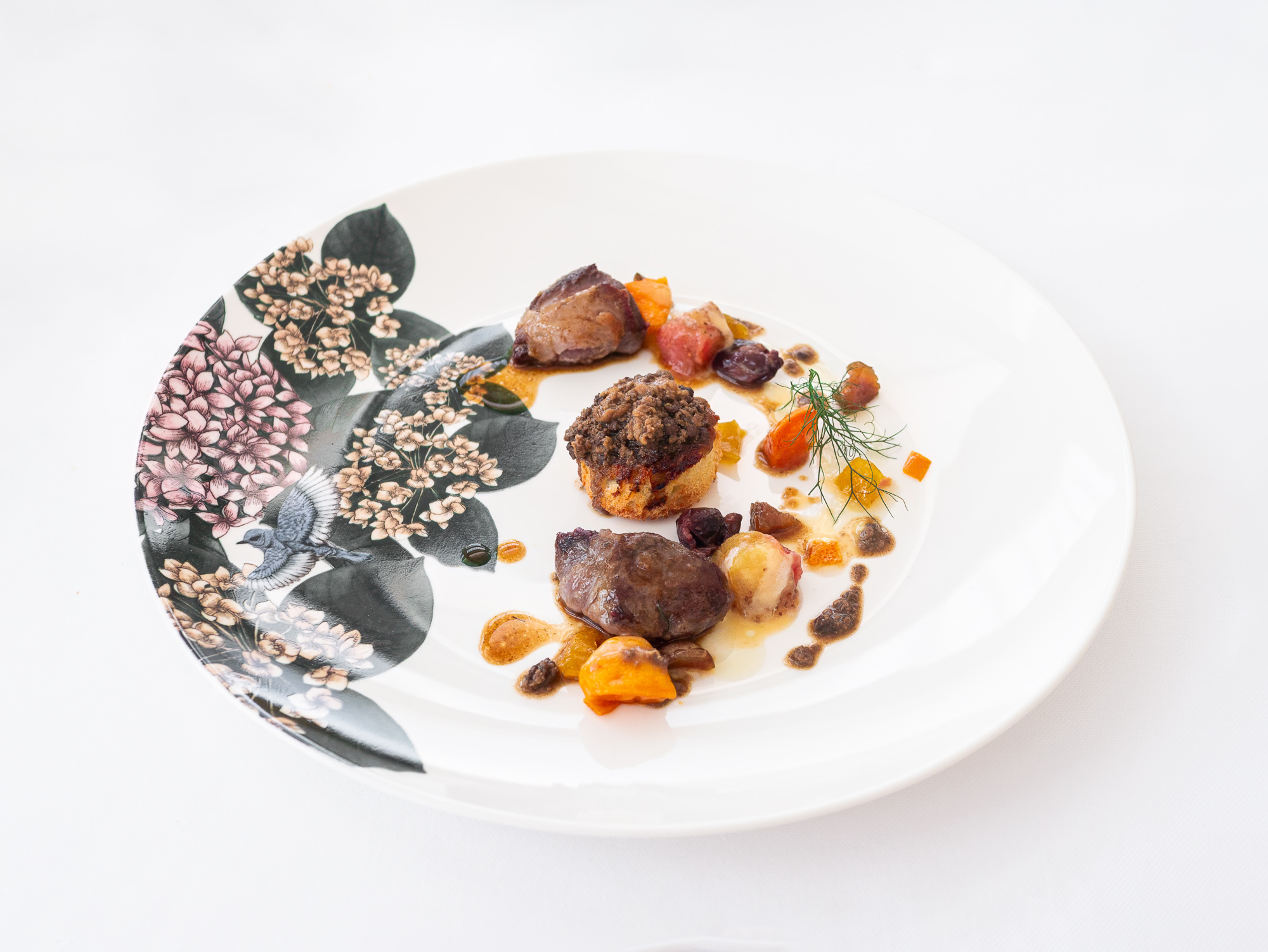
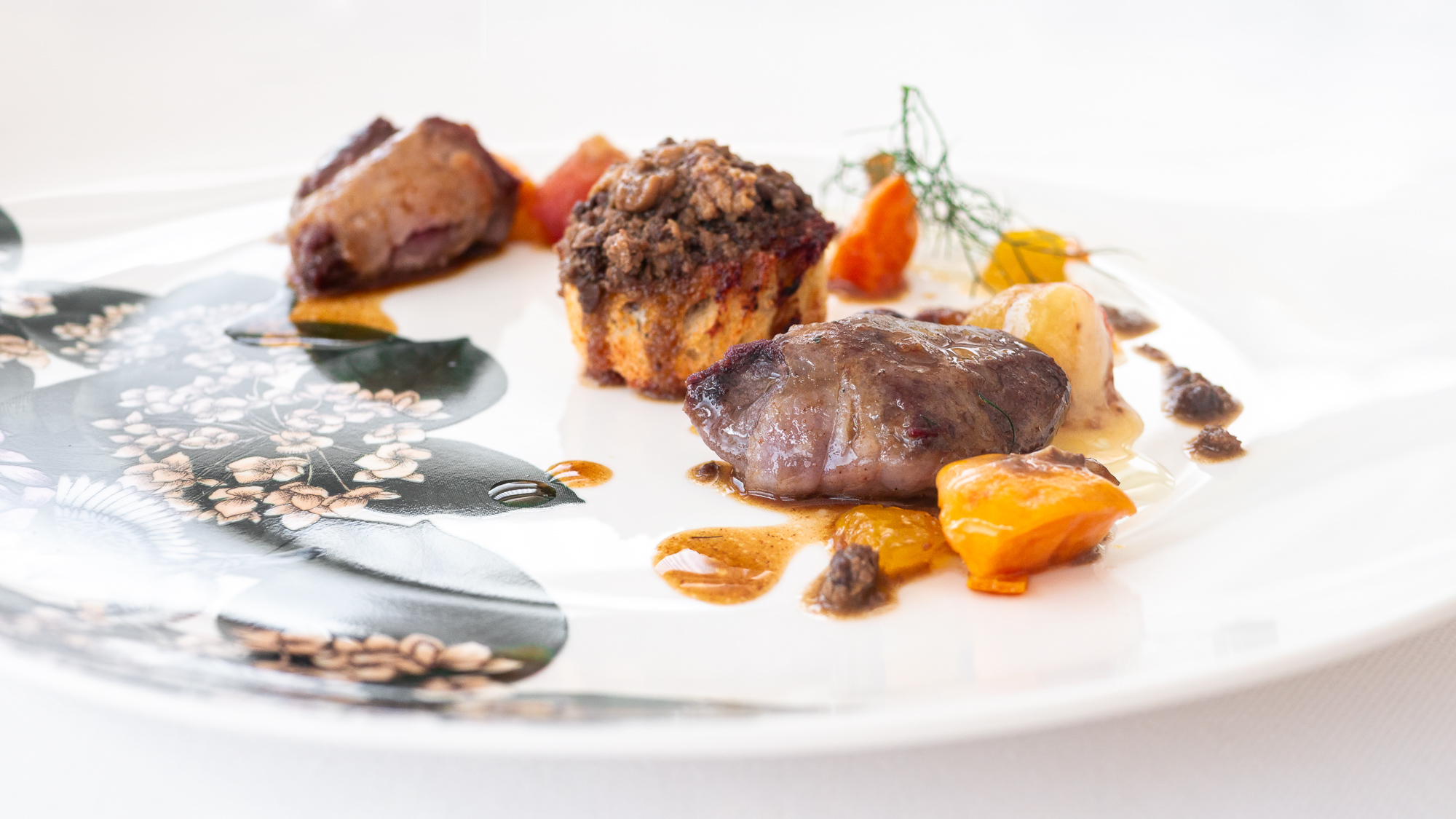
The woodpigeon bites, wrapped in guanciale and quickly seared on the plancha, pair with frozen figs—not entirely crystallized due to their high sugar content—and apricots cooked in syrup, freeze-dried, and partially rehydrated with fresh juice to spark a short-circuit between softness and crunch.
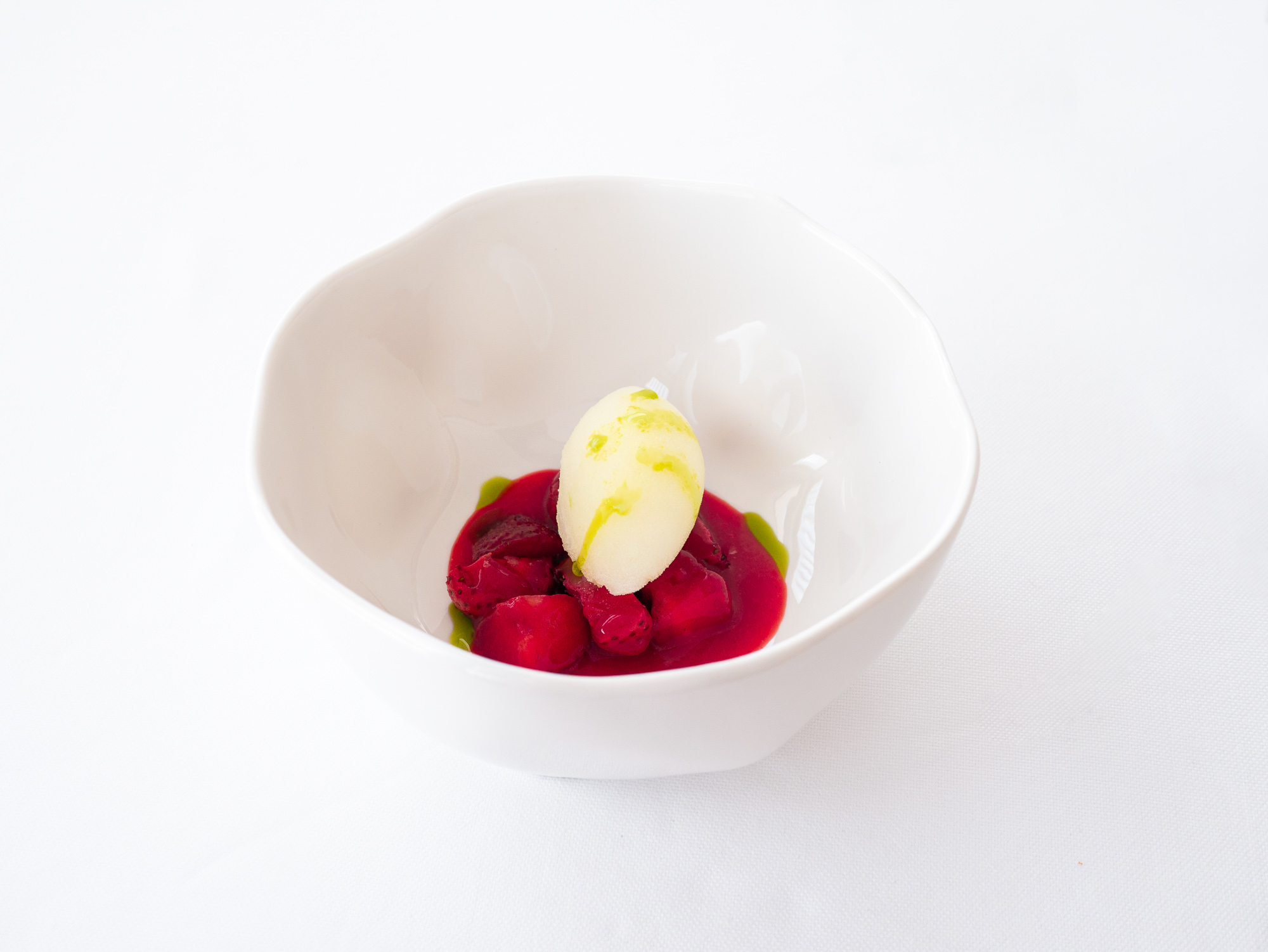
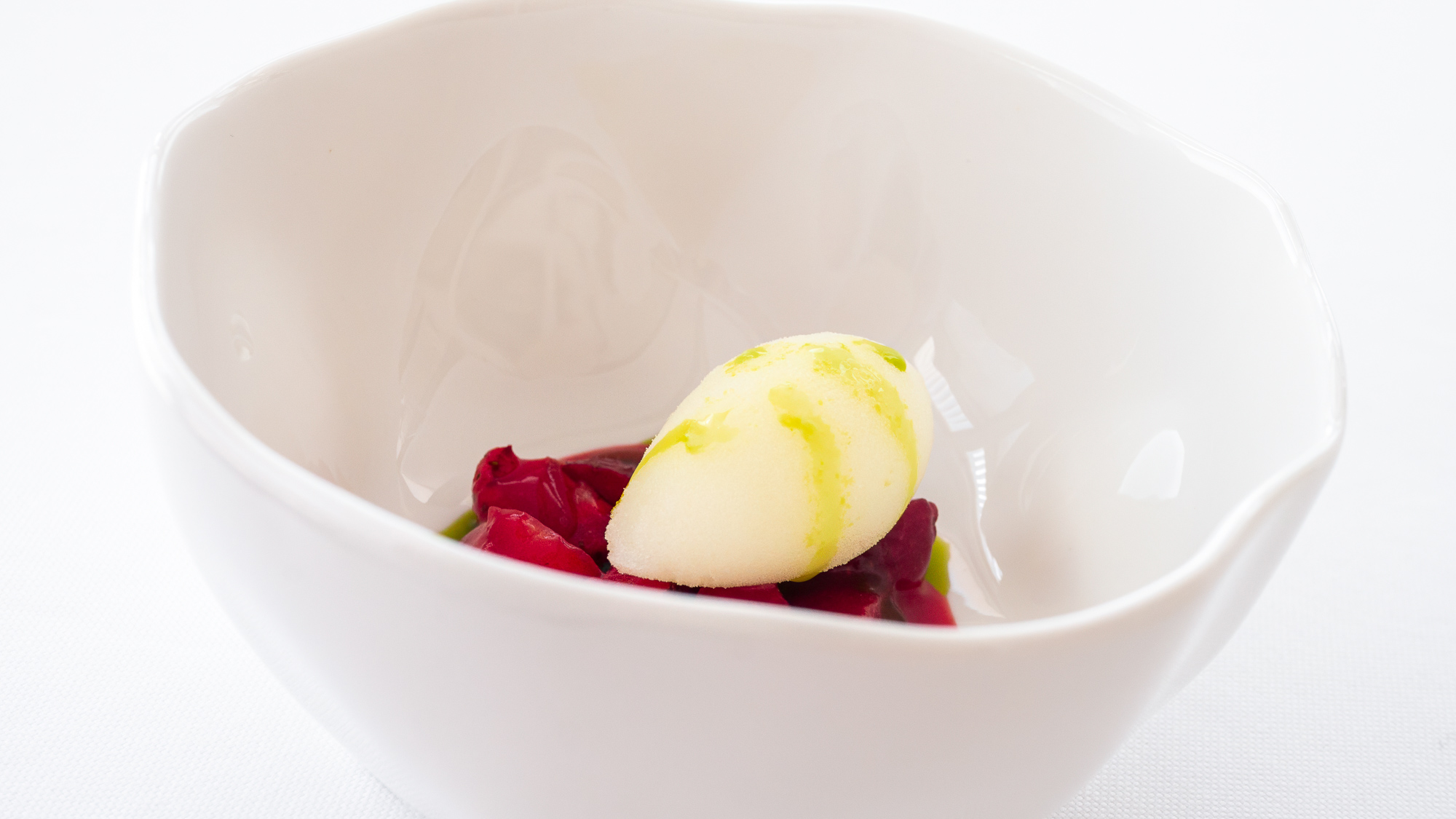
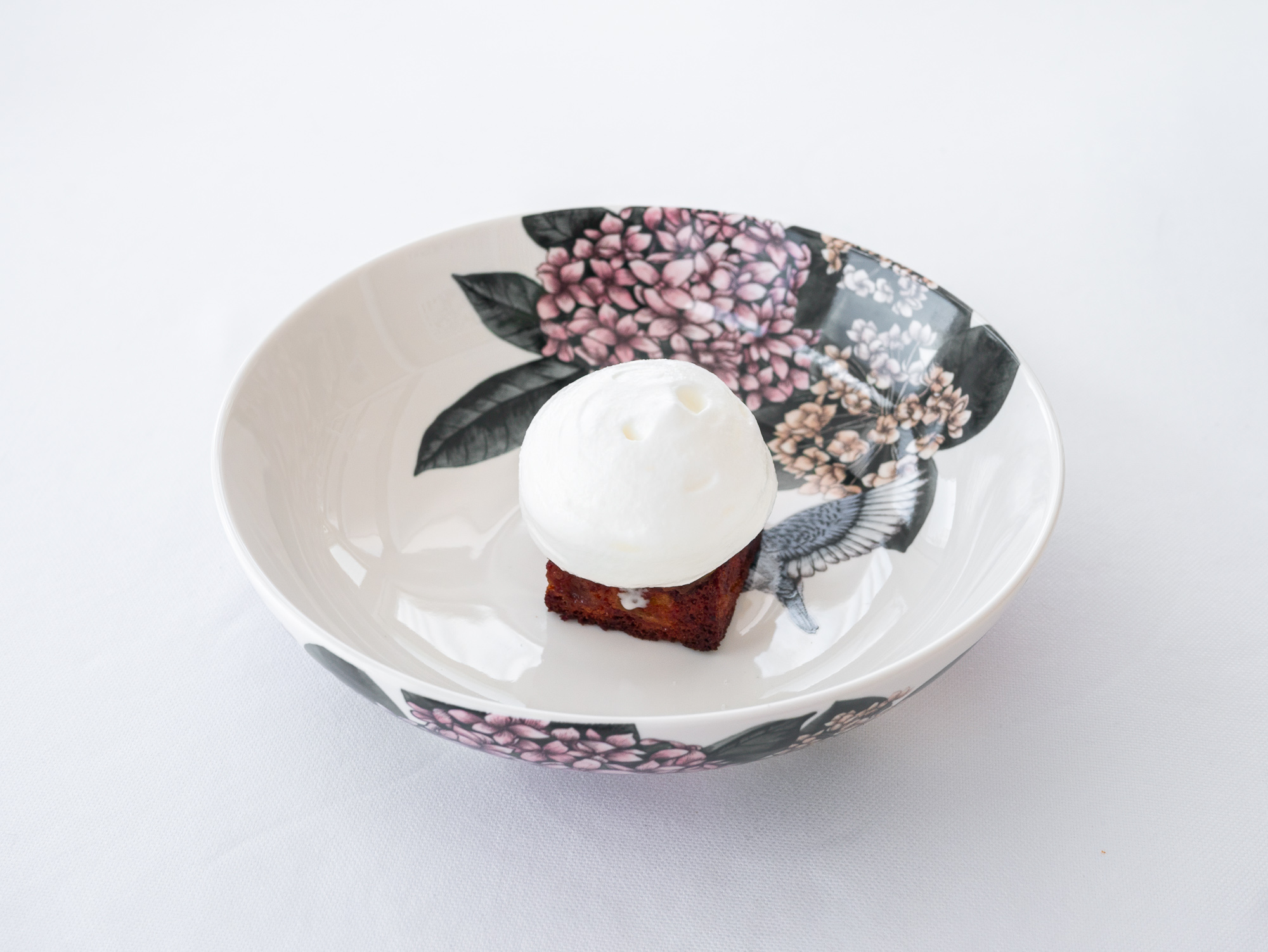
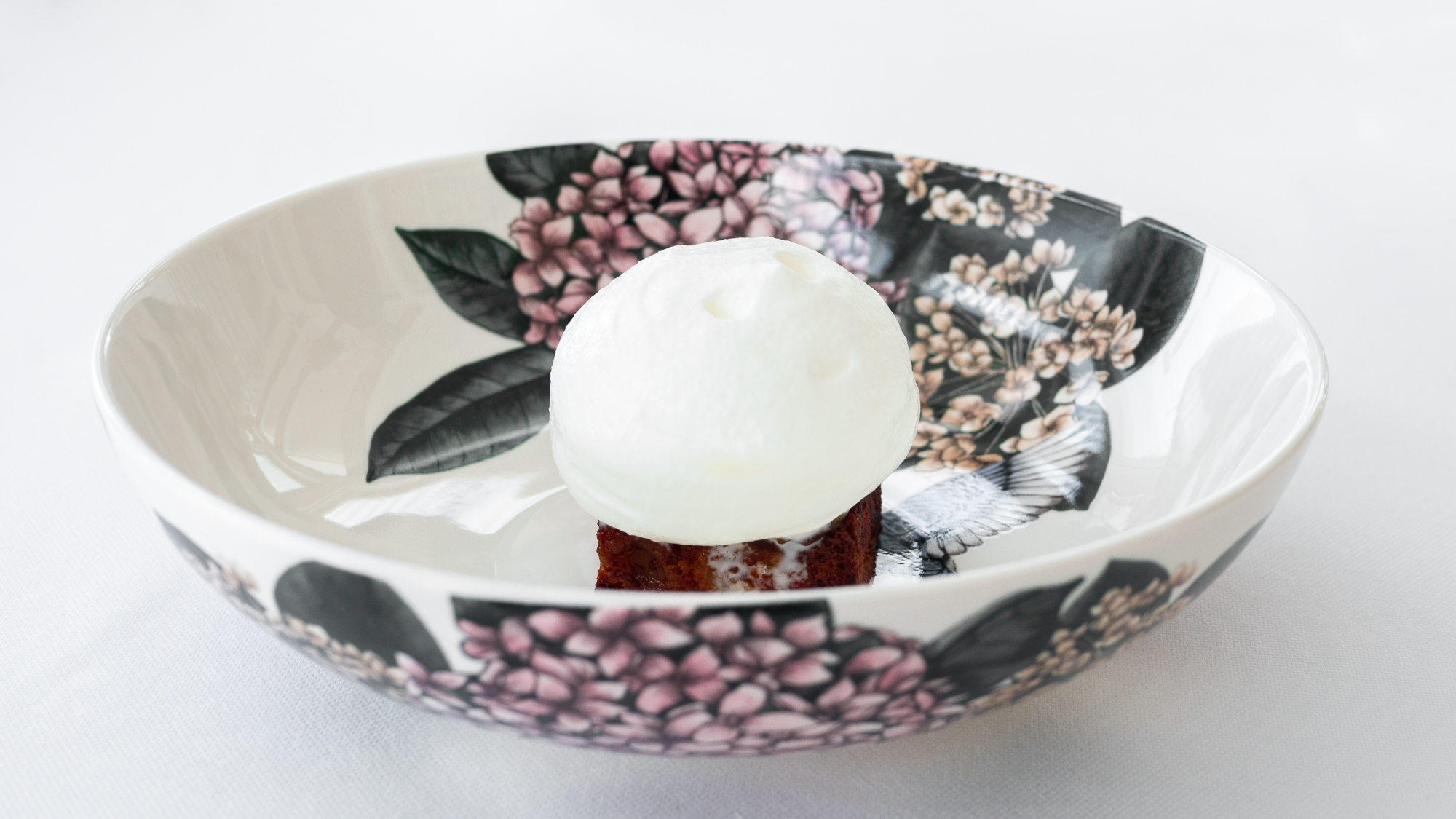
On the sweet front, pastry chef Rosita Mammone proves how difficult it is to simulate simplicity, working through apparent subtraction on two comforting archetypes until their gentle predictability is dismantled. In the pre-dessert dedicated to strawberry and lemon, the summery innocence of the pairing undergoes patient technical calibration: fresh, lightly dehydrated, and chilled berries over strawberry sauce alongside a quenelle of lemon granita, before being steered toward far more grown-up latitudes by balsamic tarragon oil. In the same vein, the familiar apple pie sheds every domestic connotation. Compressed into compact squares and caramelized in the oven until it develops a tenacious crust, it is threaded through with the austere, smoky character of black cardamom, finding its ultimate resolution in the thermal and alcoholic contrast of Calvados ice cream and foam.
15 luglio 2026